
Investing in real estate can be a lucrative venture, but finding the right financing is crucial. At Global Florida Realty, we understand the importance of securing the best mortgage lenders for investment properties.
This guide will explore top lenders, their unique offerings, and key factors to consider when financing your investment property. Whether you’re a seasoned investor or just starting out, we’ll help you navigate the complex world of investment property mortgages.
Investment property financing allows real estate investors to purchase properties for income generation. This type of financing differs from mortgages for primary residences, with unique characteristics and requirements.
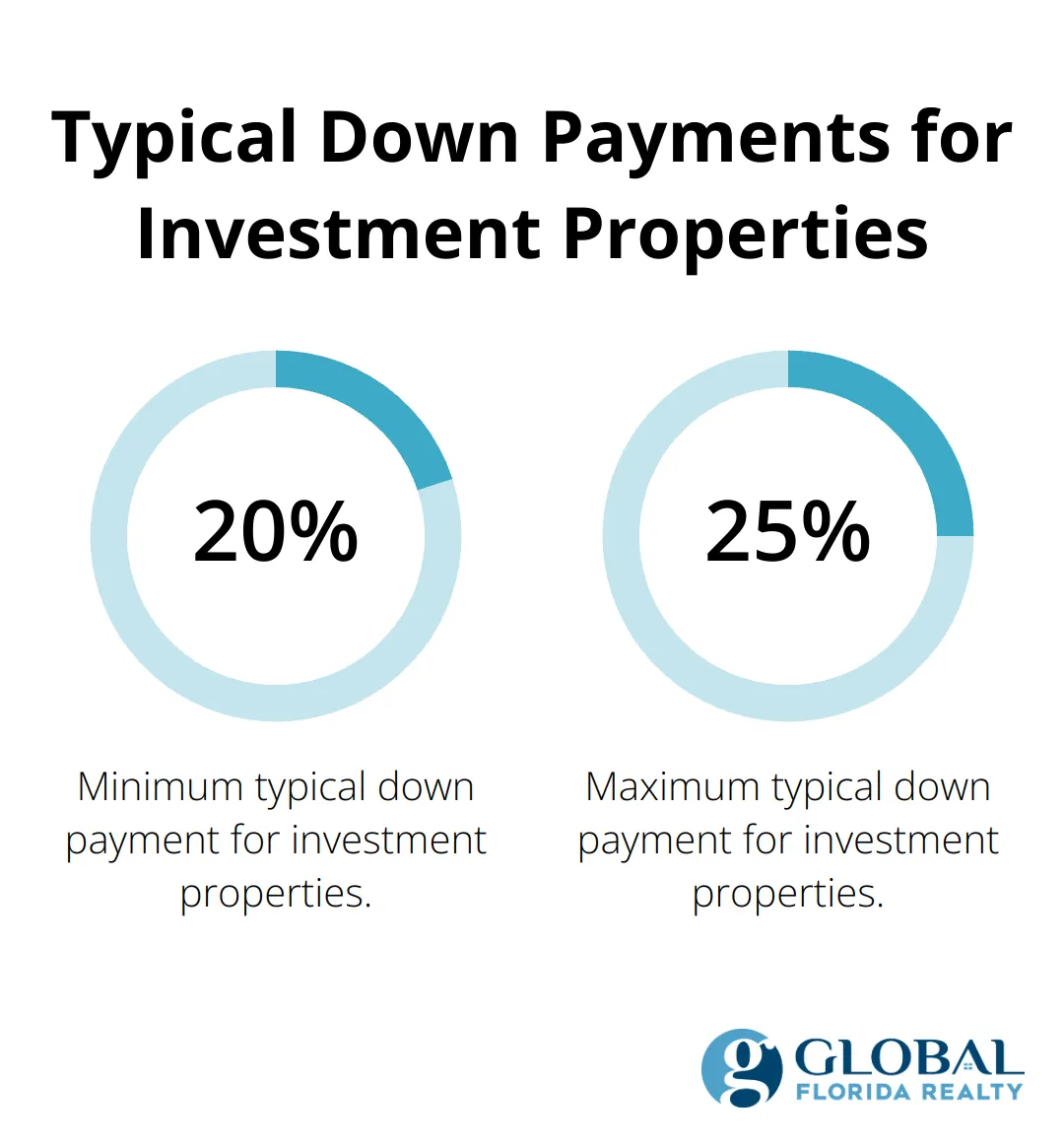
Lenders impose stricter requirements for investment property loans. Typical down payments for investment properties range from 20% to 25%, compared to lower percentages for primary residences. This higher requirement reflects the increased risk associated with investment properties.
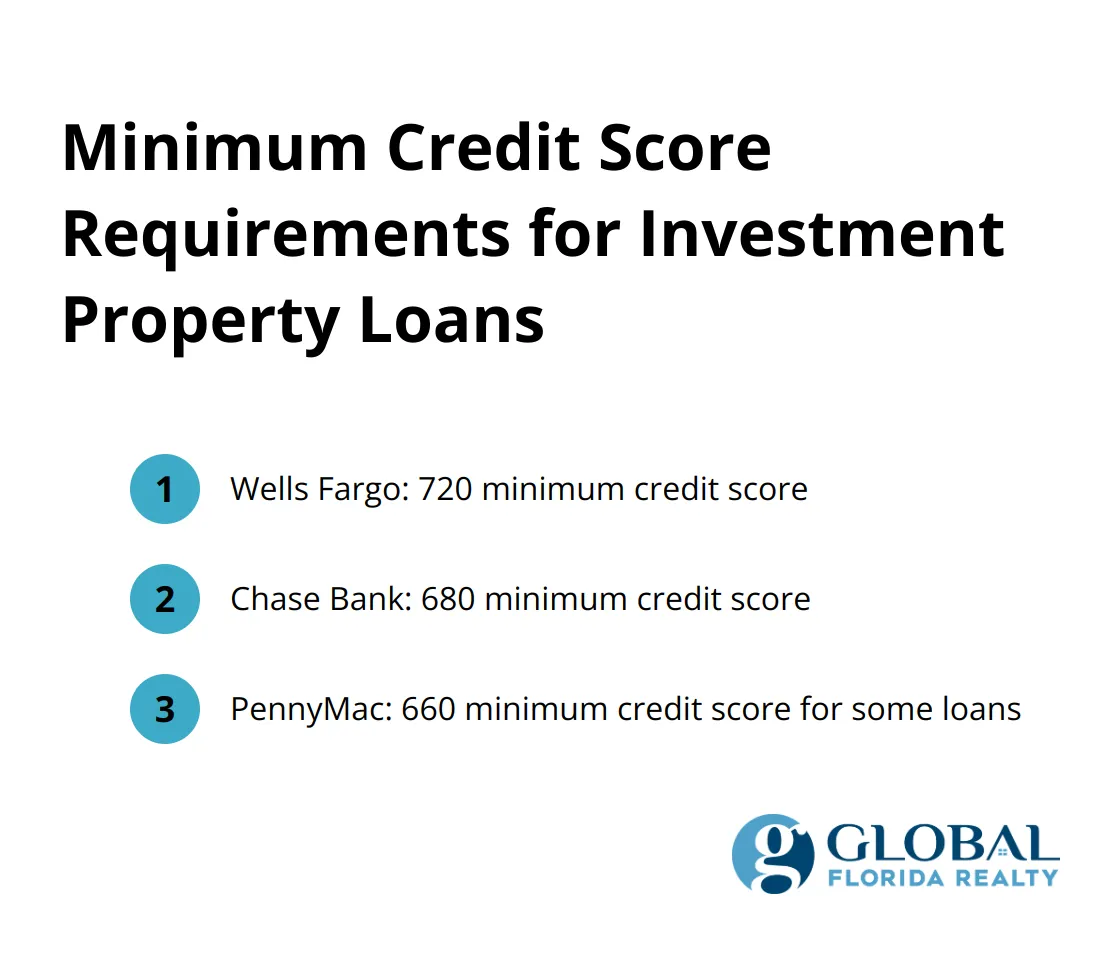
Credit score expectations also increase. While a score of 620 might suffice for a primary residence, investment property lenders often require scores of 680 or higher. Wells Fargo requires a minimum credit score of 720 for their investment property loans, which can help secure better interest rates and loan terms.
Lenders scrutinize an investor’s cash reserves closely. It’s common for lenders to require borrowers to have enough cash to cover six months of mortgage payments, property taxes, and insurance for each investment property they own. This requirement ensures that investors can handle periods of vacancy or unexpected expenses.
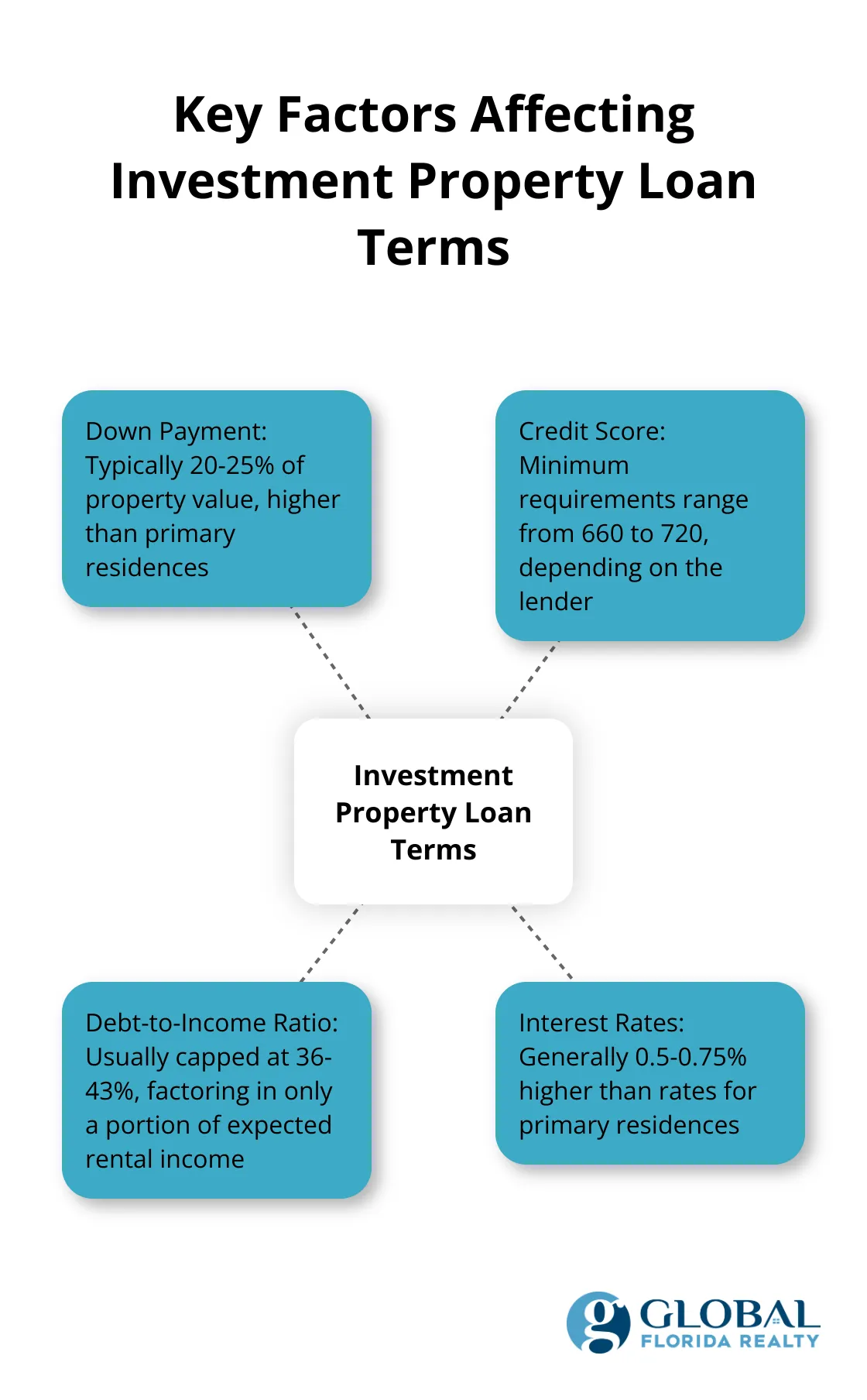
Debt-to-income (DTI) ratios also play a critical role. While primary residence mortgages might allow DTIs up to 43%, investment property loans often cap this at 36%. This lower threshold helps lenders ensure that borrowers don’t overextend themselves financially.
Interest rates for investment properties typically range 0.50% to 0.75% higher than those for primary residences. This rate premium compensates lenders for the additional risk. For example, if the average 30-year fixed rate for a primary residence is 6.5%, an investor might expect rates around 7% to 7.5% for an investment property.
These higher rates can significantly impact an investor’s bottom line. For a $300,000 property, this rate difference could mean paying an additional $20,000 to $40,000 over the life of a 30-year loan.
Lenders treat potential rental income uniquely in investment property financing. Most lenders will only consider a portion of the expected rental income when calculating a borrower’s ability to repay the loan. Typically, they’ll use 75% of the projected rent, accounting for potential vacancies and maintenance costs.
This conservative approach to rental income underscores the importance of thorough market research and realistic projections when planning an investment property purchase. Accurate data and informed decisions become essential in this complex landscape.
As we move forward to explore top mortgage lenders for investment properties, keep these unique aspects of investment property financing in mind. Understanding these fundamentals will help you navigate the offerings of various lenders and find the best fit for your investment goals.
Selecting the right lender can significantly impact your real estate investment success. Let’s explore some leading mortgage lenders for investment properties and their unique offerings.
Rocket Mortgage has revolutionized the lending process with its streamlined online application. They provide various loan options for investment properties, including conventional and jumbo loans for high-value properties.
Their standout feature is rapid loan closure – often within 16 days. This speed can provide a competitive edge in hot markets. However, their investment property interest rates tend to be higher, typically ranging from 7.5% to 8.5% for a 30-year fixed mortgage (as of June 2025).
Wells Fargo offers a wide range of investment property loan options. Their portfolio includes fixed-rate and adjustable-rate mortgages, as well as specialized programs for multi-unit properties.
Their Portfolio loan program allows investors to finance up to 10 properties, ideal for building substantial real estate portfolios. Wells Fargo requires a minimum credit score of 720, higher than some competitors, but this often results in more favorable interest rates for qualified borrowers.
Chase Bank offers competitive rates to borrowers with excellent credit scores. For investment property loans, they typically require a minimum credit score of 680 and a down payment of at least 20%.
Chase’s relationship pricing is a significant advantage. Investors with other Chase accounts may qualify for interest rate discounts, potentially leading to substantial savings over the loan’s lifetime. As of June 2025, their investment property mortgage rates start at approximately 7.25% for a 30-year fixed loan.
PennyMac has established a niche in investment property lending with specialized programs. They offer loans for both residential and multi-family investment properties (up to four units).
Their Debt Service Coverage Ratio (DSCR) loan program stands out, allowing investors to qualify based on the property’s income potential rather than personal income. This benefits investors with multiple properties or non-traditional income sources.
PennyMac offers competitive rates, with investment property mortgages starting around 7.375% for a 30-year fixed loan (as of June 2025). They require a minimum credit score of 660 for most investment property loans, lower than some competitors.
While the aforementioned national lenders offer strong options, Global Florida Realty provides unparalleled local expertise and personalized service. With nearly 30 years of experience in Florida real estate, we understand the nuances of the local market and can guide investors to the most suitable financing options.
Our comprehensive services extend beyond lending, including assistance with locating investment properties, effective marketing strategies, and property management for both short-term and long-term leasing. We also offer specialized guidance on EB-5 program and 1031 exchanges, making us a one-stop solution for all your investment property needs.
As we move forward to compare loan terms and requirements, keep in mind that each lender has its strengths and weaknesses. The best choice will depend on your specific financial situation and investment goals.
Investment property loans typically require higher down payments than primary residences. Lenders generally require a down payment of at least 20% to buy an investment property, though some may require as little as 15%. PennyMac’s DSCR program requires a minimum 15% down payment for single-family homes, while 2-4 unit properties require as low as 25% down. Lower down payments often result in higher interest rates or additional fees.
Lenders impose stricter credit score requirements for investment property loans. Wells Fargo sets a high bar, requiring a minimum score of 720 for most investment property loans. Chase Bank and Rocket Mortgage typically require scores of 680 or higher. PennyMac accepts scores as low as 660 for some investment property loans. Borrowers with higher credit scores often qualify for better interest rates and terms.
Debt-to-income (DTI) ratios play a key role in loan approval. Most lenders cap DTI at 36% for investment property loans, though some extend to 43% for highly qualified borrowers. Rocket Mortgage typically requires a DTI of 43% or lower, while Wells Fargo and Chase Bank often prefer ratios below 36%. Lenders calculate DTI differently for investment properties, factoring in only a portion of expected rental income (typically 75%) to account for potential vacancies and maintenance costs.
Interest rates for investment properties usually exceed those for primary residences by 0.5% to 0.75%. As of June 2025, rates for investment property loans from major lenders range from about 7% to 8.5% for a 30-year fixed mortgage. Chase Bank often offers competitive rates, especially for borrowers with excellent credit and strong financial profiles. Rocket Mortgage’s rates tend to be higher, but they compensate with rapid closing times and a streamlined application process.
Fees vary significantly between lenders. Origination fees, appraisal costs, and other closing expenses can add up to 2% to 5% of the loan amount. Some lenders (like Wells Fargo) may waive certain fees for existing customers or those with substantial assets under management.
Lenders differ in their loan program offerings and flexibility. Wells Fargo’s Portfolio loan program allows investors to finance up to 10 properties, ideal for building substantial real estate portfolios. PennyMac’s DSCR loan program stands out by qualifying investors based on the property’s income potential rather than personal income. This benefits investors with multiple properties or non-traditional income sources. Rocket Mortgage offers various options, including conventional and jumbo loans for high-value properties.
The best mortgage lenders for investment properties offer diverse options tailored to different investor needs. Rocket Mortgage excels in rapid processing, Wells Fargo provides extensive portfolio options, Chase Bank attracts prime borrowers with competitive rates, and PennyMac offers specialized programs like DSCR loans. Your ideal lender depends on your financial situation, investment goals, and property type.
We at Global Florida Realty bring nearly three decades of experience in Florida’s real estate market. Our comprehensive services extend beyond lending, including assistance in locating investment properties, marketing strategies, and property management for both short-term and long-term rentals. We also provide specialized guidance on EB-5 programs and 1031 exchanges (beneficial for investors looking to maximize returns).
Real estate investment can yield rewards when approached with the right knowledge and partners. You will make informed decisions that align with your investment strategy and financial goals through thorough exploration of financing options. Our expert guidance will set a strong foundation for your real estate investment journey, whether you’re a first-time investor or expanding your portfolio.