
Investing in multiple rental properties can be a game-changing strategy for building wealth and generating passive income. At Global Florida Realty, we’ve helped countless investors navigate the complexities of purchasing multiple rental properties.
This step-by-step guide will walk you through the essential aspects of how to purchase multiple rental properties, from financing options to effective management techniques. Whether you’re a seasoned investor or just starting out, this comprehensive resource will equip you with the knowledge and tools to succeed in the world of real estate investing.
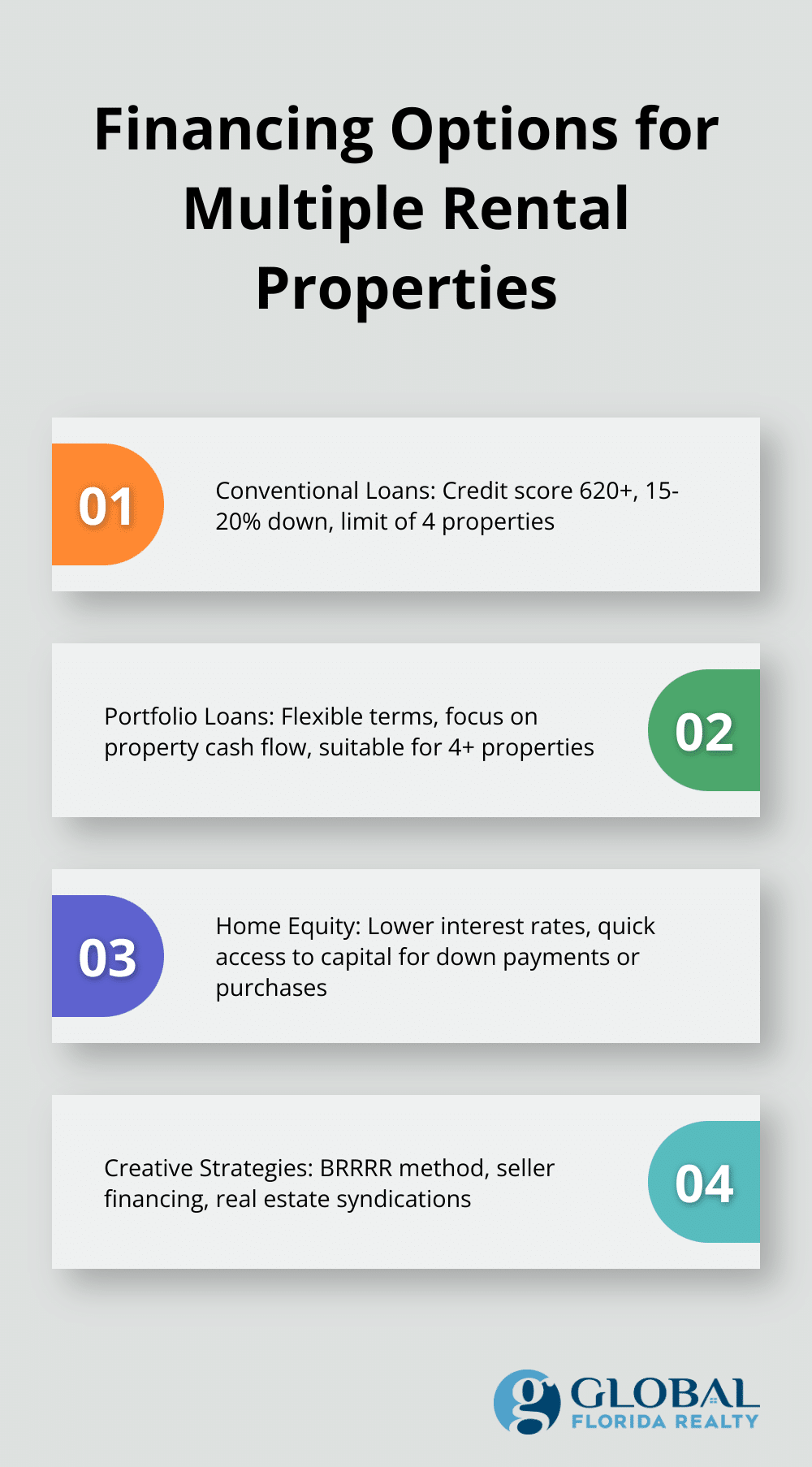
Conventional loans serve as a starting point for many investors. These loans typically require a credit score of at least 620 and a down payment of 15-20%. Most lenders cap conventional loans at four properties per borrower. After reaching this limit, you’ll need to explore alternative financing options.
Portfolio loans can be an excellent option for investors looking to expand beyond four properties. These are mortgages created by a bank or lender, then retained in their portfolio instead of being sold on the secondary market. This allows for more flexible terms. Portfolio lenders often focus more on the property’s potential cash flow rather than strict debt-to-income ratios. While interest rates may be slightly higher, the ability to finance multiple properties under one loan can streamline your investment process.
If you have significant equity in your primary residence or existing investment properties, you can tap into this resource. Home equity loans or lines of credit often offer lower interest rates compared to new mortgages. This strategy can provide quick access to capital for down payments or even full property purchases.
To maximize your chances of approval, try to maintain a credit score above 700 and keep your debt-to-income ratio below 45%. Lenders will scrutinize your existing rental income and expenses when considering additional financing.
For investors facing challenges with traditional financing, creative strategies can open new doors. One such method is the BRRRR strategy (Buy, Rehab, Rent, Refinance, Repeat). This real estate investment approach involves flipping a distressed property, renting it, and then taking out a cash-out refinance to buy other properties.
Another option is seller financing, where the property owner acts as the lender. This can be particularly useful for properties that don’t meet conventional lending standards. However, be prepared to negotiate terms and potentially offer a higher interest rate.
Partnering with other investors through real estate syndications can also help you access larger deals and spread the financial burden. Just be sure to clearly define roles and expectations in a written agreement.
Understanding these financing options and maintaining a strong financial profile will position you better to build a portfolio of multiple rental properties. Each financing strategy comes with its own set of pros and cons, so it’s important to align your choices with your long-term investment goals.
Now that you’ve explored various financing options, let’s move on to the next critical step in your journey to owning multiple rental properties: finding and analyzing potential investments.
Start your search by focusing on areas with strong economic indicators. Look for cities or neighborhoods with job growth, population increases, and rising median incomes. These factors often correlate with higher rental demand and property appreciation. Orlando, for example, has seen consistent population growth (averaging 2.5% annually over the past decade), which makes it a prime market for rental investments.
Examine local rental yields. Try to find properties where the gross rental yield (annual rent income divided by property price) exceeds 8%. In Florida, cities like Jacksonville have an average apartment rent of $1495, which can offer attractive rental yields depending on property prices.
Don’t ignore emerging markets. Areas undergoing revitalization or benefiting from new infrastructure projects can offer excellent investment potential. The ongoing expansion of the SunRail commuter rail system in Central Florida, for instance, has boosted property values in previously overlooked suburbs.

Harness the power of online real estate platforms to streamline your property search. Websites like Zillow and Realtor.com offer valuable data on property histories, price trends, and neighborhood statistics. However, use these tools as a starting point, not as a substitute for thorough research.
For a more in-depth analysis, consider subscribing to professional-grade tools (such as CoStar or RealtyTrac). These platforms provide comprehensive market data and investment analytics, which can prove invaluable for serious investors.
Incorporate Geographic Information System (GIS) mapping tools into your research process. These allow you to visualize critical data points (crime rates, school district boundaries, flood zones) that can significantly impact a property’s investment potential.
Once you’ve identified a promising property, conduct rigorous due diligence. Start with a comprehensive property inspection. Hire a professional inspector to uncover any hidden issues that could affect your investment.
Review local zoning laws and regulations. Ensure the property can legally operate as a rental and check for any upcoming changes that might impact its value or rentability. Some Florida cities have recently implemented stricter regulations on short-term rentals, which could affect your investment strategy.
Analyze the property’s financial performance. For existing rentals, request detailed records of income and expenses for at least the past two years. Calculate the net operating income (NOI) and cap rate to assess the property’s profitability. A cap rate between 4% and 10% is generally considered good, depending on the local market and property type.
Research the property’s history. Look for any liens, encumbrances, or legal issues that could complicate your purchase. A title search can reveal these potential red flags.
While online tools and data analysis are invaluable, nothing beats local market knowledge. Consider partnering with a reputable local real estate agency (like Global Florida Realty) that specializes in investment properties. These professionals can provide insights into neighborhood trends, upcoming developments, and off-market opportunities that might not be visible through online research alone.
Local experts can also help you navigate the complexities of Florida’s diverse real estate markets, from beachfront condos to suburban single-family homes. Their on-the-ground experience can prove invaluable in identifying properties with the best potential for long-term appreciation and consistent rental income.
To maximize your investment, it’s crucial to understand how to navigate capital gains on Florida real estate. This knowledge can help you make informed decisions about when to buy, hold, or sell your rental properties for optimal financial outcomes.
To manage multiple properties effectively, you must standardize your processes. Create a uniform system for tenant screening, lease agreements, and maintenance requests. This consistency will save time and reduce errors. Use a standardized rental application form across all your properties to simplify the screening process.
Implement a centralized system to track rent payments, expenses, and maintenance schedules. QuickBooks or specialized property management software can help you keep all financial records in one place. This organization proves invaluable during tax season and helps you quickly identify which properties perform well and which need attention.
Technology can significantly ease the burden of managing multiple properties. Property management software can automate many tasks, from rent collection to maintenance requests. These platforms often include features like online rent payments, which can increase on-time payments.
Use smart home technology to your advantage. Smart locks eliminate the need for physical key handovers and make it easier to grant access for maintenance visits. Smart thermostats can help reduce energy costs, potentially saving money per year per property.
As your portfolio grows, you should consider hiring a professional property management company. While this comes at a cost, it can free up your time and potentially lead to better property performance. A good property manager will handle tenant screening, rent collection, maintenance, and even legal issues.
If you decide to go this route, choose carefully. Look for a company with a proven track record in your specific market. Asking questions and educating yourself about local property managers’ services and expertise will help you choose the right company to manage your rental units.
Establishing relationships with reliable contractors is essential for efficient property management. Create a network of plumbers, electricians, HVAC specialists, and general handymen who can respond quickly to maintenance issues. This proactive approach can save you money in the long run by addressing small problems before they become major repairs.
Try to negotiate discounted rates with these professionals for regular work. Some property owners report saving on maintenance costs by building long-term relationships with contractors.
Prompt maintenance not only keeps your tenants happy but also protects your investment.

Managing multiple rental properties requires a systematic approach and the right tools. By streamlining operations, leveraging technology, considering professional management, and building a reliable maintenance network, you can effectively oversee your real estate investments and maximize their potential.
Investing in multiple rental properties offers a powerful strategy to build long-term wealth and generate passive income. You can navigate the complexities of purchasing and managing a property portfolio with the right approach. We at Global Florida Realty provide expert guidance on how to purchase multiple rental properties, from exploring financing options to implementing efficient management systems.
The benefits of real estate investing extend beyond steady cash flow from rental income. Property appreciation, tax advantages, and inflation protection contribute to a diversified investment portfolio. Our team specializes in high-demand areas like Orlando and can help you find perfect investment properties, including vacation rentals near popular attractions.
Take the first step towards building your real estate empire today. Global Florida Realty stands ready to support you through every stage of your investment journey. With our expertise in property management, marketing, and complex transactions, you can successfully create a lasting financial legacy through multiple rental property investments.