
Owning rental properties can be a powerful way to build wealth and generate passive income. At Global Florida Realty, we’ve helped countless investors start their journey into the world of real estate.
This guide will walk you through the essential steps on how to start owning rental properties, from understanding market trends to navigating the purchase process. Whether you’re a first-time investor or looking to expand your portfolio, we’ll provide you with practical insights to make informed decisions in the Florida rental market.
Florida’s rental market offers a wide array of options. Single-family homes dominate suburban areas, while condos and apartments are prevalent in urban centers. Vacation rentals near attractions (like Disney World) also see high demand. Each property type presents unique advantages and considerations.
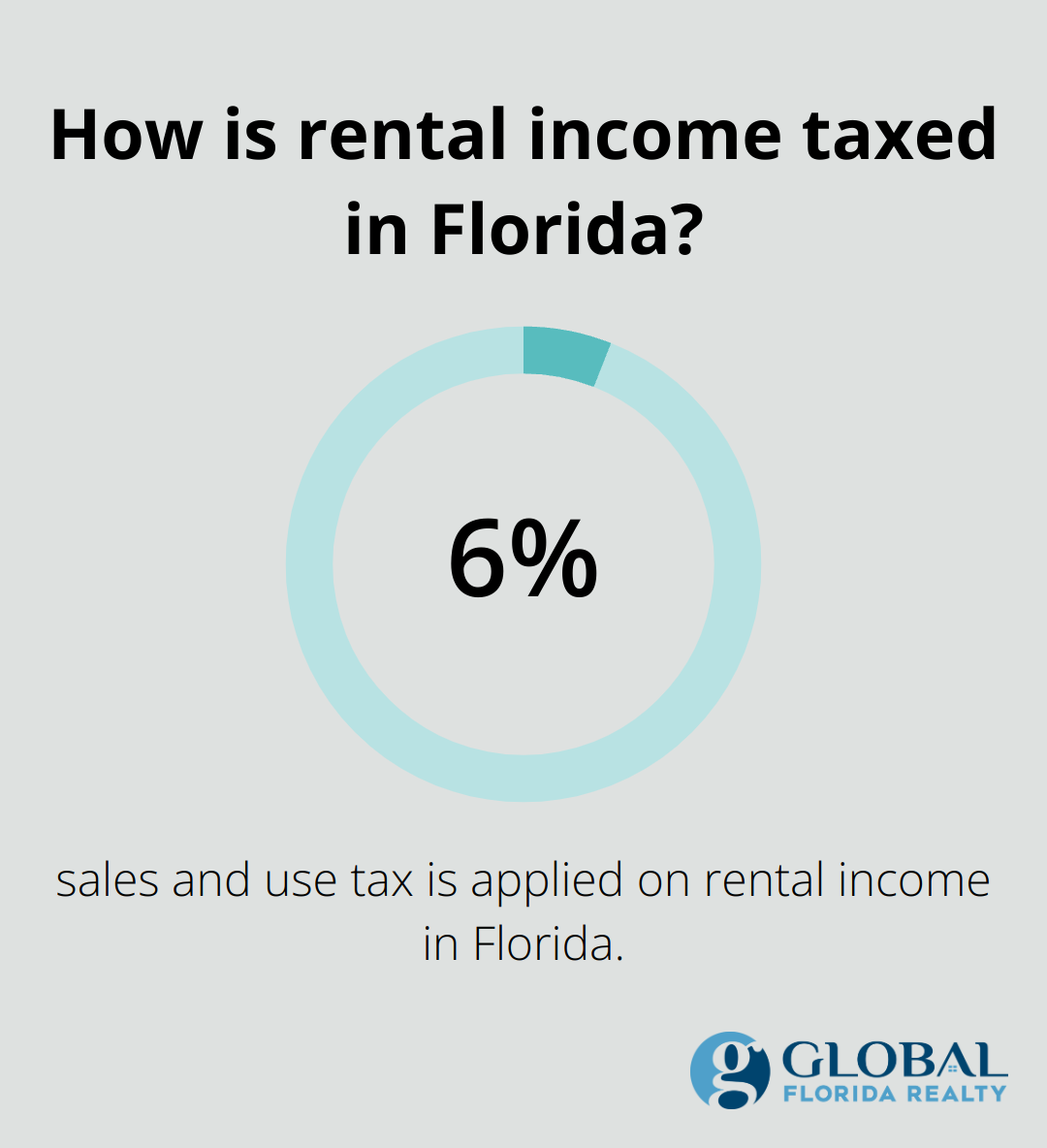
Investing in Florida rental properties can prove a smart financial move. The state’s population growth fuels steady housing demand. This growth, paired with Florida’s rental tax policy, which includes a 6% sales and use tax on rental income, attracts both residents and investors.
The Florida rental market exhibits several noteworthy trends:
Understanding these market dynamics is key to making informed investment decisions. Investors should consider:
The Florida rental market offers numerous opportunities, but it also requires careful navigation. Working with a knowledgeable real estate agency (such as Global Florida Realty) can provide valuable insights and support throughout your investment journey. As we move forward, let’s explore the financial considerations that come with rental property ownership.
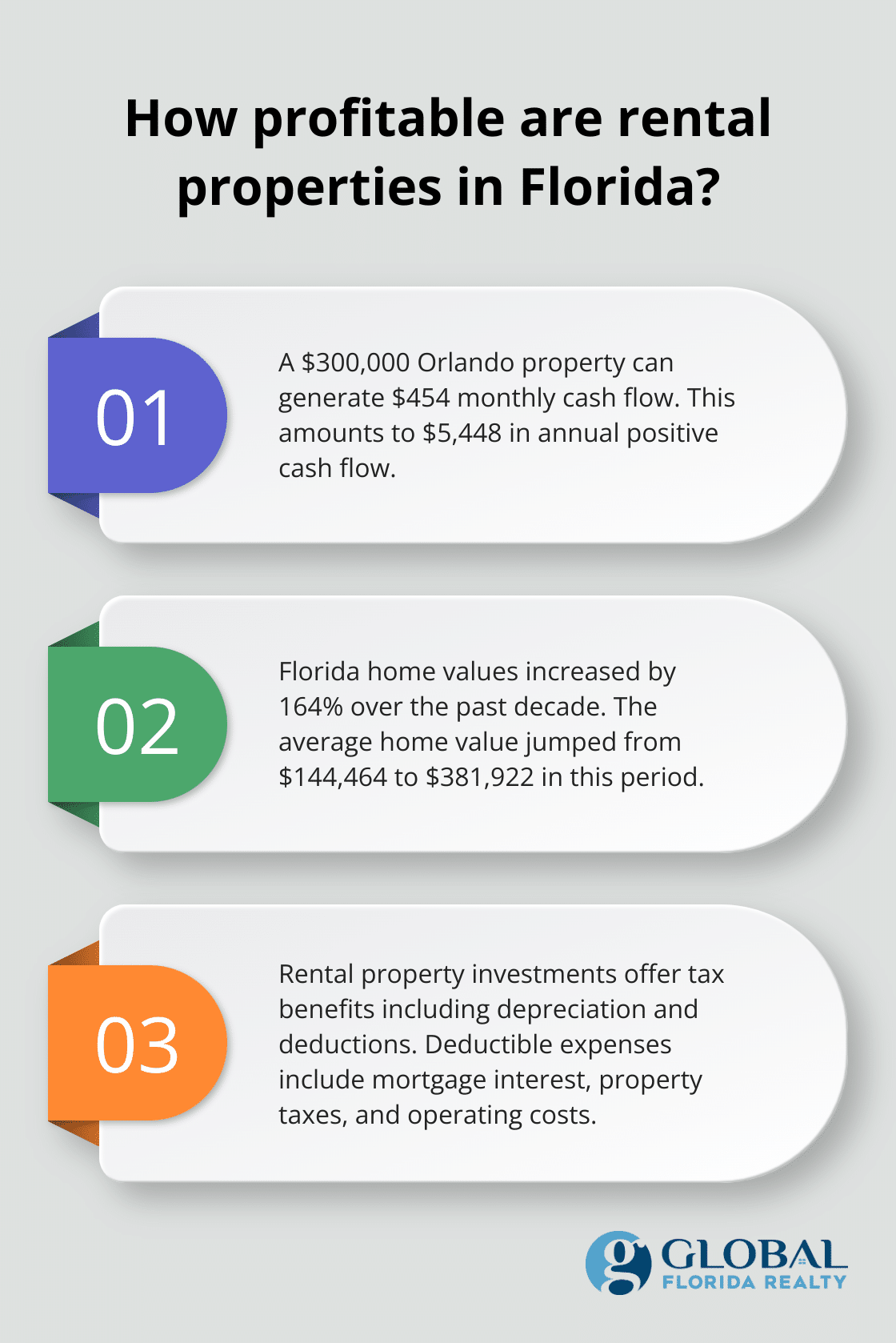
Rental property investments can provide substantial returns. Two key metrics to focus on are cash flow and appreciation. Cash flow represents the money left after paying all expenses, including mortgage, taxes, insurance, and maintenance. Try to find properties that generate positive cash flow immediately.
Let’s look at an example:
In this scenario, you’d have a positive cash flow of $454 monthly or $5,448 annually.
Appreciation refers to the increase in property value over time. While not guaranteed, Florida’s real estate market has shown strong appreciation rates historically. A decade ago, the average home in Florida was valued at $144,464. Last year, that value had jumped 164% to $381,922.
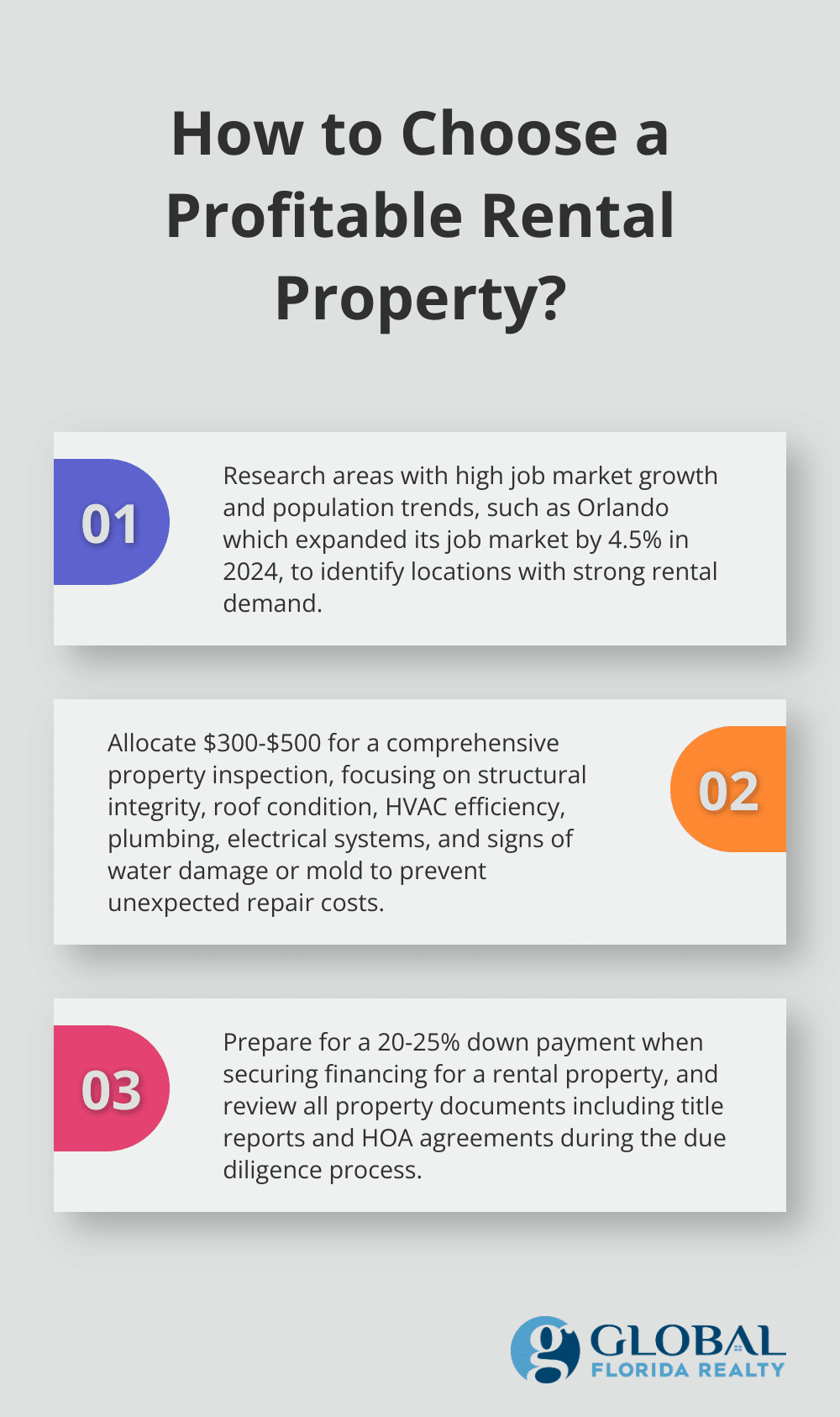
Securing financing for a rental property typically requires a larger down payment than for a primary residence (usually 20-25%). Your credit score and debt-to-income ratio will significantly impact your loan terms.
Consider these financing options:
Owning rental properties offers several tax benefits that can boost your overall returns:
Tax laws can be complex and change frequently. It’s advisable to consult with a tax professional to ensure you maximize your deductions while staying compliant with IRS regulations.
To make informed investment decisions, consider these factors:
The Florida rental market offers numerous opportunities, but it also requires careful navigation. Working with a knowledgeable real estate agency can provide valuable insights and support throughout your investment journey. As we move forward, let’s explore the practical steps to acquire your first rental property in Florida’s dynamic real estate market.
Location plays a critical role in real estate investing. Florida offers numerous attractive areas for rental property investment. Focus on regions with robust economic indicators and growing populations. For instance, Orlando’s job market expanded by 4.5% in 2024, surpassing the national average. This growth indicates increased rental demand.
When evaluating potential locations, consider these factors:
The U.S. Census Bureau’s website provides valuable demographic data. Local economic development offices often offer insights into upcoming projects that could impact property values.
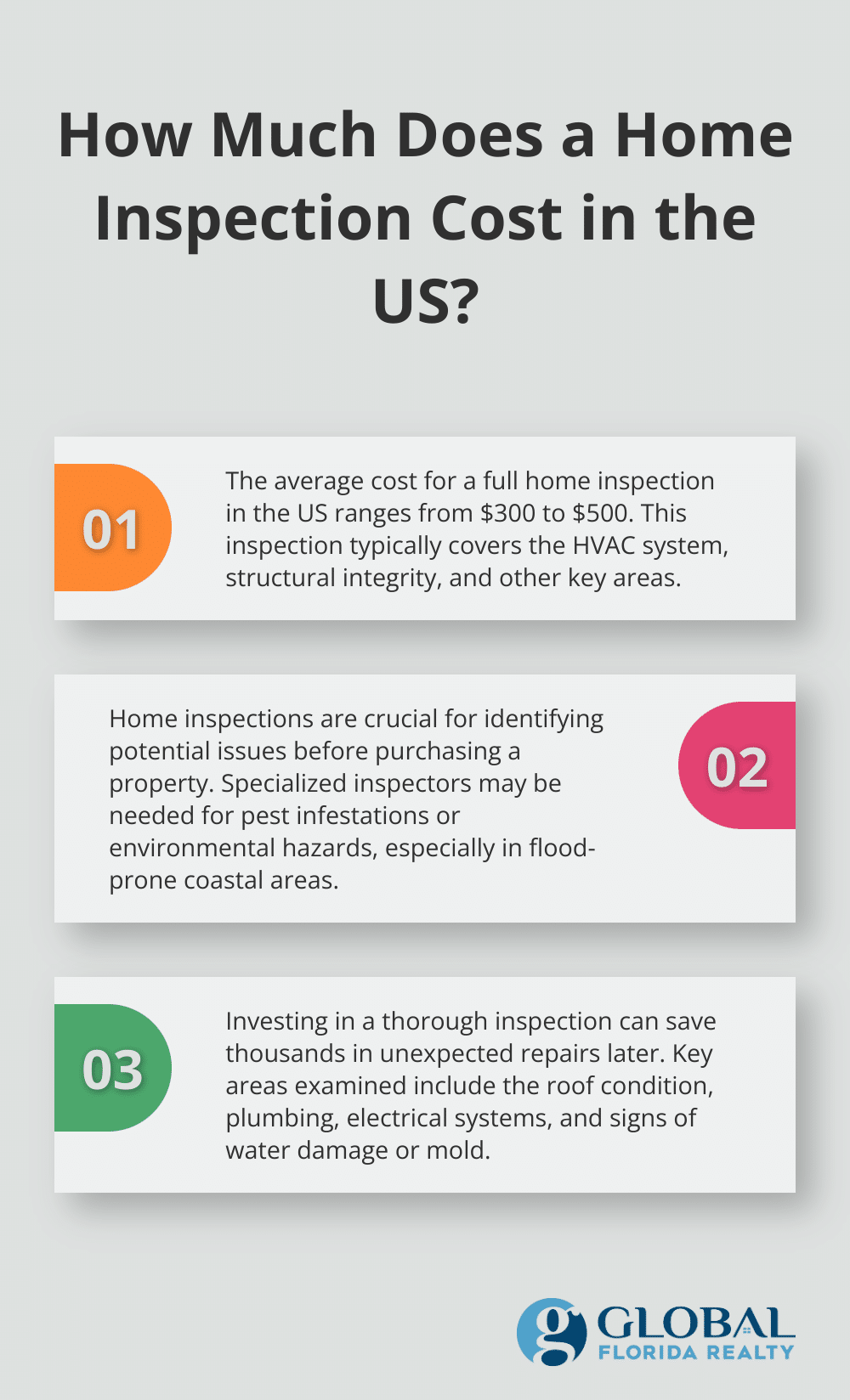
After identifying a promising property, conduct a thorough inspection. On average, homeowners spend between $300 and $500 for a full home inspection that covers the HVAC (heating, ventilation, and air conditioning) system. This investment can prevent thousands in unexpected repairs later.
Key areas to examine during the inspection include:
Consider hiring specialized inspectors for pest infestations or environmental hazards, especially in coastal areas prone to flooding.
The final step involves closing the deal. This process can challenge first-time investors. Follow this simplified roadmap:
Throughout this process, an experienced real estate agent can provide invaluable assistance. They offer market insights, negotiate on your behalf, and guide you through complex real estate transactions.
Choosing the right real estate agency can significantly impact your investment journey. Global Florida Realty, with its extensive experience in the Florida market, offers comprehensive support for investors. Their team can streamline your path to becoming a rental property owner, from identifying promising properties to navigating the closing process.
Patience serves as a key virtue in real estate investing. Avoid rushing into a purchase that doesn’t meet your criteria. Careful planning and due diligence position you well to make a sound investment in your first rental property.
Rental property ownership offers an exciting path to financial growth. You can generate passive income, benefit from property appreciation, and enjoy tax advantages when you start owning rental properties. The Florida real estate market continues to evolve, presenting opportunities for investors who make strategic decisions.
Successful rental property ownership demands patience, diligence, and continuous learning. You must stay informed about market trends, maintain your properties well, and adapt to changing tenant needs. These actions will help you build a thriving rental property portfolio that provides long-term financial stability and growth.
Global Florida Realty can guide you through every step of the investment process. Our team offers expertise in identifying promising properties and managing investments for optimal returns. We provide comprehensive services for buying, selling, and investing in Florida real estate to support your journey in rental property ownership.