
Are rental properties a good investment? This question is on the minds of many potential investors. At Global Florida Realty, we’ve seen firsthand the potential benefits and challenges of rental property investments.
In this post, we’ll explore the pros and cons of investing in rental properties, as well as strategies for success in this market.
Rental properties offer a unique blend of financial benefits that attract many investors. The potential for wealth building through strategic rental property investments is significant.
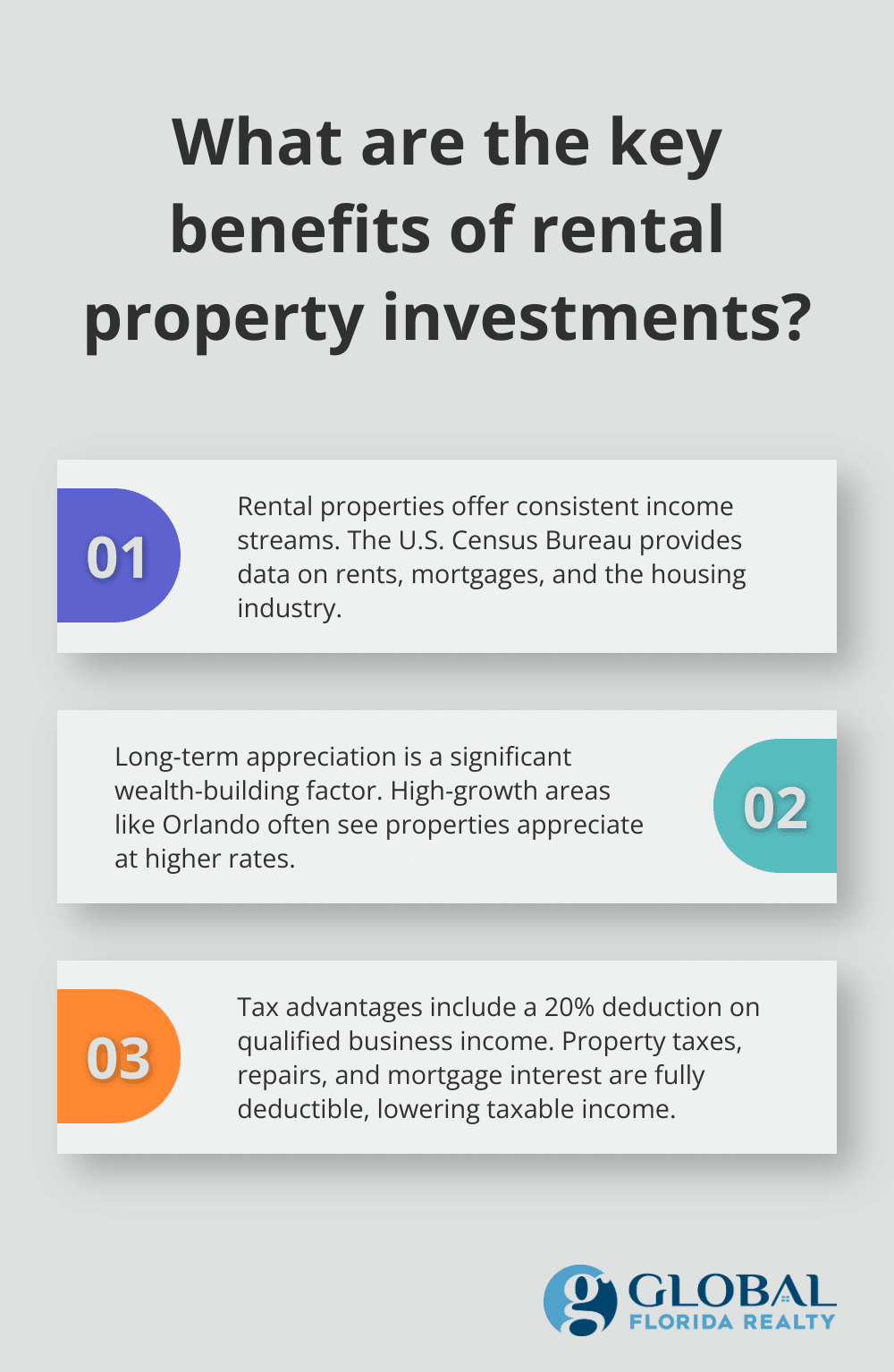
One of the primary advantages of rental properties is the potential for steady cash flow. The U.S. Census Bureau provides a wide range of data on American homes, including information on rents, mortgages, and the housing industry. This vast market provides ample opportunities for investors to generate regular income.
In Florida, tourism drives demand for short-term rentals. Property owners near attractions like Disney often see higher returns. Vacation rentals frequently report occupancy rates well above the national average, which translates to stronger cash flow.
While cash flow matters, the real wealth-building potential of rental properties lies in long-term appreciation. High-growth areas like Orlando often see properties appreciate at even higher rates.
The tax benefits of rental property ownership are substantial. The Tax Cuts and Jobs Act allows a deduction of up to 20% of qualified business income for owners of some businesses, with limits applying based on various factors. Additionally, expenses such as property taxes, repairs, and mortgage interest are fully deductible, which lowers taxable income.
One of the most powerful tax advantages is depreciation. The IRS allows rental property owners to deduct the value loss of their property over 27.5 years, effectively sheltering a portion of rental income from taxes. This combination of deductions and depreciation often results in significant tax savings for property owners.
As rental income pays down the mortgage, property owners build equity. This forced savings mechanism is a key component of long-term wealth building through real estate.
Moreover, current low fixed-rate mortgages allow investors to leverage their capital effectively. A 20% down payment on a rental property could potentially yield a return on invested cash when appreciation equals inflation.
The benefits of rental property investments are clear, but it’s important to consider the potential drawbacks as well. Let’s examine some of the challenges investors might face when venturing into the rental property market.
Investing in rental properties isn’t all smooth sailing. The potential for profit exists, but understanding the challenges is essential. Let’s explore some of the less glamorous aspects of rental property ownership.
The initial cost of buying a property is just the beginning. The average annual cost of owning and maintaining a single-family home in the U.S. is more than $18,000 a year – 26 percent higher now compared to four years ago. For rental properties, these costs can escalate due to increased wear and tear from tenants.

Unexpected repairs can quickly erode profits. A new roof, HVAC system, or major plumbing issue can cost thousands of dollars. Many experienced landlords set aside between $3,000 (1% rule) and $12,000 (50% rule) annually for maintenance.
Landlords often work around the clock. From screening tenants to handling maintenance requests, the time commitment can overwhelm. Many investors underestimate the work involved in managing a property effectively.
If you hire a property manager to handle these tasks, prepare to pay for the service. Property managers typically charge between 8% and 12% of collected rents. While this frees up your time, it also reduces your profits.
Even with thorough screening, difficult tenants can slip through the cracks. Late rent payments, property damage, and evictions are all potential issues landlords face. The eviction process can drag on for months and cost thousands of dollars to resolve.
Understanding local landlord-tenant laws is vital. Mistakes in this area can lead to legal troubles and financial penalties. Staying current with these regulations requires ongoing education and vigilance.
Real estate markets can prove unpredictable. Economic downturns, changes in local job markets, or shifts in neighborhood desirability can all impact your property’s value and rental income potential. The COVID-19 pandemic, for example, dramatically affected rental markets across the country (with some areas seeing significant drops in demand and rental rates).
Interest rates also play a crucial role in the profitability of rental properties. Rising rates can increase borrowing costs, potentially turning a profitable investment into a money-losing venture. It’s important to factor in potential rate increases when calculating the long-term viability of an investment.
These challenges may seem daunting, but they’re not insurmountable. The next section will explore strategies for overcoming these obstacles and maximizing your chances of success in the rental property market.
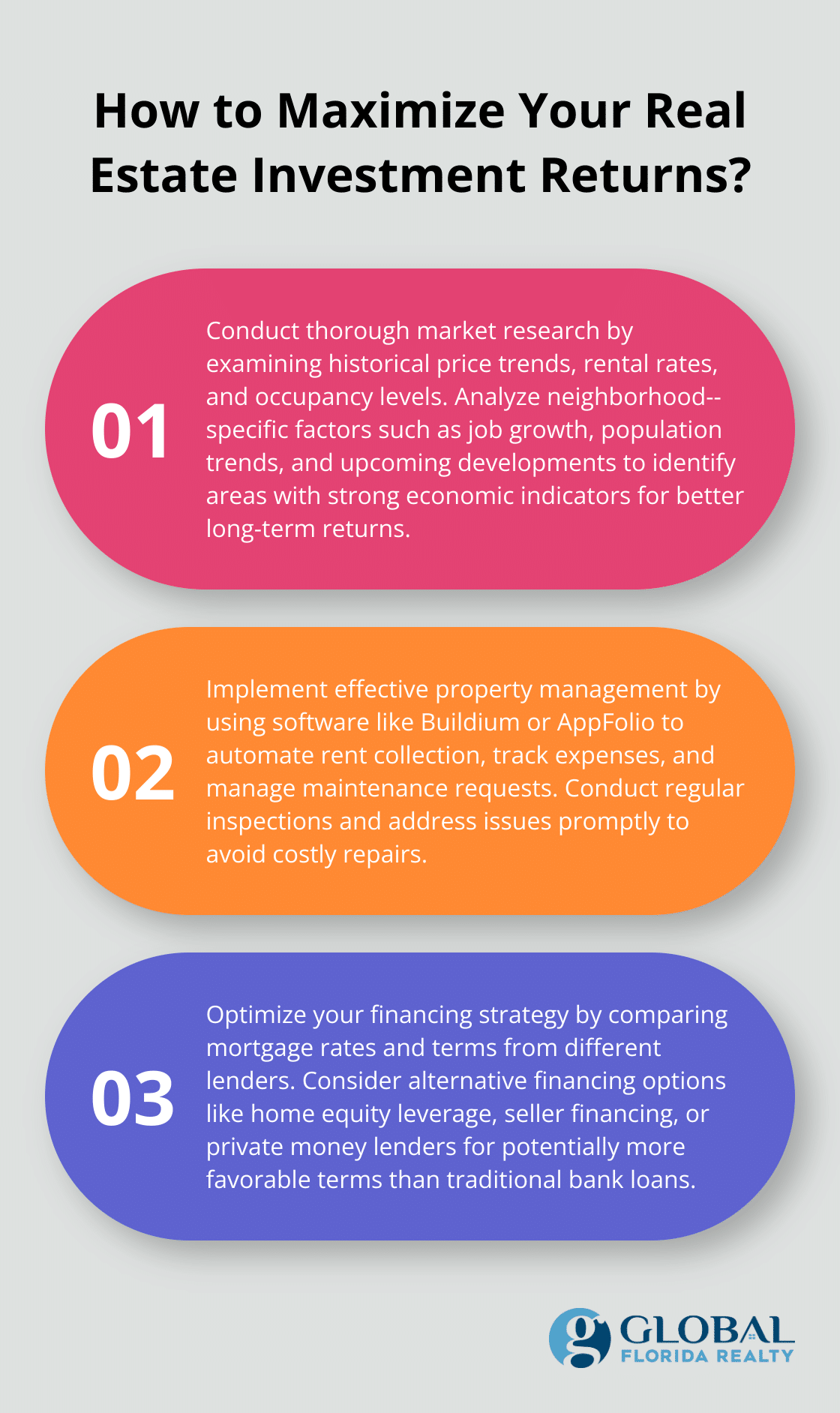
Success in rental property investing starts with comprehensive market research. Investors should examine historical price trends, rental rates, and occupancy levels. The National Association of Realtors offers valuable data on market conditions across the U.S. In Orlando, the average rent for an apartment is currently $2181, which represents a 2% increase compared to the previous year.

Investors must analyze neighborhood-specific factors such as job growth, population trends, and upcoming developments. Areas with strong economic indicators often yield better long-term returns.
Successful property management maximizes returns. Investors should implement a rigorous tenant screening process to reduce the risk of problematic renters.
Preventative maintenance helps avoid costly repairs. Regular inspections and prompt issue resolution are essential.
Property management software can streamline operations. Tools like Buildium or AppFolio automate rent collection, track expenses, and manage maintenance requests.
Smart financing significantly impacts an investment’s profitability. Investors should compare mortgage rates and terms.
Home equity leverage or creative financing options like seller financing or private money lenders can sometimes offer more favorable terms than traditional bank loans.
Investors must factor in all costs when calculating potential returns.
Diversification reduces risk in rental property investing. Investors should consider different types of rental properties (single-family homes, multi-unit buildings, commercial spaces) and locations. Adding global real estate may improve portfolio performance due to its potentially more segmented nature.
Rental property investors must stay current on local landlord-tenant laws and tax regulations. These laws can significantly impact profitability and legal compliance. Investors should consult with legal and tax professionals to ensure they understand their obligations and take advantage of all available tax benefits.
Rental properties can offer lucrative investment opportunities, but they come with their own set of challenges. The potential for steady cash flow, long-term appreciation, and tax benefits attracts many investors. However, high initial costs, ongoing expenses, and management responsibilities present significant hurdles.
Success in rental property investing requires careful planning and thorough research. Investors must understand local market conditions, implement effective property management strategies, and stay informed about legal and tax issues. These factors play a crucial role in maximizing returns and minimizing risks.
At Global Florida Realty, we help investors navigate the complexities of the rental property market. Our expertise in Florida real estate, particularly in desirable areas like Orlando, proves invaluable for those looking to build wealth through rental properties. Whether you’re interested in short-term vacation rentals or long-term leasing opportunities, we guide you through every step of the process.