
At Global Florida Realty, we know that understanding the various types of rental properties is essential for both investors and tenants.
The rental market offers a diverse range of options, each with its own unique advantages and challenges.
In this post, we’ll explore different types of rental properties, from single-family homes to multi-family units and vacation rentals.
Single-family homes stand out as independent residential properties designed for one household. These rentals typically include a yard, garage, and private entrance, offering tenants unparalleled independence and privacy.
For tenants, single-family homes provide expansive living spaces and freedom. Families often prefer these rentals for extra bedrooms, larger living areas, and outdoor spaces (perfect for children and pets). A 2024 survey by the National Rental Home Council revealed that 31% of renters live in single-family homes, with annual rent increases averaging 4.4% in Q4 2024.

Landlords benefit from longer-term tenants and potentially higher rental income. The Urban Institute reports that single-family rentals often command 15-17% higher rents than comparable apartments. This premium reflects the added value tenants place on the privacy and space these properties offer.
Maintaining a single-family home requires more effort than other rental types. Landlords must handle all aspects of property upkeep, from lawn care to major repairs. The National Association of Residential Property Managers recommends a budget of 1-4% of the property’s value annually for maintenance costs.
This responsibility also presents opportunities. Well-maintained properties attract quality tenants and justify higher rents. Properties with recent upgrades (such as energy-efficient appliances or smart home features) can command up to 5-10% higher rents in markets like Orlando.
Single-family homes often appreciate more than other property types. The average home value in the United States is $357,138, up 2.6% over the past year, showcasing the potential for long-term value growth.
Location plays a crucial role in appreciation. Areas with strong job markets, good schools, and desirable amenities tend to see faster price growth. For instance, cities like Orlando have seen consistent appreciation due to their robust tourism industry and expanding job market.
Investors should weigh immediate cash flow against long-term appreciation. While some markets offer strong rental yields, others may provide better prospects for property value increases over time. Aligning your investment strategy with your financial goals and risk tolerance proves essential.
As we move from single-family homes to multi-family properties, we’ll explore how economies of scale and diversified rental income can change the investment landscape.
Multi-family properties transform the rental landscape. These buildings, which include duplexes, triplexes, and larger apartment complexes, offer unique advantages for investors and tenants alike.
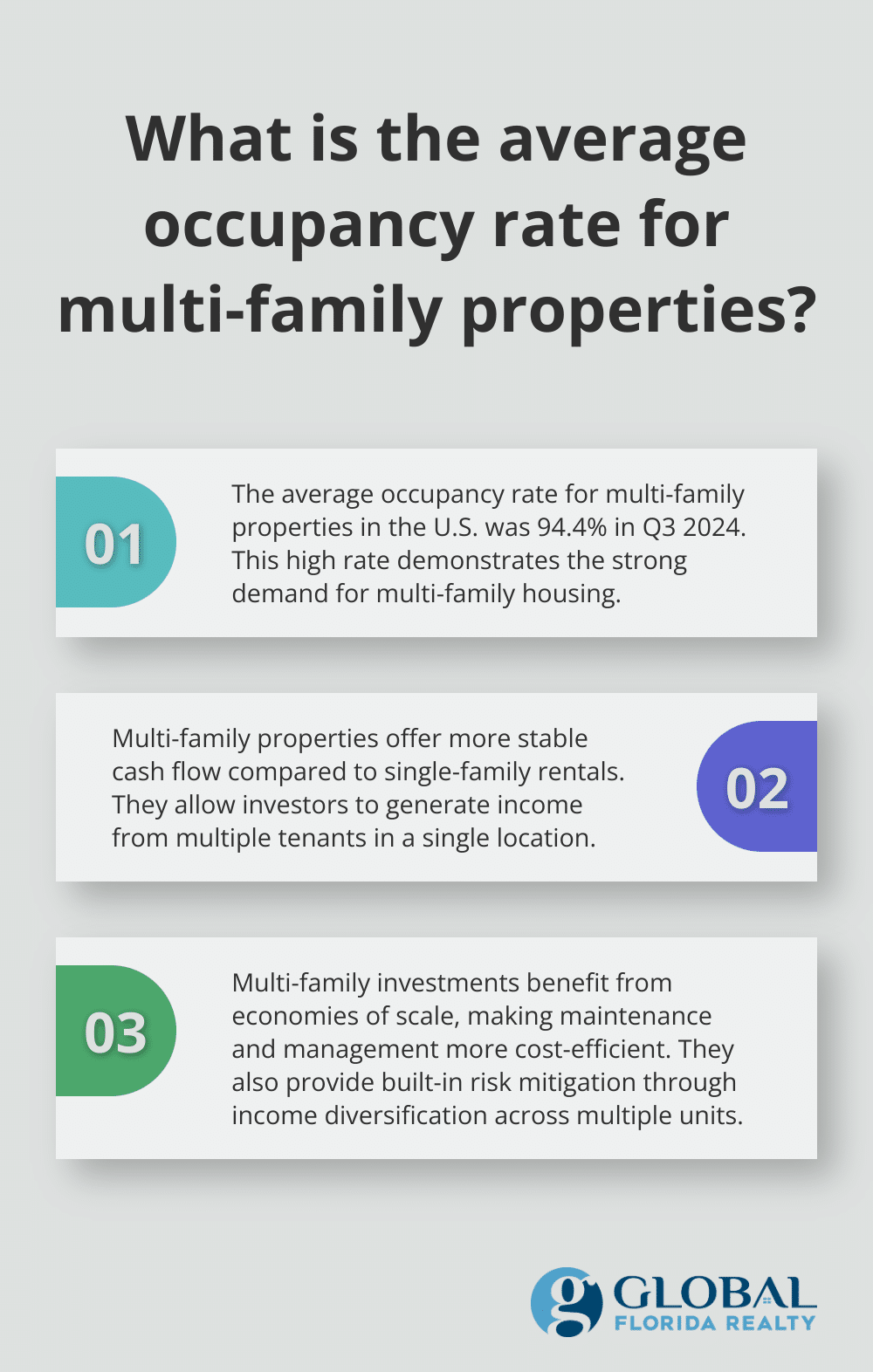
Multi-family properties allow investors to generate income from multiple tenants in a single location. This setup creates a more stable cash flow compared to single-family rentals. The National Multifamily Housing Council reports an average occupancy rate of 94.4% for multi-family properties in the U.S. in Q3 2024, highlighting their strong demand.
One of the biggest perks of multi-family investments is their cost-efficiency. Maintenance, repairs, and property management become more economical when spread across multiple units.
Multi-family properties inherently diversify rental income. If one unit remains vacant, income from other units can cover expenses. This built-in risk mitigation attracts investors, especially during uncertain economic times.
While multi-family properties offer numerous benefits, they also present unique management challenges. Dealing with multiple tenants, coordinating maintenance across units, and ensuring compliance with local multi-family housing regulations can complicate operations.
To address these challenges, many investors turn to professional property management services.
The multi-family sector evolves rapidly. Trends like smart home technology integration and amenity-rich communities reshape tenant expectations.
Investors who want to capitalize on these trends should focus on properties that can be easily upgraded or those already incorporating modern amenities. In markets like Orlando, multi-family properties near employment centers or popular attractions often command premium rents and enjoy high occupancy rates.
As we shift our focus to vacation rentals, we’ll explore how short-term rental strategies can complement a diverse real estate portfolio and tap into the lucrative tourism market.
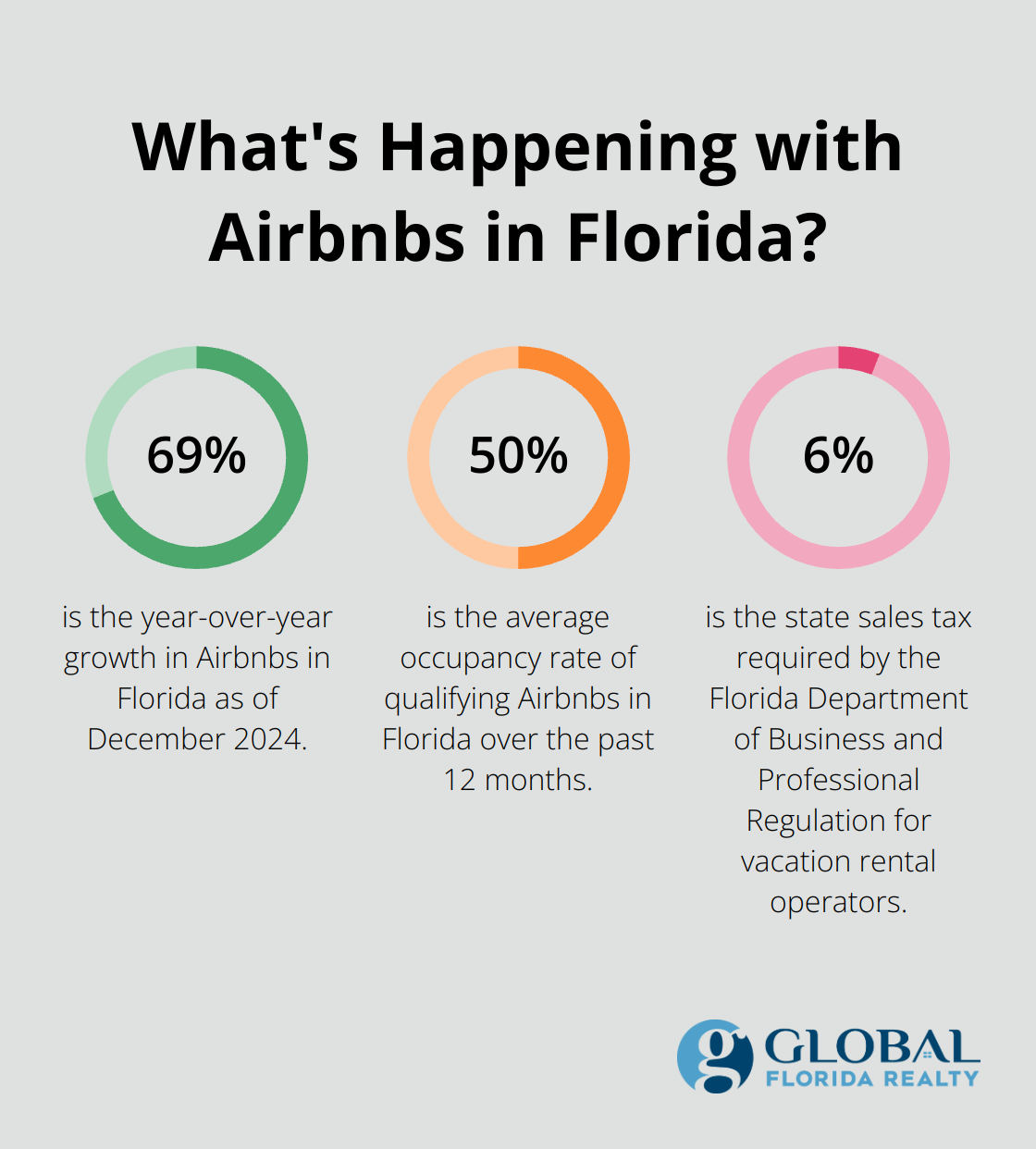
Florida’s vacation rental market has exploded, offering investors a lucrative opportunity to tap into the state’s thriving tourism industry. As of December 2024, there are 324 qualifying Airbnbs in Florida, with an average occupancy rate of 50% over the past 12 months and a year-over-year growth in Airbnbs of 69%.
Orlando stands out as a top destination for vacation rentals, thanks to its world-famous theme parks and year-round attractions. Properties near Disney World, Universal Studios, and SeaWorld command premium rates, especially during peak seasons. Coastal areas like Miami Beach, Fort Lauderdale, and the Florida Keys also attract high-paying guests seeking sun and sand.
In these prime locations, well-maintained properties with amenities like pools, hot tubs, and proximity to attractions can fetch nightly rates 30-50% higher than standard long-term rentals. A three-bedroom vacation home near Disney World can generate an average of $200-$300 per night during peak seasons (compared to $1,500-$2,000 per month for long-term rentals).
Florida’s vacation rental market experiences significant seasonal fluctuations. The peak season typically runs from December to April, with a secondary surge during summer months. Smart investors use dynamic pricing strategies to maximize returns during these high-demand periods.
Tools like PriceLabs and Beyond Pricing help automate rate adjustments based on real-time market data, potentially increasing revenue by 10-20%. During off-peak seasons, offering discounted extended stays or targeting business travelers can help maintain occupancy rates and cash flow.
The regulatory environment plays a critical role in vacation rental success in Florida. While the state generally supports short-term rentals, local regulations vary significantly. Miami Beach imposes strict zoning restrictions and hefty fines for violations, while Orlando maintains a more permissive stance.
Investors must research local ordinances, obtain necessary licenses, and comply with tax requirements. The Florida Department of Business and Professional Regulation requires vacation rental operators to obtain a license and pay a 6% state sales tax, plus any applicable local taxes.
To maximize investment potential in Florida’s vacation rental market, investors should:
The vacation rental market in Florida offers significant potential for savvy investors. With careful property selection, strategic pricing, and regulatory compliance, vacation rentals can yield returns far exceeding traditional long-term rentals.
The rental property market offers diverse opportunities for investors. Single-family homes, multi-family properties, and vacation rentals each present unique advantages and challenges. Investors must consider their financial goals, risk tolerance, and management capabilities when selecting a strategy.

Location remains a critical factor across all types of rental properties. Areas with strong job markets, desirable amenities, and tourism appeal often yield better returns and appreciation potential. Thorough market research and due diligence prove essential for success in any rental property investment.
Global Florida Realty offers expert guidance for investors navigating the complex Florida real estate market. Their comprehensive services help investors find profitable opportunities across various types of rental properties. The rental property market continues to evolve, influenced by changing demographics, technology, and economic factors.