
Tax yield investments in Florida offer a unique opportunity for real estate investors seeking to maximize returns while enjoying tax benefits. At Global Florida Realty, we’ve seen growing interest in this investment strategy among our clients.
This blog post will explore the ins and outs of tax yield investments in the Sunshine State, including their benefits, key considerations, and how to get started.
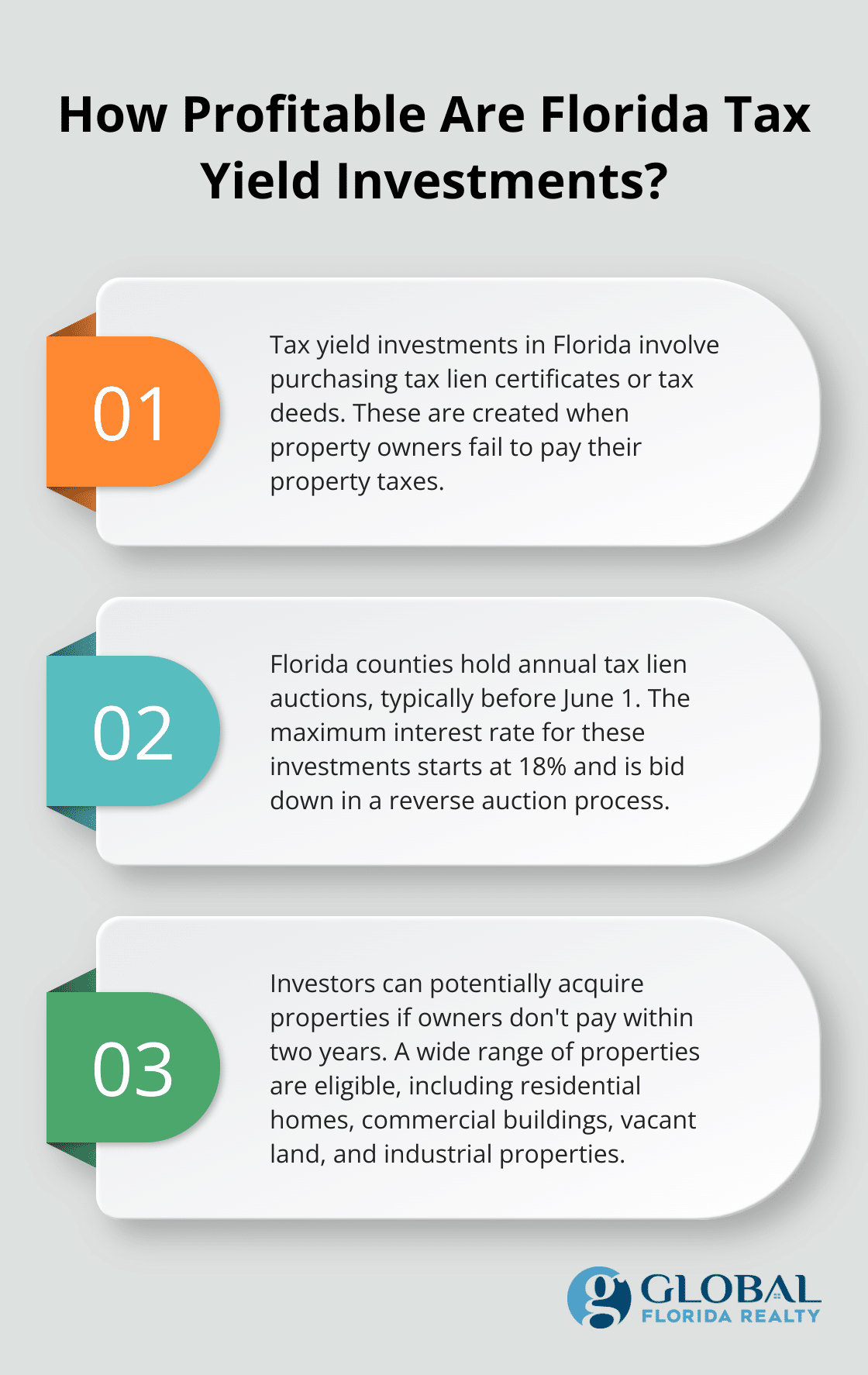
Tax yield investments in Florida represent a strategic approach to real estate investing that capitalizes on the state’s unique tax laws and property market dynamics. These investments typically involve the purchase of tax lien certificates or tax deeds, which are created when property owners fail to pay their property taxes.
In Florida, when property taxes remain unpaid, the county issues a tax lien certificate. These certificates are then auctioned to investors. The winning bidder pays the delinquent taxes and receives the right to collect that amount plus interest from the property owner. If the owner doesn’t pay within a specified period (usually two years in Florida), the investor can initiate foreclosure proceedings and potentially acquire the property.
A wide range of properties can be subject to tax liens in Florida. These include:
Residential homes
Commercial buildings
Vacant land
Industrial properties
Florida counties hold tax lien auctions annually, typically on or before June 1. These auctions increasingly take place online, which facilitates investor participation. The bidding process in Florida is unique – it’s a reverse auction where investors bid down the interest rate they’re willing to accept, starting from a maximum of 18%.
Successful investors often focus on specific counties or property types to develop expertise and maximize their returns. For example, some investors have found success targeting tax liens on vacation properties in popular tourist areas (which often have higher property values and tax rates).
While tax yield investments can offer attractive returns, they also come with risks. Investors must conduct thorough due diligence on properties before bidding. This includes:
Assessing the property’s value
Checking for other liens or encumbrances
Understanding local market conditions
As we move forward to explore the benefits of tax yield investments, it’s important to understand how these potential rewards stack up against the associated risks and required effort.
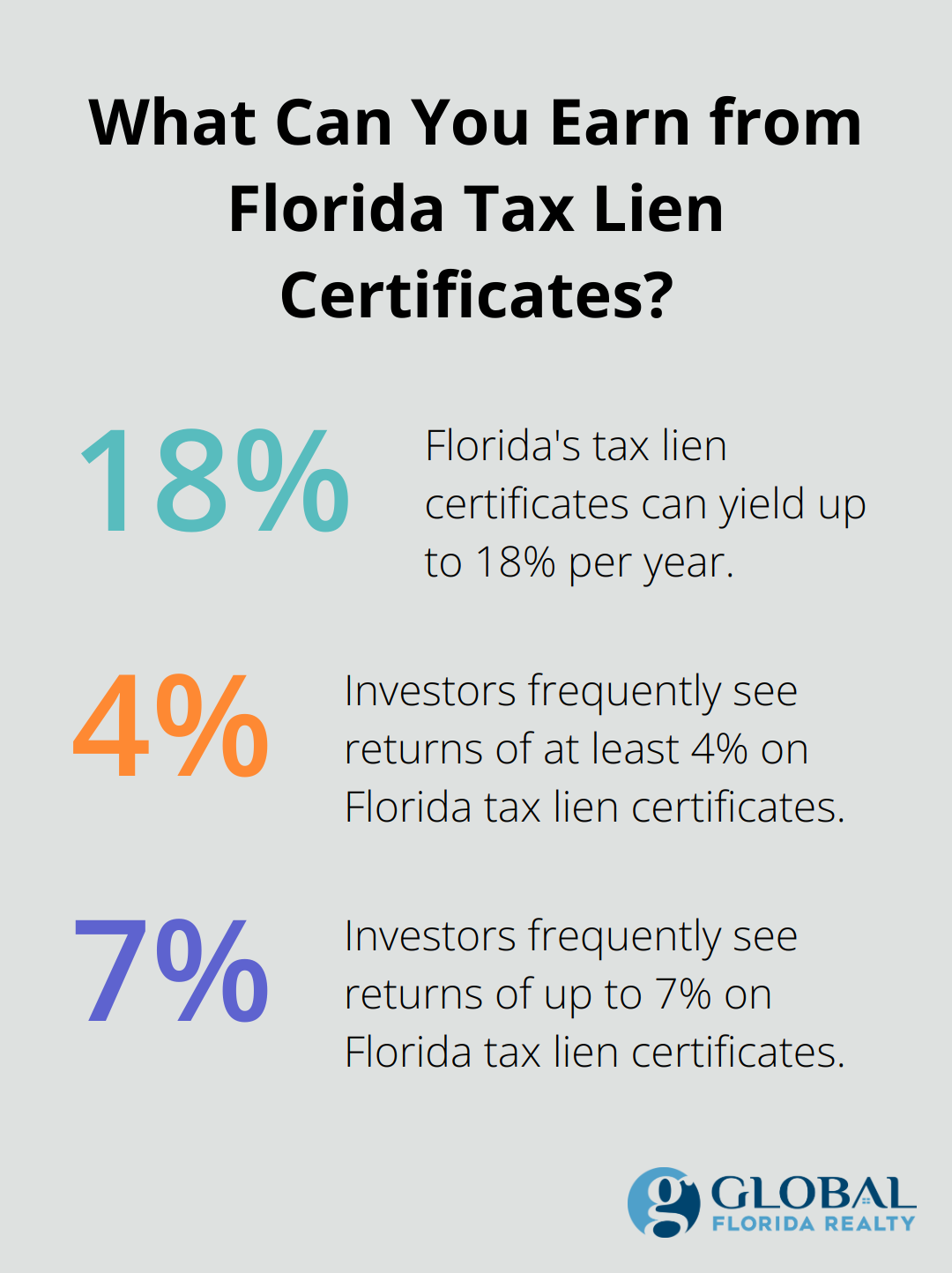
Tax yield investments in Florida offer investors a chance to earn substantial returns. Florida’s tax lien certificates can yield up to 18% per year, which outperforms many traditional investment vehicles. While competitive bidding often reduces the average return, investors still frequently see returns between 4% to 7%. This rate surpasses current savings account rates or many bond yields. For example, Miami-Dade County’s 2023 tax lien auction saw an average winning bid of around 6.5% (according to county records).
The inherent security of tax yield investments appeals to many investors. The property itself backs the investment, which reduces the risk of total loss. If a property owner fails to redeem the certificate, the investor can foreclose and acquire the property, often at a fraction of its market value. Investors who purchase property tax liens earn their profit through payments of back taxes plus interest by the property owner.
Tax yield investments allow investors to diversify beyond traditional stocks and bonds. They provide exposure to the real estate market without the need for direct property ownership or management. This strategy can attract investors who want to balance their portfolio with assets that have low correlation to stock market fluctuations.
Unlike purchasing properties outright, investors can acquire tax lien certificates for relatively small amounts. In Florida, certificates can start as low as a few hundred dollars, which makes this investment strategy accessible to a wide range of investors. This low entry point allows for easy diversification across multiple certificates and properties.
While most tax liens are redeemed, the small percentage that aren’t can lead to property acquisition. In Florida’s 2022 fiscal year, approximately 1.2% of tax lien certificates resulted in tax deed applications (as reported by the Florida Department of Revenue). This presents an opportunity for investors to acquire properties at significant discounts to market value.
As we move forward to explore the key factors to consider when engaging in tax yield investments, it’s important to understand how these potential benefits interact with the specific characteristics of the Florida real estate market.
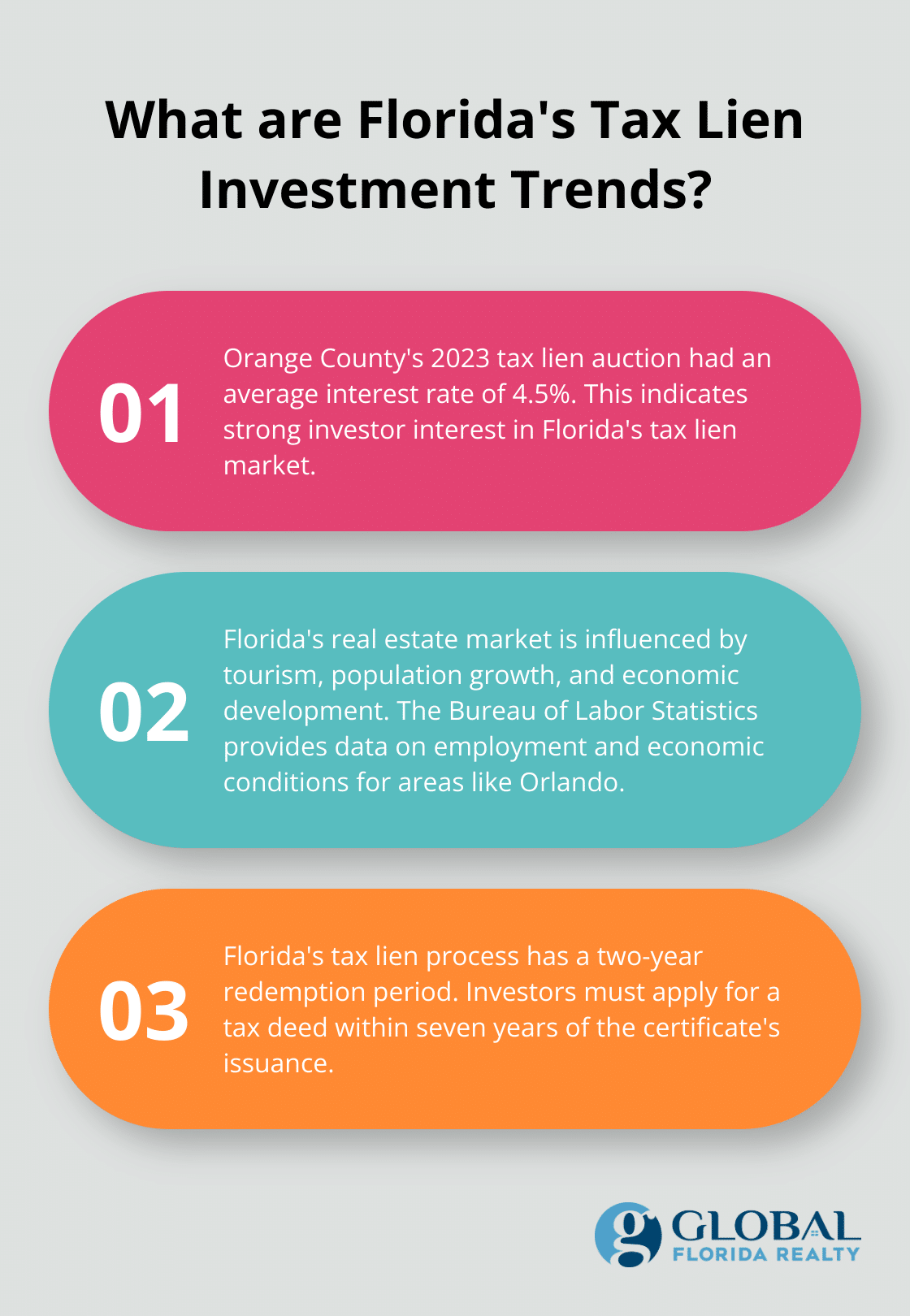
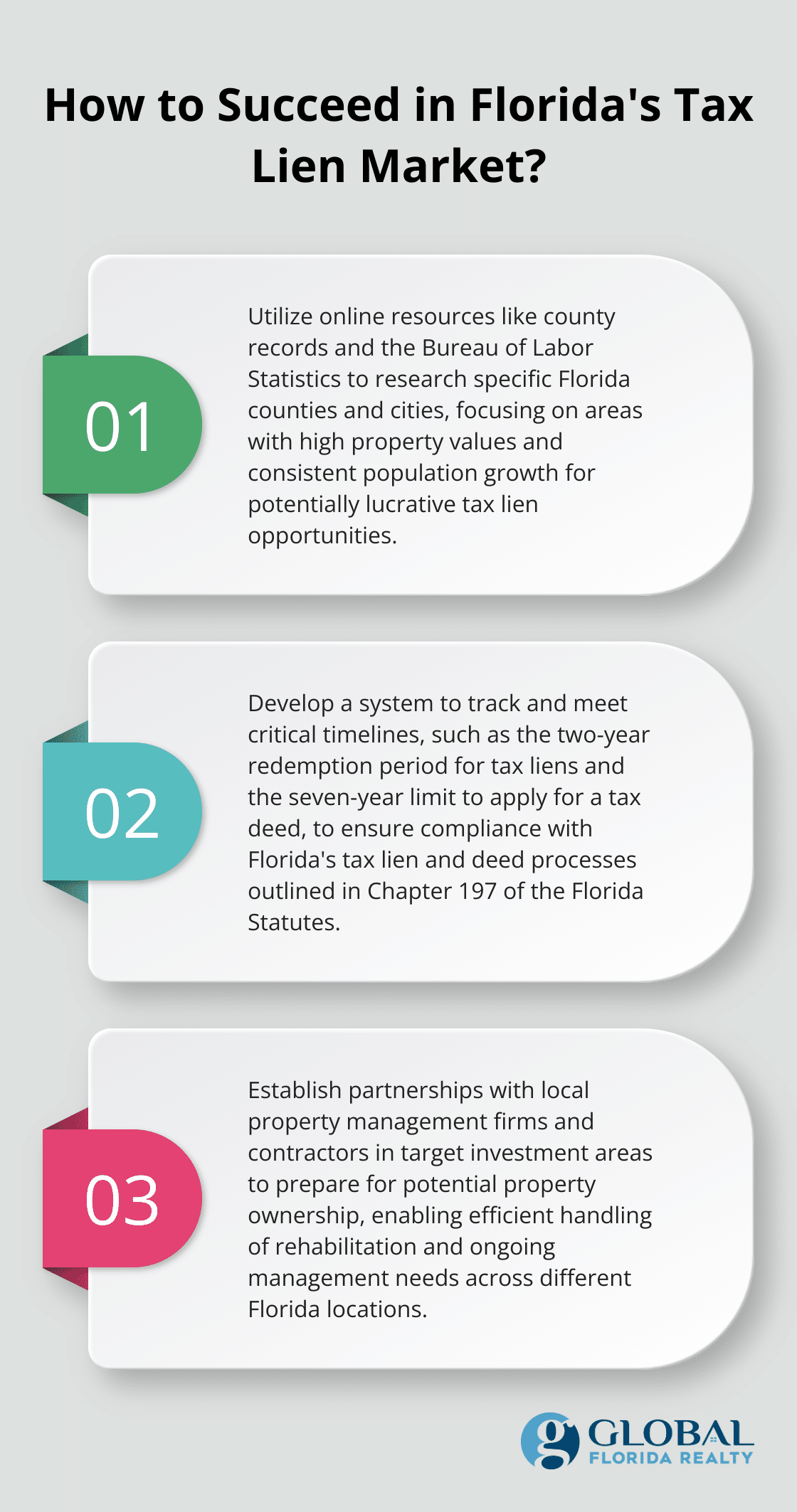
Location plays a central role in tax yield investments. Florida’s diverse real estate market offers varying opportunities across different areas. Counties with high property values and consistent population growth (such as Orange County and Miami-Dade) often present attractive tax lien opportunities. In 2023, Orange County’s tax lien auction saw an average interest rate of 4.5% (according to county records), indicating strong investor interest.
Savvy investors often target up-and-coming neighborhoods or areas slated for development. Areas near new infrastructure projects or expanding business districts can offer hidden gems. The key is to use local knowledge and market data to identify properties with strong appreciation potential.
Broader economic trends significantly influence investment decisions. Florida’s real estate market responds to factors such as tourism, population growth, and economic development initiatives. Florida’s QuickFacts provide statistics for all states and counties, as well as cities and towns with a population of 5,000 or more.
Investors should monitor local employment rates, median income levels, and new business formations. These indicators can signal areas poised for growth and increased property values. The Bureau of Labor Statistics provides geographically based survey data on employment, unemployment, prices, living conditions, compensation, and working conditions for the Orlando area.
Florida’s tax lien and deed processes follow specific laws and regulations that investors must understand thoroughly. Chapter 197 of the Florida Statutes outlines the procedures for tax certificate sales and redemptions. Investors need to know critical timelines, such as the two-year redemption period for tax liens and the requirement to apply for a tax deed within seven years of the certificate’s issuance.
Recent legal developments can impact investment strategies. The 2023 U.S. Supreme Court decision in Tyler v. Hennepin County has implications for how excess proceeds from tax foreclosures are handled, potentially affecting investor returns in some cases. Staying informed about such legal changes is essential to mitigate risks and maximize returns.
Tax lien investments don’t always result in property ownership, but investors should prepare for this possibility. This preparation includes considering the potential costs of property rehabilitation and ongoing management. In Florida’s humid climate, vacant properties can deteriorate quickly, leading to significant repair expenses.
For those who acquire properties through tax deed sales, understanding the local rental market becomes important. Short-term vacation rentals in tourist hotspots like Orlando or Miami can offer high returns but require more intensive management. Long-term rentals in residential areas might provide more stable income with less day-to-day involvement.
Successful investors often partner with local property management firms or develop a network of reliable contractors. This approach allows them to capitalize on opportunities across the state without geographic constraints or management limitations.
Tax yield investments in Florida offer investors a unique opportunity to diversify portfolios and earn attractive returns. These investments provide high yield potential, built-in security, and the possibility to acquire properties below market value. Investors must conduct thorough research on local markets, property conditions, and regulations to mitigate risks and capitalize on promising opportunities.
Expert guidance proves invaluable when navigating the complexities of tax yield investments in Florida. Global Florida Realty brings extensive experience in Florida’s real estate market to assist investors. Our team understands local market dynamics and offers comprehensive services to help investors make informed decisions.
We support investors interested in tax lien certificates, tax deeds, or other real estate investment opportunities in Florida. Our expertise covers the full spectrum of real estate investment needs (from property identification to asset management). Tax yield investments in Florida remain an intriguing option for investors seeking substantial returns and long-term growth in the state’s dynamic property market.