
At Global Florida Realty, we often encounter clients weighing their investment options. The debate between rental properties vs. stock market investments is a common one.
Both avenues offer unique advantages and potential drawbacks. In this post, we’ll explore the key differences to help you make an informed decision about which path aligns best with your financial goals.
Rental properties offer a powerful way to build wealth and secure your financial future. The advantages of investing in rental properties are numerous and compelling.
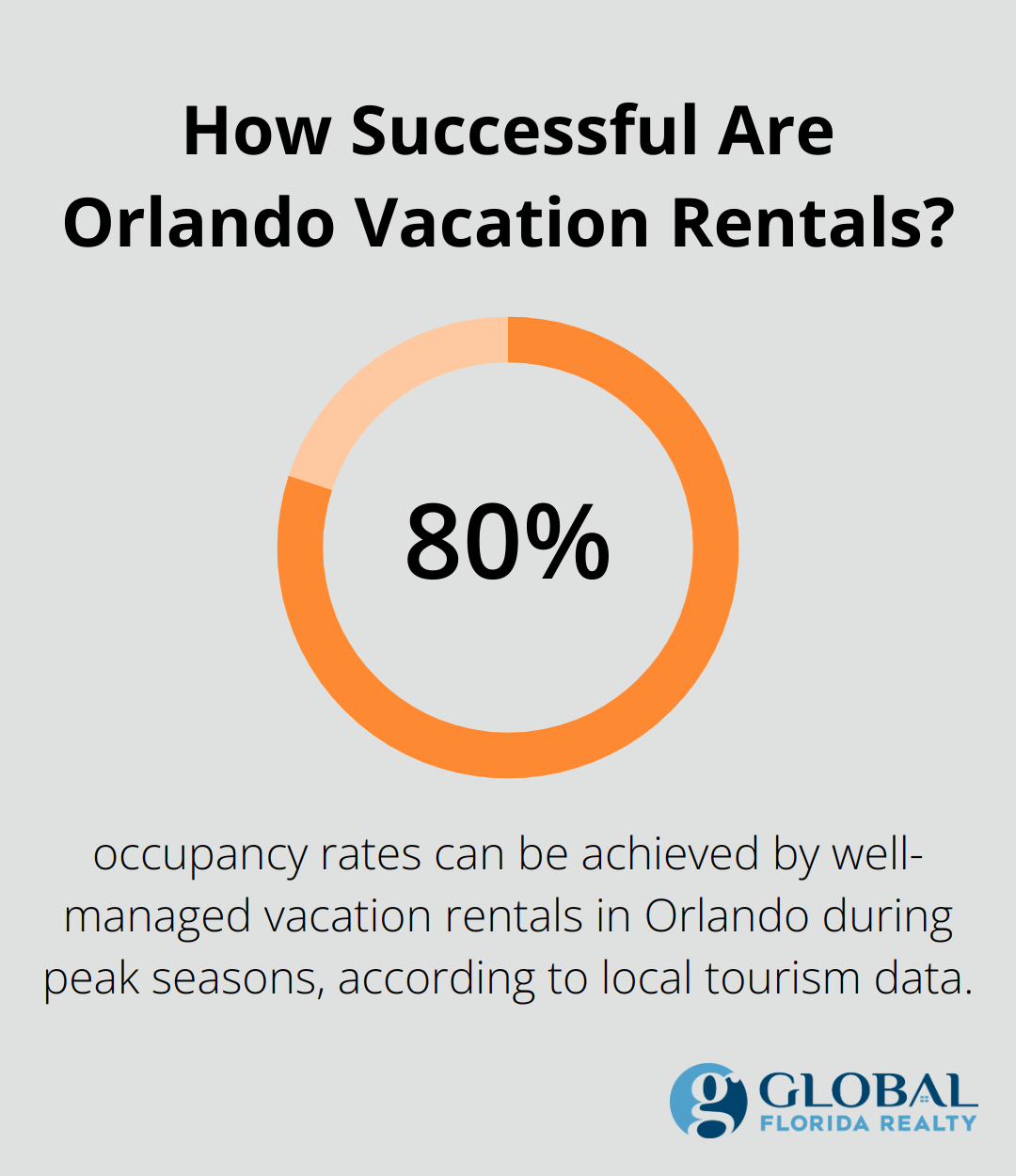
Rental properties generate a steady cash flow, unlike stocks which may or may not pay dividends. This predictable monthly income provides financial stability. In Florida, where tourism thrives, short-term rentals near attractions like Disney can yield even higher returns. Well-managed vacation rentals in Orlando can achieve occupancy rates of up to 80% during peak seasons (according to local tourism data).
Real estate tends to appreciate over time, while the stock market can be volatile. The Federal Reserve Bank of St. Louis reports data on the All-Transactions House Price Index for the United States, which shows the long-term trend of house price appreciation. Florida’s appreciation has been even more pronounced in many areas due to population growth and limited land availability.
Rental property owners enjoy numerous tax advantages. You can deduct expenses such as mortgage interest, property taxes, insurance, maintenance, and depreciation. These deductions can significantly reduce your taxable income. According to the IRS, in the first year that you claim depreciation for residential rental property, you can claim depreciation only for the number of months the property is in use.
Real estate allows you to use leverage to amplify your returns. With as little as 20% down, you can control a property worth five times your initial investment. This means that if the property appreciates by 5%, your actual return on investment could be 25% or more when factoring in your initial down payment.
Experienced real estate professionals can help you navigate the rental property market. They can assist in identifying high-potential properties, securing financing, and managing your rentals for optimal returns. Whether you’re interested in long-term residential rentals or short-term vacation properties, expert guidance can significantly improve your chances of success in the Florida real estate market.
The benefits of rental properties are clear, but how do they compare to stock market investments? Let’s explore the advantages of investing in the stock market to provide a comprehensive comparison.
The stock market presents a set of compelling advantages for investors. A well-rounded investment strategy often includes a mix of assets, and stocks deserve consideration in your portfolio for several reasons:
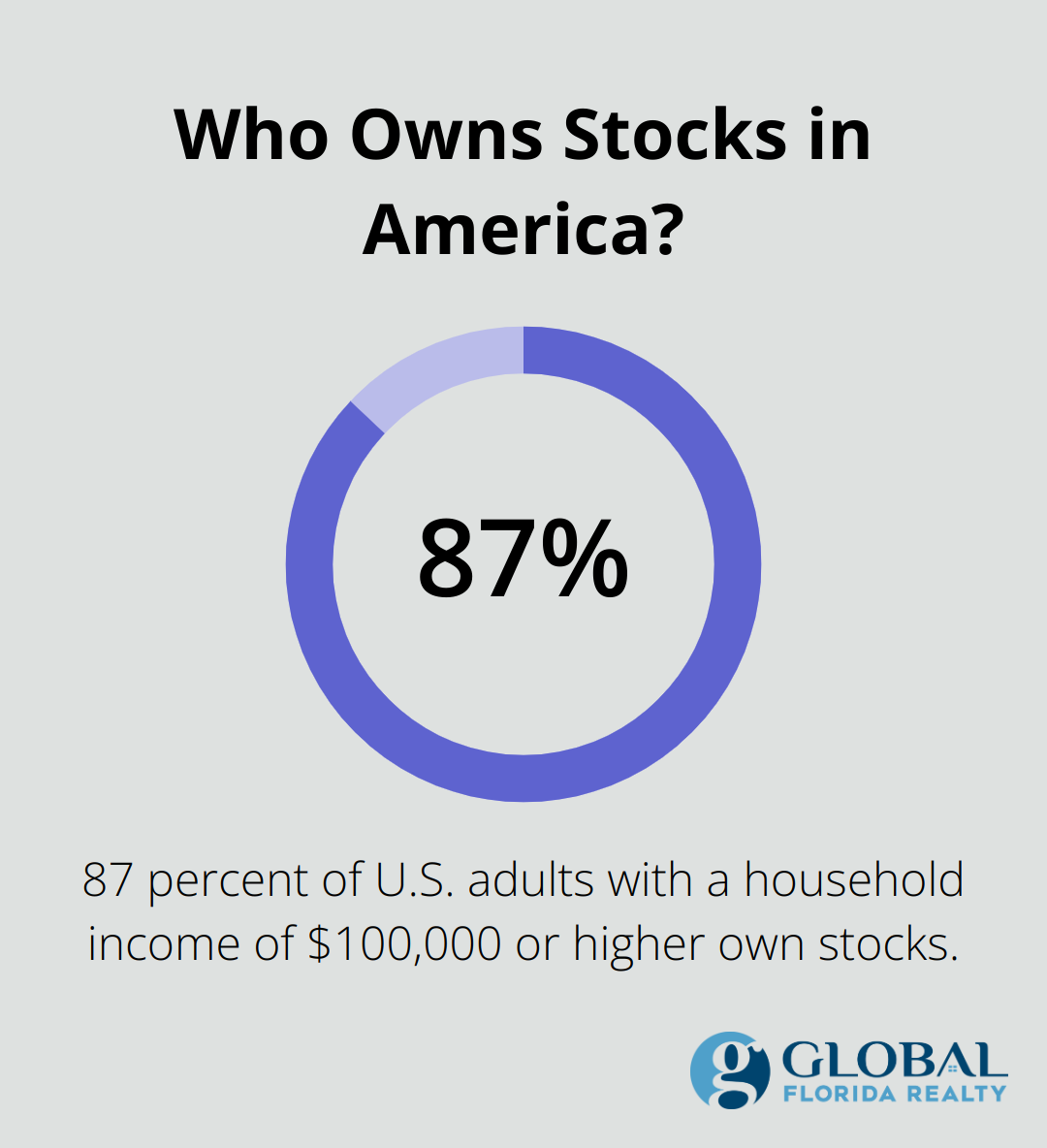
The stock market’s accessibility stands out. You can buy or sell shares from anywhere in the world with just a few clicks. This ease of trading allows you to react quickly to market changes or personal financial needs. A 2024 Gallup poll revealed that 87 percent of U.S. adults with a household income of $100,000 or higher own stocks, which demonstrates its widespread appeal among higher-income groups.
Diversification forms a cornerstone of smart investing, and the stock market simplifies this process. Investing in mutual funds or ETFs spreads your money across hundreds or thousands of companies instantly. The popular S&P 500 index fund, for example, exposes you to 500 of the largest U.S. companies across various sectors.
Unlike real estate, which often requires substantial upfront capital, you can start investing in stocks with as little as $100. Many brokerages now offer fractional shares, which allow you to own a piece of high-priced stocks (like Amazon or Google) without a large investment. This low barrier to entry makes stocks an attractive option for new investors or those with limited funds.
The stock market has historically delivered strong long-term returns. Data from NYU Stern School of Business shows that the S&P 500 has provided returns over long periods. While past performance doesn’t guarantee future results, stocks have consistently outpaced inflation over long periods.
Stocks offer superior liquidity compared to real estate. You can convert your stock holdings into cash within days (or even minutes), which provides flexibility for unexpected expenses or new investment opportunities. This liquidity advantage becomes particularly valuable during financial emergencies or when market conditions shift rapidly.
The unique benefits of stock investments complement the advantages of real estate. As we transition to comparing the risks and rewards of both investment types, it’s important to consider how these different asset classes can work together in a balanced portfolio.
Investing in real estate or stocks requires careful consideration of risk and potential returns. Different market conditions affect both investment types uniquely. Let’s examine the key factors that influence risk and reward in these asset classes.
Stock markets are known for their volatility. The S&P 500 experienced a sharp 34% drop in just 33 days during the COVID-19 pandemic in 2020. However, it rebounded quickly, demonstrating the potential for both rapid losses and gains.

Real estate, particularly in Florida, shows more stability. Florida home prices have increased by an average of 5.5% annually over the past decade (according to the Federal Housing Finance Agency). This steady growth can provide a sense of security for investors wary of market swings.
Stock investments typically require less hands-on management. Once you choose your stocks or funds, you can monitor and rebalance in a few hours per month.
Real estate demands more time and effort. Property management, tenant issues, and maintenance can consume significant resources. However, hiring a property management company alleviates this burden. In Orlando, property management fees typically range from 7% to 10% of monthly rent, allowing investors to benefit from passive income without the day-to-day hassles.
Over the long term, both real estate and stocks have shown strong performance. The S&P 500 has delivered an average annual return of about 10% since its inception in 1926.
Florida real estate has also performed well. The median home value in Orlando has increased by approximately 69% over the past five years (based on Zillow data). This growth outpaces many stock market returns during the same period.
Both investment types are influenced by economic factors, but in different ways. Interest rates directly affect mortgage costs and can impact real estate demand. When rates rise, it can cool the housing market but potentially benefit income-focused stock investments like dividend-paying stocks or REITs.
Inflation is another important factor. Real estate often serves as a hedge against inflation, as property values and rents tend to increase with rising prices. Stocks can be more vulnerable to inflationary pressures, although certain sectors may benefit.
Understanding these dynamics is key for making informed investment decisions. Whether you consider a rental property in Orlando or diversify your stock portfolio, you should weigh these factors against your personal financial goals and risk tolerance.
The rental properties vs stock market debate doesn’t have a one-size-fits-all answer. Each option offers unique advantages and challenges that suit different investor profiles and financial goals. Your choice should align with your objectives, risk tolerance, and personal circumstances.
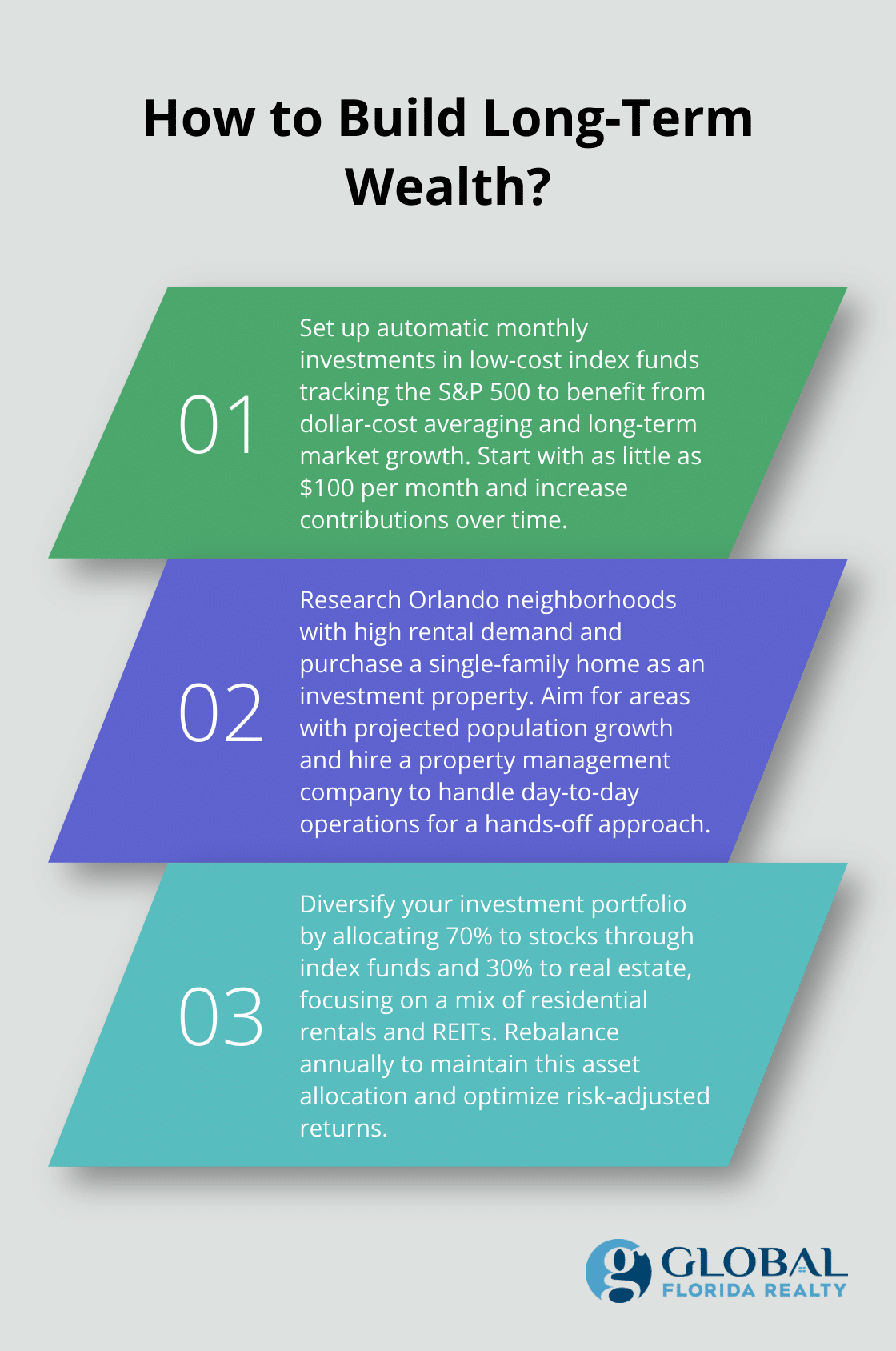
A mix of real estate and stocks can create a well-rounded portfolio that balances steady income with growth potential. We at Global Florida Realty offer expert guidance to navigate the local market for those considering real estate investments in Florida. Our team can help you identify promising rental properties, manage your investments, and maximize returns.
For personalized advice on Florida real estate investments, including rental properties near popular attractions, visit Global Florida Realty to explore how we can help you make the most of your investment journey. The best investment strategy helps you achieve your financial goals while allowing you to sleep soundly at night. You can create a robust investment approach tailored to your unique situation through careful consideration of rental properties and stocks.