
Real estate investing can be a powerful way to build wealth and secure your financial future. At Global Florida Realty, we’ve helped countless clients navigate the exciting world of investment properties.
If you’re wondering how to start buying investment properties, you’re in the right place. This guide will walk you through the essential steps, from understanding different types of investments to closing your first deal.
Investment properties are real estate assets purchased primarily to generate income or capital appreciation. Unlike your primary residence, these properties function as financial instruments to build wealth over time.
The real estate market offers various investment opportunities:

Real estate investing offers multiple avenues for financial gain:
Real estate investments come with several tax benefits:
These deductions can significantly reduce your taxable income (potentially leading to substantial savings).
When you choose an investment property, you should consider several factors:
Global Florida Realty specializes in identifying properties with strong investment potential, particularly in high-growth areas like Orlando. Our team guides investors through the process of selecting properties that align with their financial goals and risk tolerance.
As you prepare to start your investment journey, the next step involves assessing your financial situation and setting clear investment goals. This preparation will help you make informed decisions and maximize your chances of success in real estate investing.
The first step in preparing to buy investment properties involves a thorough evaluation of your financial situation. Check your credit score – try to achieve at least 620 for conventional loans (though a score of 740 or higher will secure you the best interest rates). Calculate your debt-to-income ratio (DTI). Most lenders prefer a DTI of 45% or lower for investment properties.
Save for a substantial down payment. Investment properties typically require 20-30% down, significantly higher than for primary residences. For a $300,000 property, you’ll need $60,000 to $90,000 upfront. Don’t forget closing costs, which can add another 2-5% of the purchase price.
Build a cash reserve to cover at least six months of expenses for your investment property. This safety net proves essential for handling unexpected repairs, vacancies, or market downturns.
Clear goals prove vital for successful real estate investing. Do you aim for long-term appreciation or immediate cash flow? Perhaps fix-and-flip projects interest you? Your strategy will dictate the type of properties you target and the markets you explore.
For steady income, consider long-term rentals in stable neighborhoods. If you seek higher returns and don’t mind more hands-on work, short-term vacation rentals might fit your focus. Fix-and-flip investors should look for undervalued properties in up-and-coming areas.
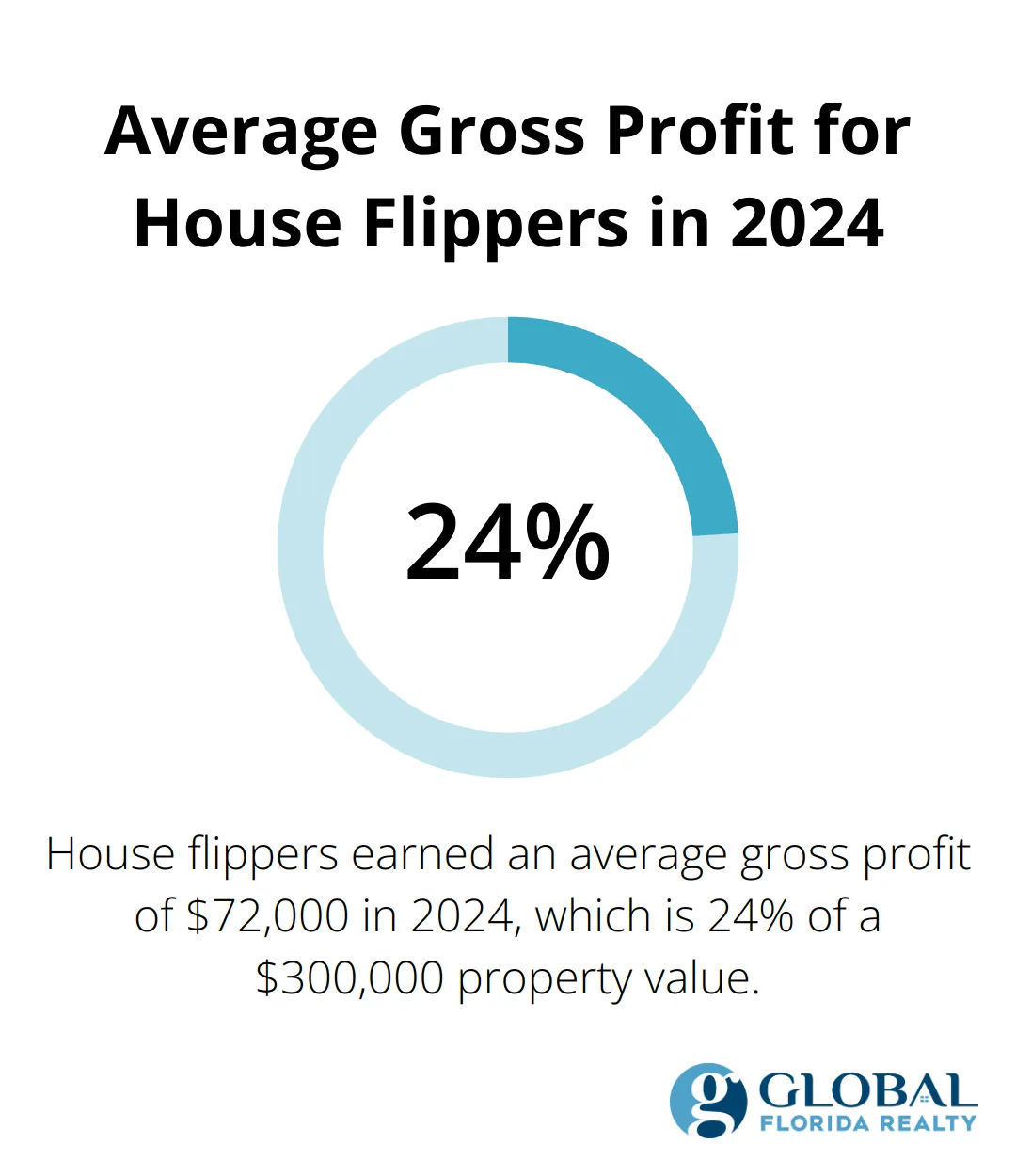
Set realistic expectations for returns. While real estate can prove lucrative, it’s not a get-rich-quick scheme. According to ATTOM Data Solutions, the average gross profit for house flippers in 2024 was $72,000.
Thorough market research proves non-negotiable. Look for areas with strong job growth, rising population, and improving infrastructure. The U.S. Bureau of Labor Statistics provides valuable data on employment trends by region.
Analyze local rent prices and vacancy rates. Ideally, monthly rent should equal at least 1% of the property’s purchase price to ensure profitability. Zillow reported that the average rent for single-family homes was $2,256 in April 2025 (but this varies widely by location).
Pay attention to neighborhood amenities, school districts, and crime rates. These factors significantly impact property values and tenant quality. Use resources like NeighborhoodScout for detailed community data.
Successful real estate investing requires a team of experts. Start by finding a realtor who specializes in investment properties. They can provide invaluable insights on local markets and help you identify promising opportunities.
A good property manager proves essential if you don’t plan to handle day-to-day operations yourself. They typically charge 8-12% of monthly rent but can save you time and headaches.
Connect with a reliable contractor for property inspections and renovations. Their expertise can help you accurately estimate repair costs and avoid expensive surprises.
Lastly, consult with a tax professional familiar with real estate investments. They can guide you on maximizing tax benefits and structuring your investments efficiently.
With your financial assessment complete, investment strategy defined, market research conducted, and professional network in place, you’re ready to take the next step: finding and analyzing potential investment properties. This process requires careful consideration and due diligence to ensure you make a sound investment decision.
Start your search by using multiple listing services (MLS) and online real estate platforms. These tools offer comprehensive listings and often include key metrics like price history and estimated rental income. Don’t limit yourself to online searches. Drive through target neighborhoods to spot “For Sale” signs and potential off-market deals.
Network with local real estate agents, particularly those who specialize in investment properties. They often have insider knowledge of upcoming listings and can provide valuable insights into neighborhood trends. Attend local real estate investor meetings to connect with experienced investors and potentially find off-market deals.
Consider foreclosures and bank-owned properties as potential investment opportunities. These properties often sell below market value, providing room for appreciation. The U.S. Department of Housing and Urban Development (HUD) regularly lists foreclosed homes on their website.
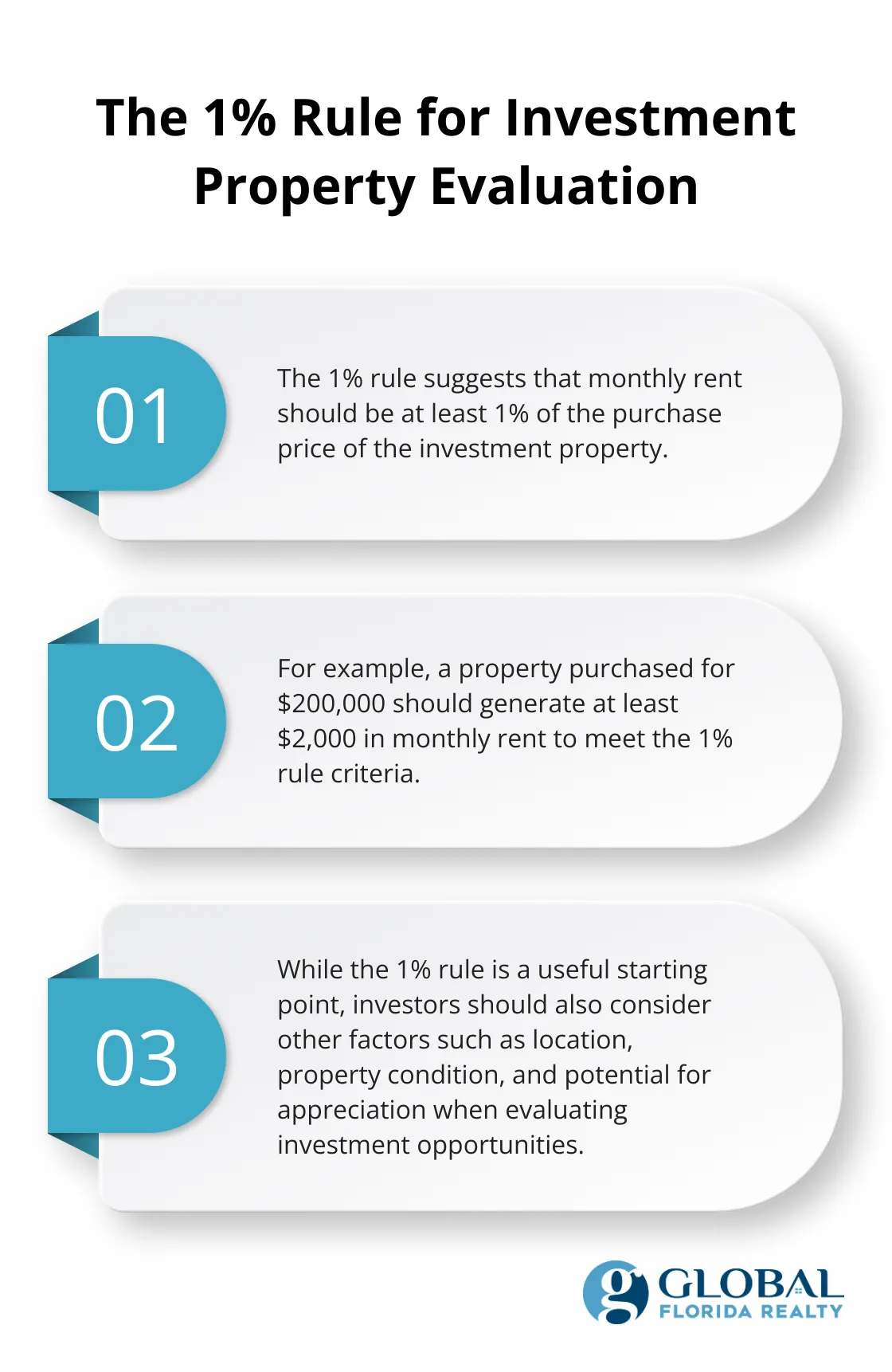
Once you’ve identified potential properties, conduct a thorough analysis. Calculate the potential return on investment (ROI) using the 1% rule as a starting point. This rule suggests that monthly rent should be at least 1% of the purchase price. For a $200,000 property, try to secure a monthly rent of at least $2,000.
Estimate all expenses associated with the property, including mortgage payments, property taxes, insurance, maintenance, and potential vacancies. A good rule of thumb is to set aside 1% of the property value annually for maintenance costs.
Analyze the property’s potential for appreciation by researching local market trends and planned developments in the area. The Federal Housing Finance Agency provides quarterly house price index reports, which can help you gauge appreciation trends in different markets.
When you’re ready to make an offer, first determine the property’s fair market value. Compare recent sales of similar properties in the area, adjusting for differences in features and condition. Your real estate agent can provide a comparative market analysis to help with this process.
Make your initial offer below the asking price, but ensure it’s reasonable based on your research. Include contingencies in your offer to protect yourself, such as inspection and financing contingencies.
Prepare for counteroffers and negotiations. Stay focused on your investment goals and the property’s potential ROI. Don’t let emotions drive your decisions – this is a business transaction.
Investment property loans typically have stricter requirements than primary residence mortgages. Expect to need a down payment of 20-30% of the purchase price. Your credit score will significantly impact your interest rate, so try to achieve a score of at least 740 for the best rates.
Consider alternative financing options if traditional mortgages don’t suit your situation. These might include FHA loans for multi-unit properties (where you’ll occupy one unit) or portfolio lenders who have more flexible lending criteria.
Secure pre-approval for financing before making offers. This strengthens your position as a buyer and can speed up the closing process.
Work closely with your real estate agent and attorney to navigate the closing process. Schedule a professional home inspection to uncover any hidden issues. Use the inspection results to negotiate repairs or price adjustments if necessary.
Review all closing documents carefully, paying special attention to the settlement statement which outlines all costs associated with the purchase. Prepare to wire the down payment and closing costs to the escrow company.
Decide whether you’ll manage the property yourself or hire a professional property management company. If you choose to self-manage, familiarize yourself with landlord-tenant laws in your state to understand the latest regulations and updates for property owners.
If opting for professional management, interview several companies and compare their services and fees. A good property management company typically charges 8-12% of the monthly rent but can save you significant time and stress.
Set up systems for rent collection, maintenance requests, and financial tracking from the start. Consider using property management software to streamline these processes.
Starting to buy investment properties marks an exciting step towards building long-term wealth. You must assess your financial readiness, set clear investment goals, and conduct thorough market research. Building a strong professional network will support your investment strategy and help you identify promising properties.
Global Florida Realty specializes in helping investors find lucrative opportunities in desirable areas such as Orlando. We offer comprehensive services, from property selection and purchase to effective marketing and management for both short-term and long-term rentals. Our in-depth market knowledge and personalized approach ensure efficient real estate transactions.
Take the first step towards building your real estate portfolio today. Contact Global Florida Realty to explore investment opportunities and receive expert guidance tailored to your goals. With our support, you’ll make smart investment decisions and unlock the potential of Florida’s thriving real estate market.