
Navigating the complex world of real estate regulations in Florida can be challenging. At Global Florida Realty, we understand the importance of staying compliant with DBPR real estate Florida guidelines.
This guide will walk you through the key aspects of DBPR regulations, licensing requirements, and best practices for real estate transactions in the Sunshine State. Whether you’re a seasoned professional or new to the field, understanding these rules is essential for success in Florida’s dynamic real estate market.
The Department of Business and Professional Regulation (DBPR) serves as a cornerstone in Florida’s real estate industry. This state agency oversees licensing, enforces regulations, and protects consumers across various business sectors, including real estate.
DBPR manages the licensing process for real estate professionals in Florida. Aspiring real estate agents must complete a 63-hour pre-licensing course online or in person. They then need to submit a completed application, electronic fingerprints, and an $89 fee.
A primary function of DBPR involves the enforcement of real estate laws and regulations. The agency investigates complaints against licensed professionals and takes disciplinary action when necessary.
DBPR works to safeguard consumers in real estate transactions. The agency enforces disclosure requirements, ensuring buyers receive accurate information about properties. Sellers must disclose known defects that could materially affect the property’s value. DBPR also oversees escrow account handling, a critical aspect of real estate transactions.
Real estate professionals must adhere to strict advertising regulations set by DBPR. These rules cover everything from property listings to social media marketing. All advertisements must clearly identify the brokerage name, and any claims about property features or market conditions must be truthful and verifiable.
Understanding these rules proves essential for anyone involved in Florida’s real estate market (whether buying, selling, or investing). Working with knowledgeable professionals allows you to navigate the regulatory landscape with confidence and focus on achieving your real estate goals. As we move forward, let’s explore the specific licensing requirements for Florida real estate professionals, which form the foundation of DBPR’s regulatory framework.
Florida’s real estate market offers exciting opportunities for those who obtain a professional license. This chapter outlines the process of becoming a licensed real estate professional in the Sunshine State.
The Sales Associate license serves as the entry point for most real estate professionals in Florida. To obtain this license, you must:
The entire process typically takes 4-6 weeks from start to finish.
For those who want to advance their career, the Broker license represents the next step. To qualify for this license, you must:
The Broker exam covers advanced topics such as real estate law, property management, and business operations.
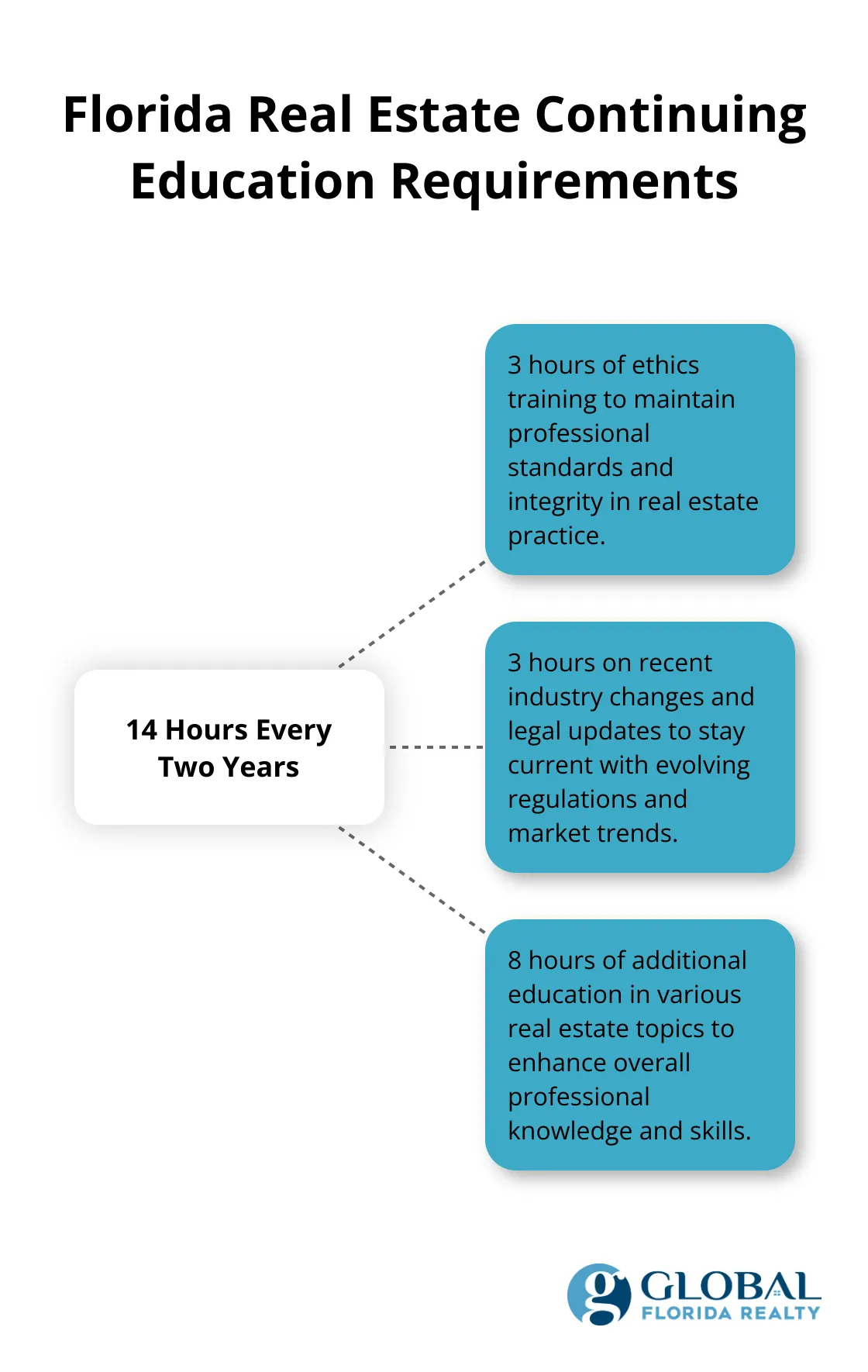
Maintaining your license requires ongoing education. Florida real estate professionals must complete:
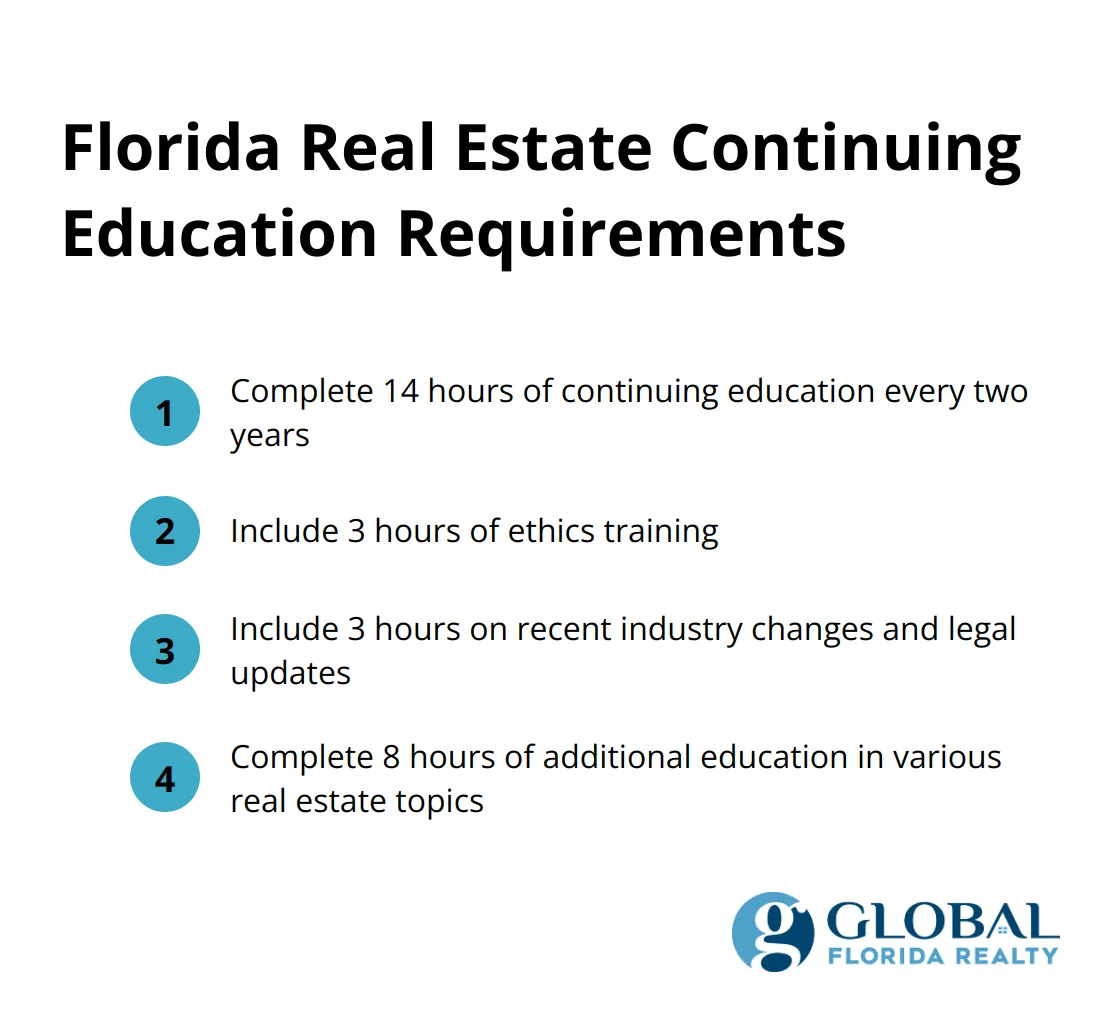
Newly licensed Sales Associates face an additional requirement of 45 hours of post-licensing education within the first 18-24 months. Brokers must complete 60 hours of post-licensing education within their first renewal cycle.
The DBPR provides online tracking tools to help manage continuing education credits and renewal deadlines. Many professionals (including those at Global Florida Realty) exceed these minimum requirements to stay competitive in the market.
While obtaining and maintaining your license forms the foundation of your real estate career, success in Florida’s dynamic market demands continuous learning and market awareness. The licensing process equips you with essential knowledge, but practical experience and ongoing education will set you apart in this competitive field.
As you embark on your journey to become a licensed real estate professional in Florida, consider how you’ll apply your newfound knowledge to serve clients effectively. The next chapter will explore compliance and best practices for real estate transactions, building upon the licensing foundation we’ve discussed here.
Compliance in Florida real estate transactions protects your interests and those of your clients. This chapter explores key areas to focus on to stay aligned with DBPR regulations.
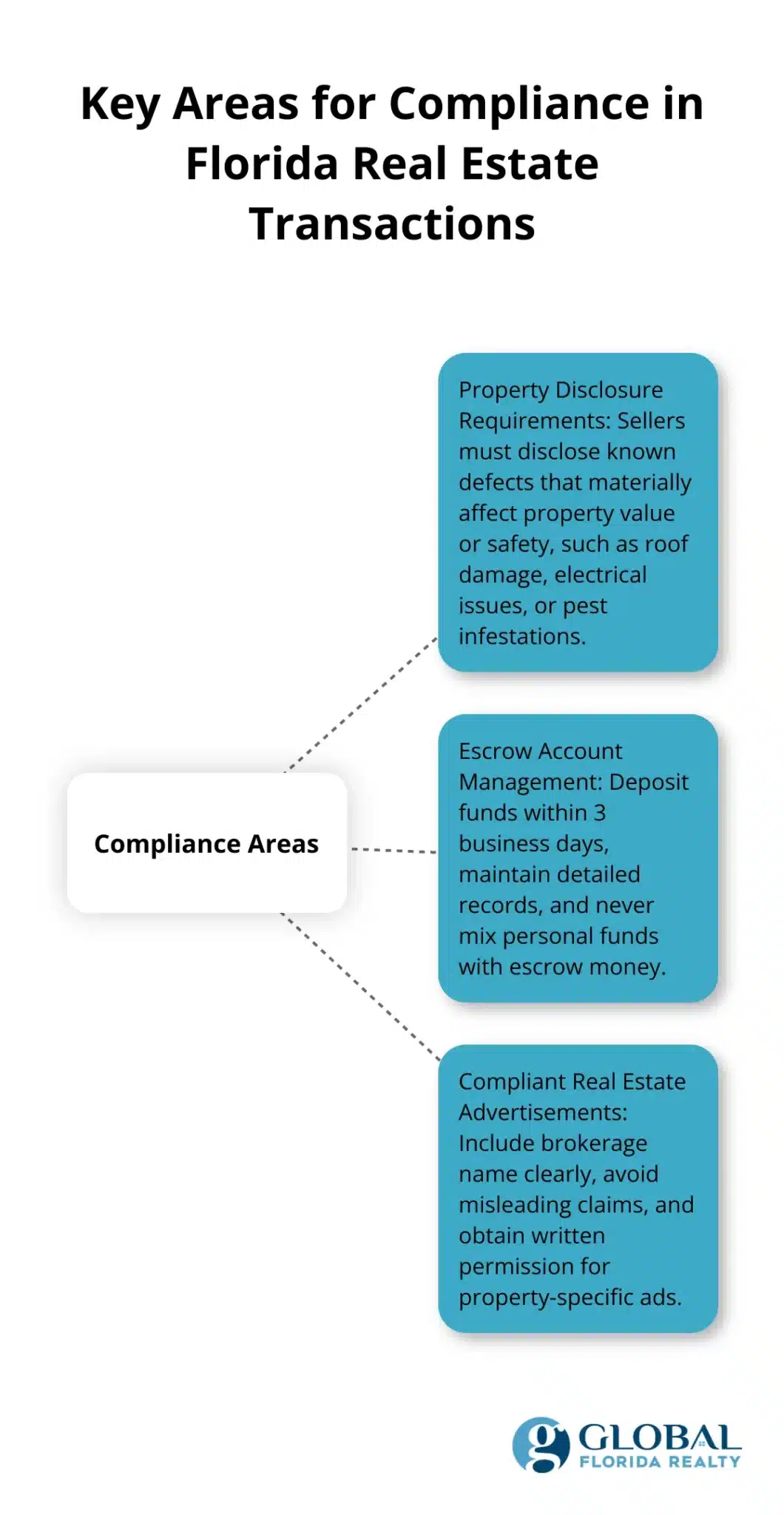
Florida law requires sellers to disclose known defects that materially affect property value or safety. This requirement serves as both a legal and ethical obligation. Common disclosures include:
To avoid missing any important information, use a standardized disclosure form (such as the one provided by the Florida Association of Realtors).
The DBPR closely monitors escrow accounts to prevent fraud and protect consumers. Key points to remember include:
Violations of escrow rules can result in severe penalties (including license suspension or revocation). Consult with a qualified attorney or your broker if you have any doubts.
DBPR regulations on real estate advertising are strict and constantly evolving. To maintain compliance:
Social media marketing requires extra caution, as even casual posts about listings can be considered advertising and must comply with all regulations.
To ensure smooth and compliant transactions:
These practices not only keep you compliant but also build trust with your clients and establish a reputation for integrity in the Florida real estate market.
The Florida real estate market demands a thorough understanding of DBPR regulations. These rules shape every aspect of real estate practice, from licensing to transaction management. Professionals must stay informed about changes in laws and continue their education to excel in this dynamic field.
Success in Florida’s real estate landscape requires expertise and compliance. Global Florida Realty offers comprehensive services to help clients navigate the complexities of buying, selling, and investing in Florida properties. Our team’s knowledge ensures that your real estate goals align with DBPR real estate Florida guidelines.
The real estate industry constantly evolves, and regulations change accordingly. Professionals should regularly consult DBPR resources and attend industry seminars to stay current. This proactive approach fosters trust, transparency, and professionalism in every transaction, opening doors to exciting opportunities in Florida’s diverse property market.