
Becoming a real estate broker in Florida is a significant step in your career. At Global Florida Realty, we understand the importance of meeting Florida real estate brokerage requirements.
This guide will walk you through the essential educational, experience, and operational prerequisites. We’ll provide you with clear, actionable steps to help you achieve your goal of becoming a licensed broker in the Sunshine State.
Florida’s real estate broker education requirements are rigorous and comprehensive. The Florida Real Estate Commission (FREC) mandates a multi-step educational process to ensure brokers are well-prepared for their responsibilities.
Aspiring brokers must complete a 72-hour pre-licensing course approved by the FREC. This course covers essential topics such as real estate law, property management, and business practices. The Florida Department of Business and Professional Regulation (DBPR) provides a list of approved education providers. Costs for these courses typically range from $300 to $500 (depending on the provider and format).
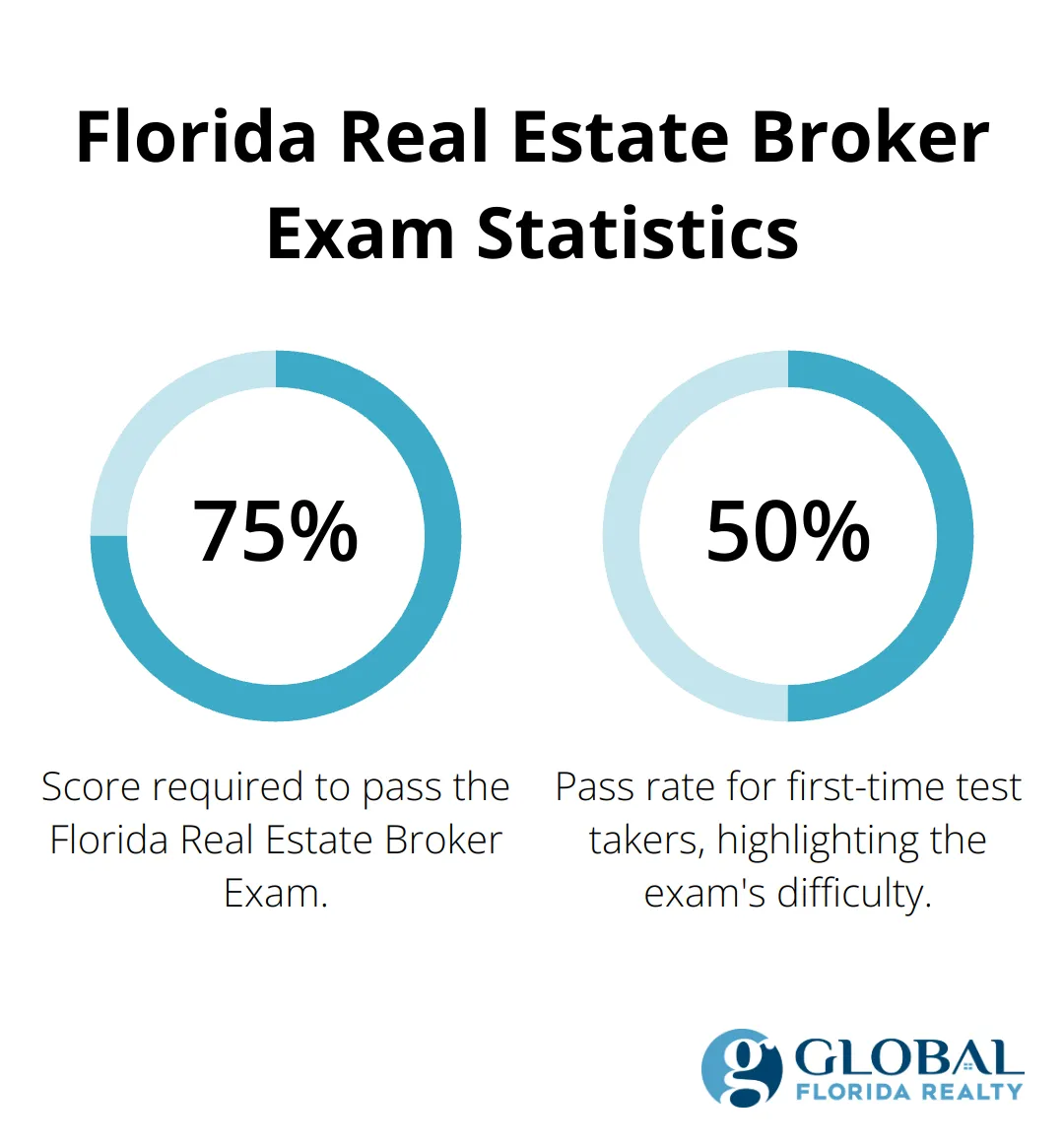
After completing the pre-licensing course, candidates must pass the Florida Real Estate Broker Exam. This exam consists of 100 multiple-choice questions and requires a score of 75% or higher to pass. The exam fee is $36.75, and candidates have 3.5 hours to complete it. The DBPR reports that the pass rate for first-time test takers is approximately 50%, which underscores the exam’s difficulty.
Once licensed, new brokers must complete 60 hours of post-licensing education within their first renewal period. This education focuses on practical skills like brokerage management, risk reduction, and advanced real estate law. Brokers who fail to complete this requirement risk having their license become null and void.
Education doesn’t stop after licensing. Florida requires brokers to complete 14 hours of continuing education every two years to maintain their license. This ongoing learning ensures brokers stay current with market trends, legal changes, and best practices in the industry.
A solid educational foundation proves crucial for success in the Florida real estate market. Brokers who invest time in their education often navigate complex transactions more effectively and provide better service to their clients. This comprehensive education system (pre-licensing, exam, post-licensing, and continuing education) creates knowledgeable professionals who can confidently handle the intricacies of Florida’s real estate landscape.
As we move forward, let’s explore the experience and background requirements that complement this educational foundation for aspiring Florida real estate brokers.
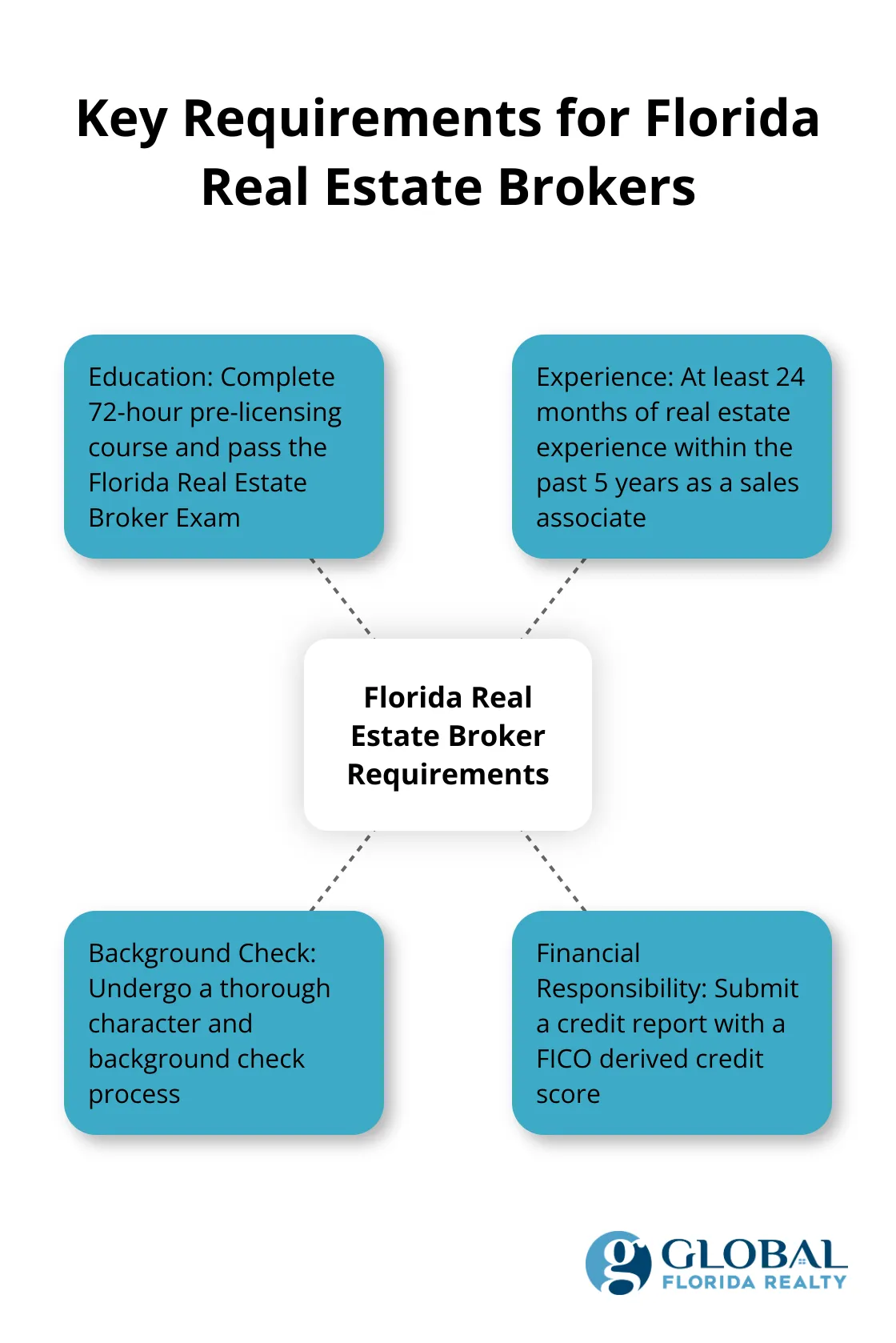
Florida Real Estate Commission (FREC) mandates at least 24 months of real estate experience within the past 5 years for broker applicants. This experience must come from active work as a sales associate. Applicants should maintain detailed records of their transactions during this period. FREC may request documentation to verify experience, so it’s important to keep a portfolio of deals (including dates, property types, and transaction values).
FREC places high importance on the moral character of broker applicants. A thorough background check forms part of the application process. This check examines any criminal history or professional misconduct that might disqualify an applicant from obtaining a broker’s license.
Applicants must disclose all past legal issues, even those that seem minor. Honesty is paramount – failure to disclose information that later comes to light can result in application denial or license revocation. Applicants with concerns about their background should consider consulting a real estate attorney who specializes in licensing issues before submitting their application.
The financial history of applicants also undergoes scrutiny. FREC requires broker applicants to demonstrate financial responsibility, which includes a credit check. Applicants must submit a credit report with a FICO derived credit score to meet financial responsibility and stability requirements. This assessment goes beyond just having a perfect credit score – it’s about showing the ability to manage financial obligations responsibly.
Applicants with outstanding debts or financial judgments should address these issues before applying. Creating a plan to improve credit (if necessary) and preparing explanations for any past financial difficulties can help. The goal is to demonstrate the capability to manage the financial aspects of a brokerage business.
Aspiring brokers should start gathering experience documentation early. Addressing any potential issues in background or financial history is crucial. Approaching the process with honesty and professionalism increases the chances of success.
These stringent requirements serve to protect consumers and maintain the integrity of the real estate profession in Florida. Meeting these high standards not only helps in obtaining a broker’s license but also sets the foundation for a successful career in real estate brokerage.
The next step in the journey to becoming a Florida real estate broker involves understanding and fulfilling the operational and business requirements set by the state. These requirements ensure that brokers are fully prepared to run their own brokerage firms effectively and legally.
Florida law requires brokerages to maintain a physical office. This space must be an enclosed room in a stationary building, which provides privacy for negotiations and closings. When you select your office location, consider factors like client accessibility, parking availability, and proximity to your target market. The Florida Department of Business and Professional Regulation (DBPR) mandates that your office signage clearly displays your brokerage name. Each office entrance sign must contain the broker’s name as registered with the FREC and the trade name, if any. For a partnership or corporation, the sign must include this information as well.
Virtual brokerages must still adhere to the physical office requirement in Florida. If you consider a home-based office, check local zoning laws and homeowners’ association rules to ensure compliance.
Errors and Omissions (E&O) insurance helps protect real estate businesses from mistakes made in the professional services given. While not legally required, E&O insurance is highly recommended (and often mandated by franchise agreements or partnerships).
When you shop for E&O insurance, compare policies from multiple providers. Look for coverage that includes:
The cost of E&O insurance varies based on factors like your brokerage size, transaction volume, and claims history.
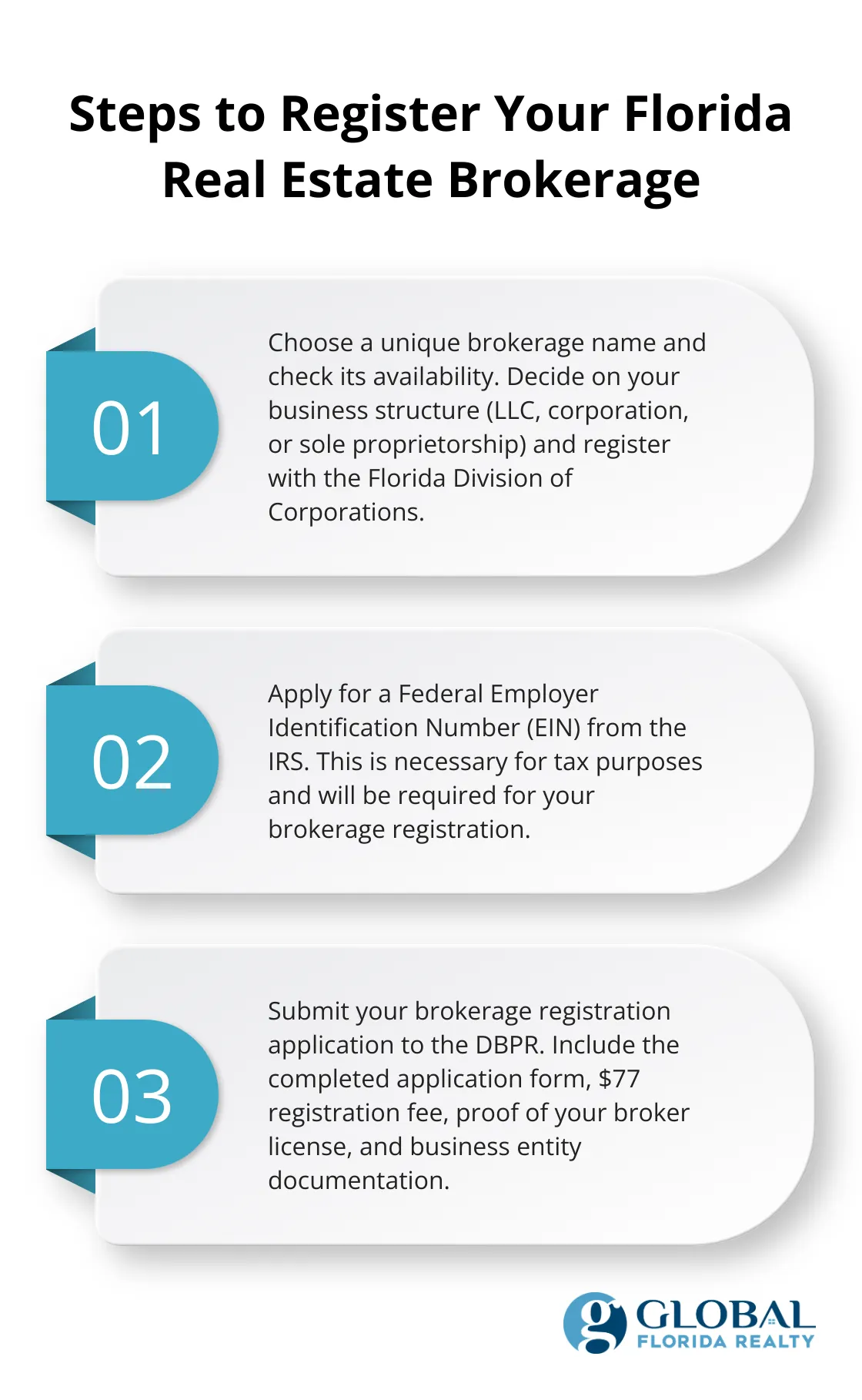
To register your brokerage with the Florida DBPR, follow these steps:
The DBPR typically processes applications within 30 days. Once approved, you’ll receive your brokerage license, which you must prominently display in your office.
Each branch office you open requires separate registration with the DBPR and incurs an annual fee of $50.
To run your brokerage efficiently, you need to establish robust operational systems. This includes:
These systems will help you manage client relationships, track transactions, and streamline your business operations.
As you set up your brokerage, you’ll need to recruit and train a team of real estate agents. Try to create a comprehensive onboarding process and provide ongoing training opportunities. This will help attract top talent and ensure your agents are equipped to succeed in the competitive Florida real estate market.
Florida real estate brokerage requirements demand dedication, education, and attention to detail. Brokers must complete pre-licensing courses, pass exams, and fulfill experience requirements to establish a successful business. The process includes rigorous educational commitments, background checks, and operational requirements that ensure ethical conduct and consumer protection.
Meeting these requirements positions brokers as knowledgeable professionals and enhances their credibility with clients. A well-prepared broker can navigate complex transactions and provide superior service in Florida’s dynamic real estate market. Staying updated with evolving regulations is essential for maintaining compliance and adapting to new industry standards.
Global Florida Realty offers comprehensive services for buying, selling, and investing in Florida real estate. We specialize in assisting clients with personal homes and investment properties (including vacation rentals near popular attractions). Our expertise extends to desirable areas like Orlando, where we strive to provide exceptional service to our clients.