
Finding lucrative investment properties is a skill that can significantly boost your real estate portfolio. At Global Florida Realty, we’ve helped countless investors identify and acquire properties with high potential returns.
This guide will walk you through the essential steps on how to find investment properties that align with your financial goals. We’ll cover everything from market research to property analysis, ensuring you have the tools to make informed investment decisions.
To find lucrative investment properties, you must first identify the right markets. The U.S. Bureau of Economic Analysis provides GDP data for metropolitan areas, revealing economic powerhouses. Orlando’s GDP grew by 3.2% in 2024, outpacing the national average. This growth often translates to increased property values and rental demand.
Median household income trends also play a crucial role. The U.S. Census Bureau reports that areas with rising incomes typically see property value appreciation. Seminole County, Florida, saw a 4.5% increase in median household income in 2024, signaling a robust local economy.
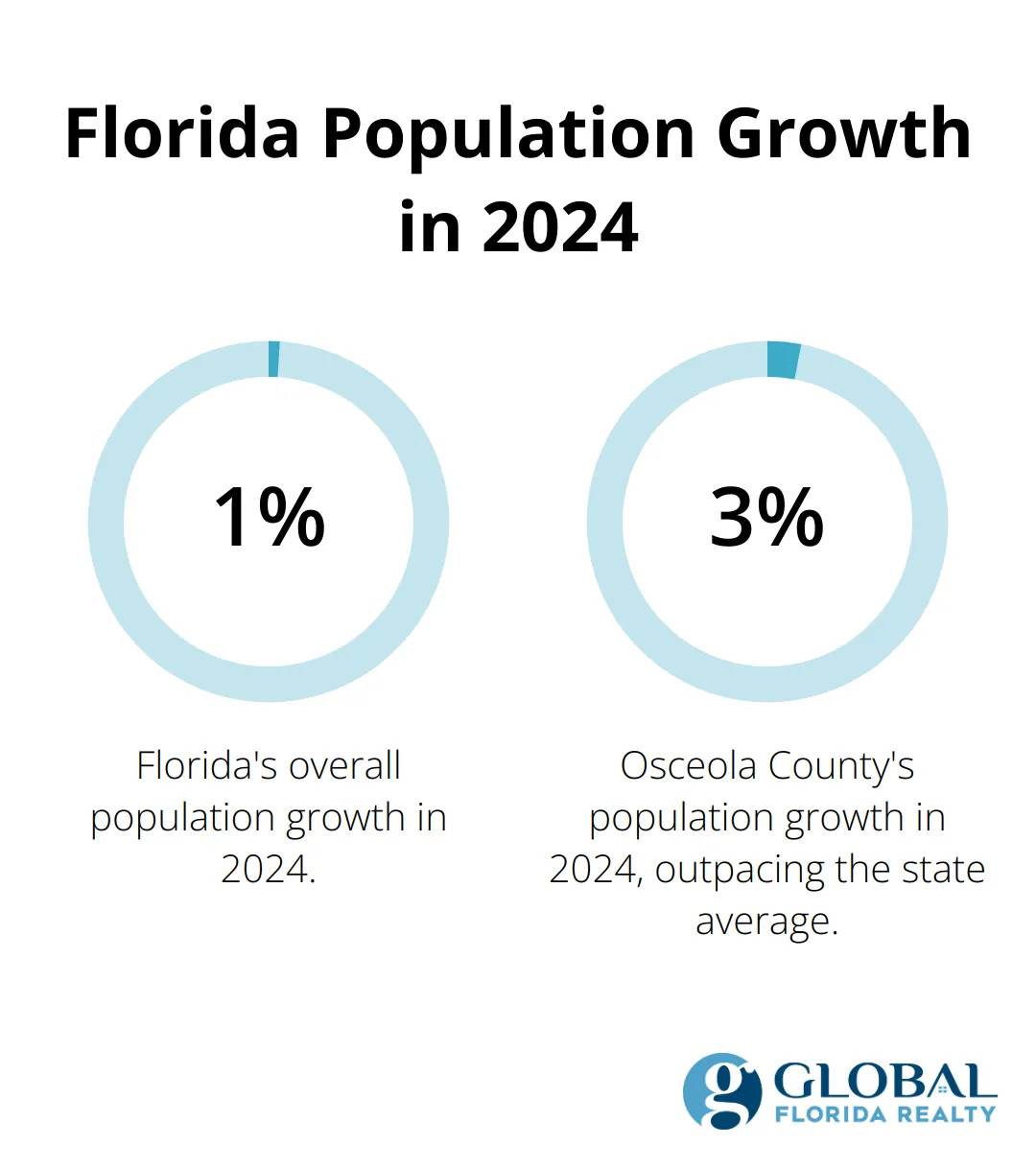
Population growth drives real estate demand. The U.S. Census Bureau’s population estimates help spot emerging markets. Florida’s population grew by 1.9% in 2024, with counties like Osceola experiencing even higher growth rates (3.2%).
Job market trends are equally important. The Bureau of Labor Statistics provides employment data by metro area. Look for diverse job markets with low unemployment rates. Orlando’s employment growth was 2.5% from 2023 to March 2024, indicating a strong job market that attracts renters and homebuyers alike.
Tools like Walk Score or AreaVibes help evaluate neighborhood amenities. High walkability scores often correlate with property value appreciation. Winter Park, Florida, saw a 5% increase in property values in 2024, partly due to its walkable downtown area.
Future development plans can significantly impact property values. Check local government websites for information on upcoming projects. Orlando’s $1 billion downtown revitalization project (announced in 2024) is expected to boost property values in surrounding neighborhoods by up to 15% over the next five years.
While data and statistics provide valuable insights, nothing beats local expertise. Real estate professionals who live and work in the area can offer invaluable information about neighborhood trends, school districts, and upcoming developments that might not be reflected in public data yet.
At Global Florida Realty, we combine in-depth market analysis with local expertise to help investors identify the most promising opportunities in Florida’s dynamic real estate landscape. Our team’s knowledge of the local market can help you spot potential before it shows up in the statistics.
Now that you know how to identify profitable markets, let’s move on to determining the right investment strategy for your goals and resources.
Choosing the right investment strategy maximizes returns in real estate. Different property types offer varying benefits and challenges, so you must align your strategy with your financial goals and risk tolerance.
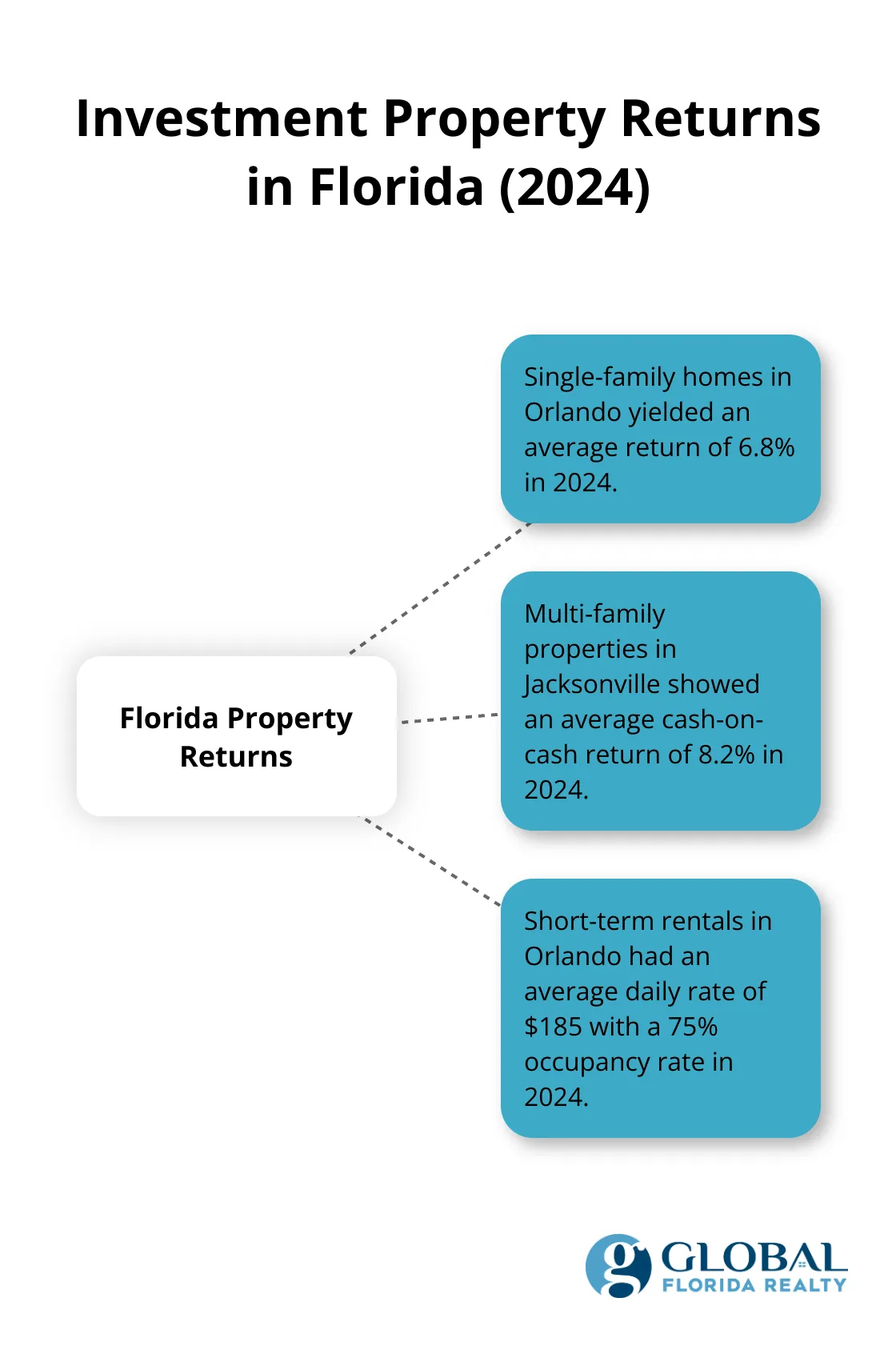
Single-family homes often attract new investors. These properties typically draw long-term tenants, resulting in more stable rental income. In Orlando, single-family home rentals yielded an average return of 6.8% in 2024 (according to Zillow data). These properties also tend to appreciate well over time.
However, single-family homes come with higher maintenance costs per unit. You become responsible for all repairs and upgrades, which can reduce your profits. The National Association of Residential Property Managers suggests setting aside about 1% of the property’s value annually for maintenance.
Multi-family properties, such as duplexes or small apartment buildings, can offer higher cash flow. With multiple units, you spread the risk of vacancy across several potential income streams. In Jacksonville, multi-family properties showed an average cash-on-cash return of 8.2% in 2024, outperforming single-family rentals in the area.
These properties often have lower per-unit maintenance costs, as many systems and structures are shared. However, they typically require a larger initial investment and can prove more complex to manage. You might consider hiring a property management company (which usually charges 8-12% of the gross rent).
Commercial properties, including retail spaces and office buildings, can provide stable, long-term income through multi-year leases. In Tampa, class A office spaces commanded an average rent of $32 per square foot in 2024 (CBRE data). Many commercial properties offer triple-net (NNN) leases, where tenants cover property taxes, building insurance, maintenance, rent, and utilities, reducing your operational responsibilities.
However, commercial real estate shows more susceptibility to economic downturns. During the 2020 pandemic, for example, office vacancy rates in Miami spiked by 15%. You must thoroughly analyze market trends and have a substantial financial cushion when investing in commercial properties.
Short-term rentals, particularly in tourist hotspots like Orlando, can yield significant returns. According to AirDNA, the average daily rate for short-term rentals in Orlando reached $185 in 2024, with an occupancy rate of 75%. This translates to potentially higher income compared to long-term rentals.
However, short-term rentals require more active management and have higher operational costs. You’ll need to factor in frequent cleaning, higher utility bills, and potentially more wear and tear on the property. Additionally, local regulations can impact short-term rental operations. For example, Orange County requires short-term rental operators to obtain a license and pay a tourist development tax.
Now that we’ve explored various investment strategies, let’s move on to the next critical step: conducting a thorough property analysis to ensure you make informed investment decisions.
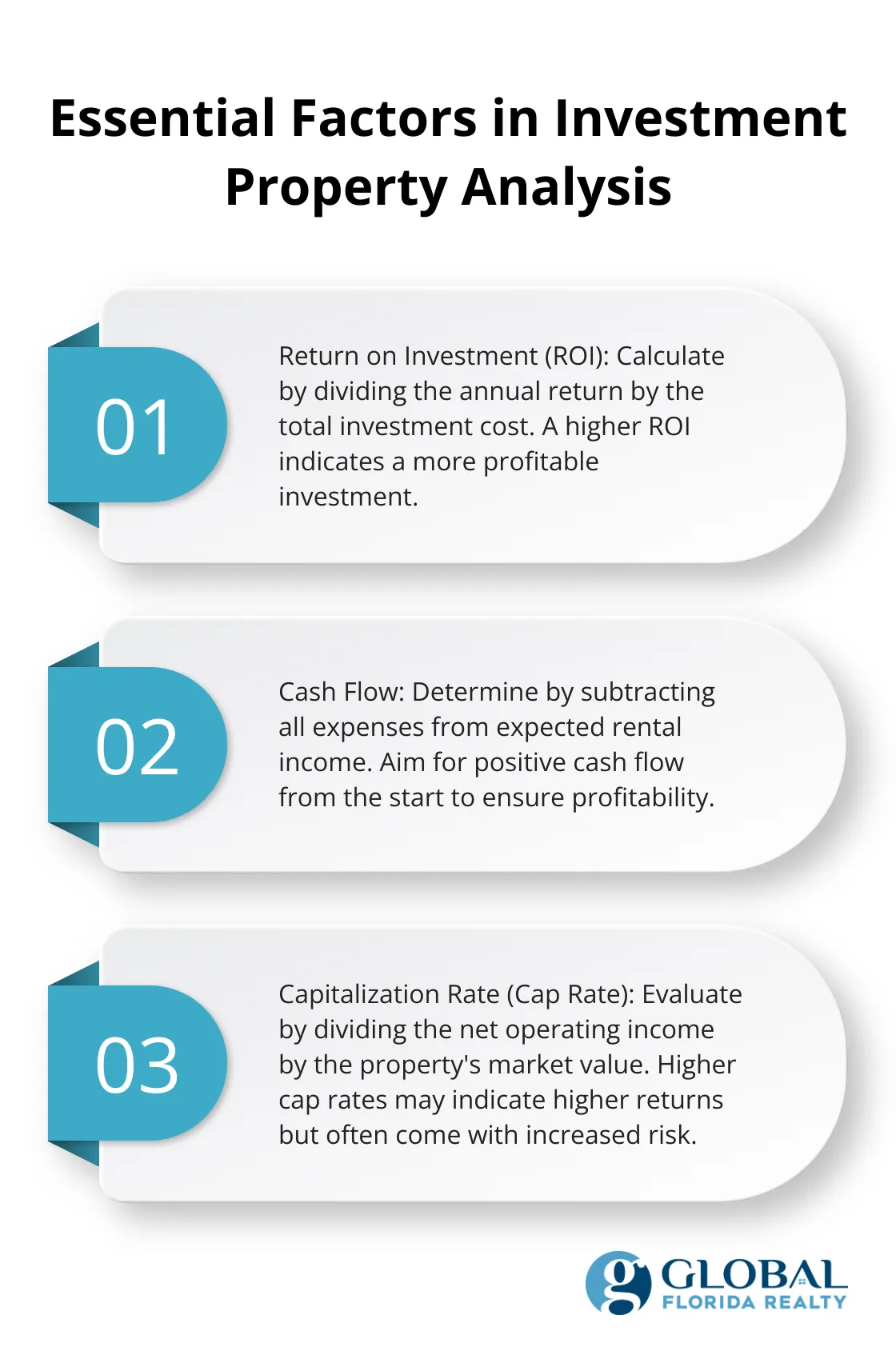
Return on Investment (ROI) serves as a key metric for property evaluation. To compute ROI, divide the annual return by the total investment cost. For instance, a $200,000 property that generates $20,000 in annual profit yields an ROI of 10%. Existing-home sales slid 0.5% month-over-month to a seasonally adjusted rate of 4.00 million in April 2025, with a year-over-year retreat of 2.0%.
Cash flow analysis proves equally important. Subtract all expenses (mortgage, taxes, insurance, maintenance) from your expected rental income. Try to achieve positive cash flow from the start. In Orlando, the average monthly rent for a 3-bedroom home reached $2,100 in 2024 (according to Zillow data). If your total monthly expenses amount to $1,800, you’d enjoy a positive cash flow of $300 per month.
Capitalization rate, or cap rate, offers another vital metric. Calculate it by dividing the net operating income by the property’s market value. For example, a $500,000 property that generates $40,000 in net operating income annually has a cap rate of 8%. In Tampa, multi-family properties averaged a cap rate of 5.8% in 2024 (as reported by CBRE).
Higher cap rates indicate potentially higher returns but often come with increased risk. Lower cap rates typically suggest safer investments but with lower returns. REITs will likely be poised for growth in a more robust CRE market because of their disciplined balance sheets, low debt costs, and greater access to various capital sources.
Don’t overlook the property’s physical condition. A home inspection can reveal potential issues and help estimate renovation costs. The average cost of a home inspection in Florida stood at $340 in 2024 (according to HomeAdvisor).
Factor in potential renovation expenses. The cost to renovate a 2,000 sq ft home in Florida ranged from $40,000 to $75,000 in 2024, depending on the extent of work needed. However, strategic renovations can significantly boost rental income or resale value. (Kitchen remodels in Orlando saw an average ROI of 81% in 2024, as reported in Remodeling Magazine’s Cost vs. Value report.)
A property requiring extensive renovations might offer a lower purchase price but could lead to higher overall costs and delayed rental income. Balance the potential savings against the time and money required for renovations.
Finding lucrative investment properties demands a strategic approach that combines thorough market research with careful property analysis. You must examine economic indicators, population trends, and job market data to identify promising areas for real estate investment. Understanding different property types and their potential returns will help you align your investments with your financial goals.
Conducting a comprehensive property analysis proves essential when you search for investment properties. You should calculate the ROI, assess cash flow, and evaluate the cap rate to make informed decisions. Don’t overlook the property’s condition and potential renovation costs, as these factors significantly impact your overall investment (renovation expenses can range from $40,000 to $75,000 for a 2,000 sq ft home in Florida).
At Global Florida Realty, we offer guidance through every step of the investment process in Florida’s dynamic real estate market. Our team provides local knowledge and personalized service to help you make sound investment decisions. We can assist you in navigating the Florida market, whether you’re interested in single-family homes, multi-family properties, or commercial real estate.