
Florida’s real estate market is booming, offering investors a wealth of opportunities. From bustling cities to serene beachfront properties, the Sunshine State has something for every type of investor.
At Global Florida Realty, we’ve seen firsthand how Florida real estate investment can yield impressive returns. This guide will walk you through the essentials of investing in Florida’s dynamic property market, helping you make informed decisions and maximize your potential for success.
Florida’s real estate market in 2025 presents a unique landscape for investors. The Sunshine State’s housing sector has undergone significant changes, creating both challenges and opportunities for those looking to invest.
As of Q4 2024, Florida’s median home sale price stood at $410,700 (a slight decrease from $413,000 in Q4 2023). This cooling trend results from an increase in available homes, which reduces competition among buyers. Active listings in Florida surged by 26.9% from November 2023 to November 2024, reaching 100,788 properties.
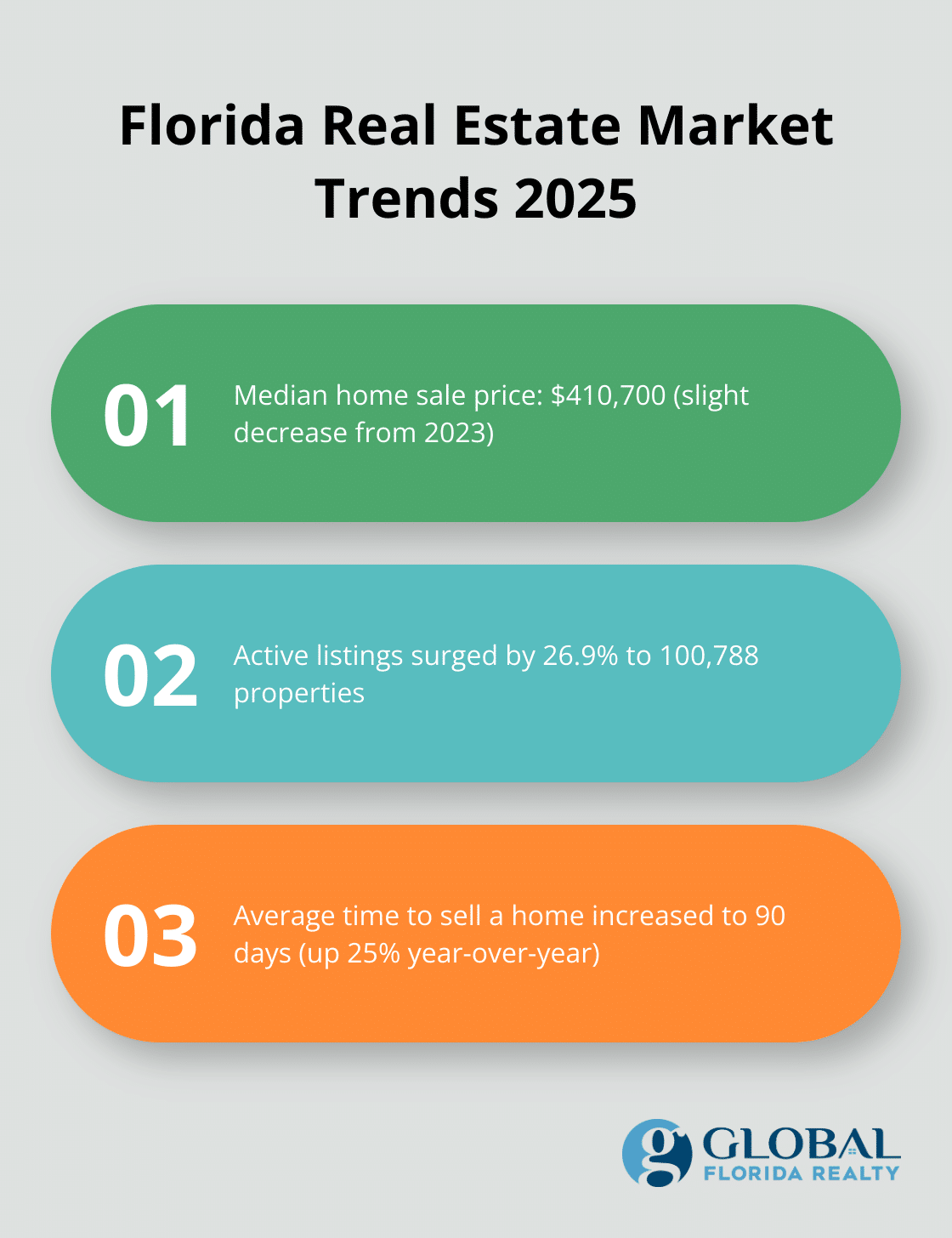
The average time to sell a home in Florida has increased to 90 days (up 25% year-over-year). This extended selling period, coupled with a 3.5% drop in closed sales of single-family homes, signals a shift towards a buyer’s market.
Orlando remains a strong investment choice with a median sale price of $442,500, showing a 1.4% year-over-year increase. The city’s robust job market and tourist attractions continue to drive demand for both long-term rentals and vacation properties.
Tampa, despite a slight decline to a median sale price of $410,000, still offers solid investment potential. The city’s growing tech sector makes it particularly attractive for those targeting young professionals.
Jacksonville has seen a 2.9% year-over-year increase in median sale price to $401,400, offering a mix of affordability and growth potential. Its diverse economy and expanding port make it a promising location for long-term investments.
Florida’s population growth remains a key driver of real estate demand. The Florida Department of Revenue projects the state’s population to reach approximately 23.3 million by 2025, which will ensure a steady influx of potential buyers and renters.
However, investors must navigate challenges such as rising homeowners insurance premiums. Climate change-driven hurricanes, floods, and fires are likely helping drive up the price of home insurance in Florida, researchers say.
The stabilization of mortgage rates around 6% in 2025, as predicted by Lawrence Yun (chief economist at the National Association of Realtors), could provide a more favorable environment for financing investment properties.
As we move forward to explore the various types of real estate investments available in Florida, it’s important to keep these market trends and driving factors in mind. They will play a significant role in shaping investment strategies and opportunities across different property types and locations.
Florida’s real estate market offers a wide array of investment opportunities, each with its own potential for returns and unique considerations. From traditional residential properties to vacation rentals and commercial spaces, investors have numerous options to diversify their portfolios.
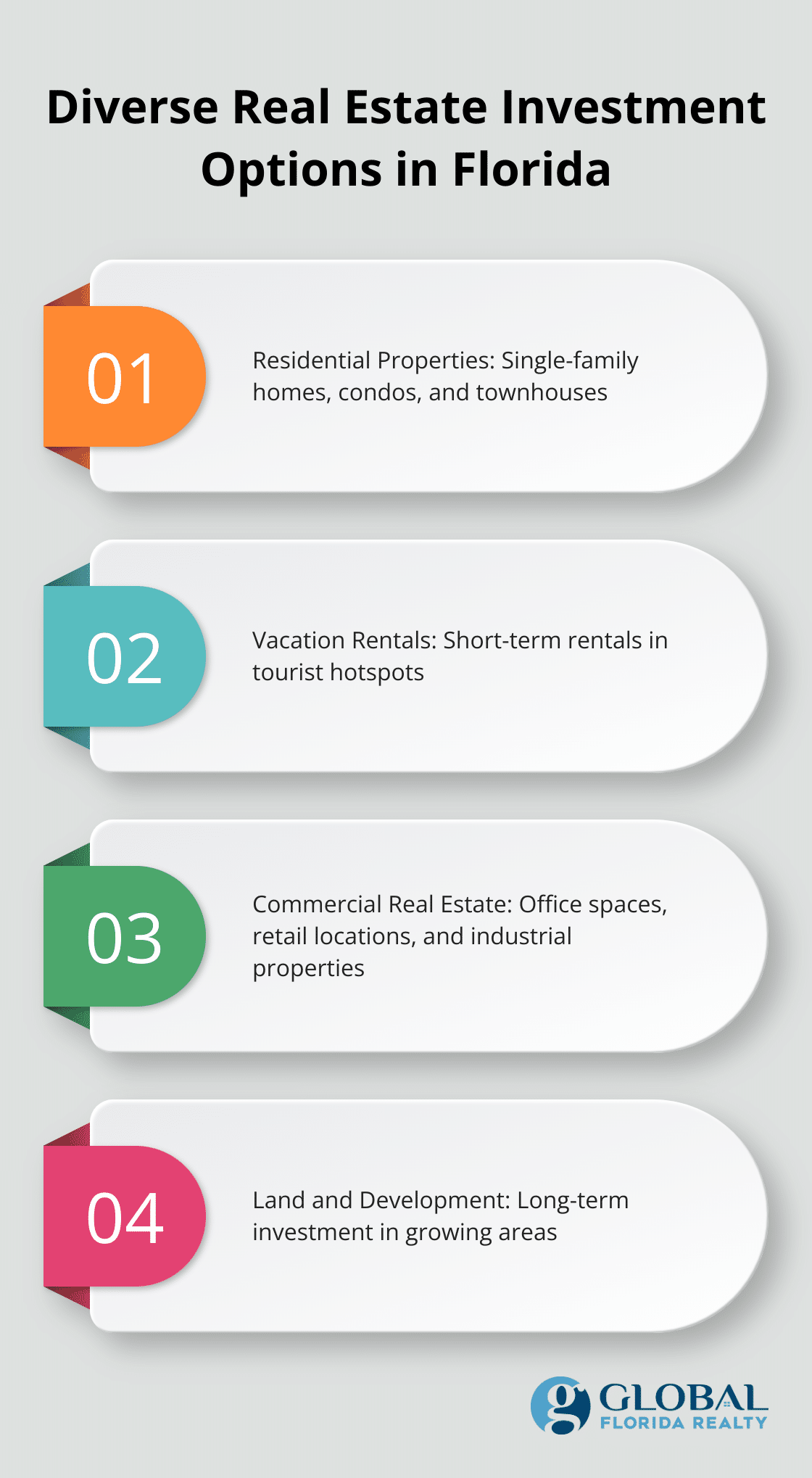
Single-family homes remain a popular choice for investors in Florida. With a median sale price of $410,700 projected for 2025, these properties offer a balance of affordability and potential for appreciation. Cities like Jacksonville present particularly attractive opportunities for those who want to enter the market.
Condos and townhouses also present viable investment options, especially in urban areas and coastal regions. These properties often come with lower maintenance requirements and can attract renters who prefer a more communal living environment.
Florida’s robust tourism industry makes vacation rentals a lucrative investment option. Cities like Orlando (with its proximity to theme parks) and coastal areas like Clearwater are prime locations for short-term rentals. However, investors must know local regulations that may affect short-term rentals. Some areas require specific licenses or impose limits on rental days.
The demand for professional property management services for vacation rentals has increased significantly. These services can help maximize occupancy rates and ensure a smooth experience for both owners and guests.
Commercial real estate in Florida presents opportunities for investors who want to diversify beyond residential properties. Office spaces, retail locations, and industrial properties can offer steady income streams and potential for long-term appreciation.
Tampa’s growing tech sector, for instance, has increased demand for modern office spaces. Meanwhile, Orlando’s tourism industry drives the need for retail and hospitality properties. Investors should consider the economic drivers in each region when they evaluate commercial real estate opportunities.
For investors with a long-term perspective, land and development projects in Florida can yield significant returns. As the state’s population continues to grow (reaching an estimated 23.3 million by 2025), the demand for new housing and commercial spaces will likely increase.
Areas like Polk County (currently the fastest-growing county in Florida) offer potential for land investment and development. However, these projects require careful due diligence, including understanding zoning laws, environmental regulations, and future development plans in the area.
Investing in Florida real estate requires a thorough understanding of the market, local regulations, and economic trends. Whether you’re interested in residential properties, vacation rentals, commercial real estate, or land development, you must conduct thorough research and seek expert guidance. The next section will explore key considerations for Florida real estate investors, including legal requirements, financing options, and risk management strategies.
Florida’s real estate laws present a complex framework. You must comply with state and local regulations, which differ based on property type and location. For instance, Orlando requires a Short-Term Rental Registration Certificate for vacation rentals. Miami Beach prohibits short-term rentals in most residential areas.
Zoning laws dictate property use and modification possibilities. Check local zoning ordinances before purchase to ensure your intended use aligns with regulations.
As of 2025, mortgage rates in Florida have stabilized around 6% for 30-year fixed-rate mortgages. This rate environment creates opportunities for investors who secure favorable financing terms.
Lenders typically require a 20-25% down payment for investment properties. Vacation rental requirements can be stricter, with some lenders asking for higher interest rates. You must live there for more than 14 days or more than 10% of the time you rent it out, which affects your loan’s interest rate and terms.
Hard money loans offer quick funding for fix-and-flip projects (albeit at higher interest rates). Experienced investors might consider partnerships or private money lenders to finance deals.
Effective property management maximizes investment returns. If you lack time or local presence, hiring a professional property management company often proves worthwhile.
For vacation rentals, companies like Vacasa handle guest communication, cleaning, and maintenance. Local property management firms screen tenants, manage repairs, and collect rent for long-term rentals.
Florida’s humid climate and storm potential can increase maintenance costs. Budget for regular HVAC servicing, pest control, and exterior upkeep to protect your investment.
Florida’s tax environment favors real estate investors. The state imposes no personal income tax, which can boost net returns significantly. However, federal taxes on rental income and capital gains still apply.
Property taxes are the primary tool for financing local governments. In fiscal year 2022, property taxes comprised 27.4 percent of total state and local tax revenue in Florida.

Real estate investors can benefit from several tax deductions, including mortgage interest, property taxes, insurance premiums, and depreciation. Consult a tax professional familiar with Florida real estate to maximize your tax benefits.
Florida’s vulnerability to hurricanes and flooding necessitates comprehensive insurance coverage. Standard homeowners insurance excludes flood damage, requiring a separate flood insurance policy. As of 2025, Florida’s average flood insurance premium costs around $550 per year, with higher rates in high-risk areas.
Wind damage from hurricanes poses another concern. Some insurers exclude wind damage from standard policies, necessitating a separate windstorm policy. These additional insurance costs can impact your investment’s profitability significantly.
Consider forming an LLC to hold your investment properties. This structure can provide personal asset protection and potential tax benefits. Consult a legal professional to determine if an LLC suits your investment strategy.
Florida real estate investment offers compelling opportunities in 2025. The state’s growing population, strong tourism industry, and favorable tax environment contribute to its appeal as an investment destination. Investors can find avenues that align with their goals and risk tolerance, from residential properties to commercial spaces.
Success in Florida’s real estate market requires careful planning and due diligence. Investors should research local markets, understand legal requirements, and consider the unique challenges of Florida’s climate. Proper financing, effective property management, and comprehensive insurance coverage are essential elements for long-term success.
Global Florida Realty brings expertise to help investors navigate the complexities of Florida’s real estate market. Their team offers comprehensive services for buyers, sellers, and investors, providing valuable insights and support throughout the investment journey (including property management and investment guidance). Global Florida Realty’s personalized approach aims to make real estate transactions profitable, seamless, and efficient.