
Florida’s real estate market is diverse, but not all cities offer equal investment potential. At Global Florida Realty, we’ve seen firsthand the importance of choosing the right location for property purchases.
This guide explores the 5 worst cities to buy real estate in Florida, helping you avoid costly mistakes. We’ll examine economic factors, environmental risks, and local market conditions that can negatively impact your investment.
High unemployment rates often indicate a struggling local economy. In 2023, Sebring, Florida reported 1,600 unemployed persons, which exceeded the state average. This lack of job opportunities can decrease housing demand and lower property values.
Cities that rely heavily on a single industry face greater vulnerability to economic downturns. Orlando serves as a prime example. Its dependence on tourism became evident during the COVID-19 pandemic, which caused significant ripples in the real estate market.
Population decreases can severely impact real estate investments. Panama City experienced a -0.181% population decline from 2021 to 2022. This exodus can lead to an oversupply of housing, which drives down prices and rental income potential.
Stagnant or decreasing median home values clearly indicate a troubled real estate market. Zillow data shows that Inverness, Florida saw a 1.2% decrease in home values over the past year. This trend affects potential appreciation and impacts an investor’s ability to build equity in the property.

Cities with these economic red flags often struggle to attract new residents and businesses, creating a cycle that proves difficult to break. Investors should look beyond surface-level appeal and examine these economic factors before making a purchase decision.
While some areas face challenges, Florida’s real estate market offers diversity and opportunity. Many cities continue to present strong investment potential. The key lies in conducting thorough research and partnering with experienced professionals who understand local market nuances.
As we shift our focus to environmental risks, it’s important to note that economic factors represent only one piece of the puzzle. Natural hazards can significantly impact property values and insurance costs, adding another layer of complexity to real estate investment decisions in Florida.
Florida’s appeal as a real estate hotspot comes with significant environmental risks. These natural hazards can impact property values, insurance costs, and long-term investment viability. Investors must understand these risks before making purchasing decisions.
Flood-prone areas in Florida threaten real estate investments. Florida’s significantly at-risk properties this year number 1.8 million, according to First Street Foundation. This vulnerability leads to high insurance costs. In some high-risk coastal areas, flood insurance premiums can exceed $20,000 annually for a single-family home.
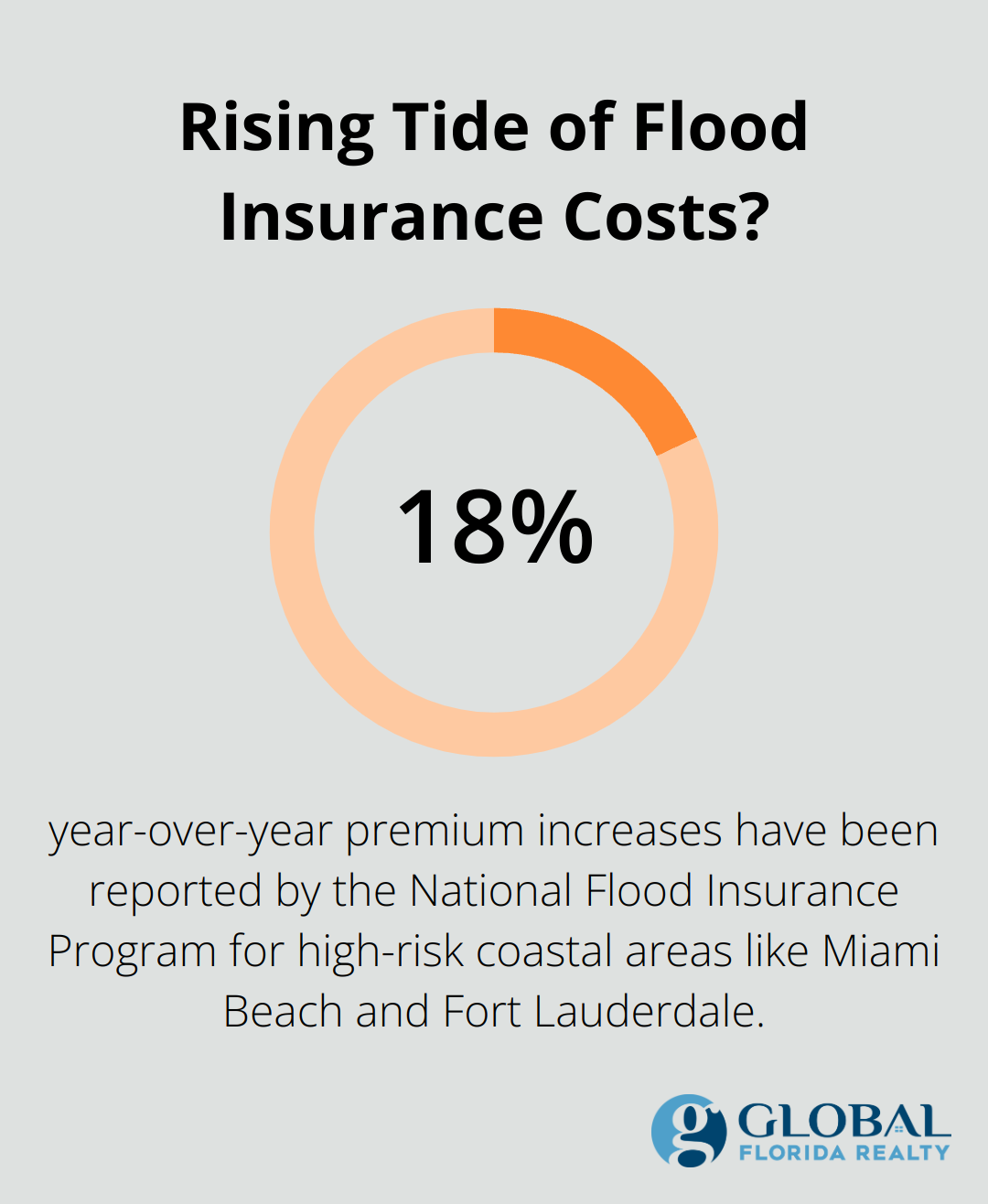
Miami Beach and Fort Lauderdale face particularly high flood risks. The National Flood Insurance Program (NFIP) reports these areas have seen premium increases of up to 18% year-over-year. Investors should consider these ongoing costs when evaluating potential properties.
Florida’s hurricane vulnerability concerns real estate investors. The National Hurricane Center reports Florida has endured more hurricanes than any other U.S. state. In 2024, Hurricane Milton could cause up to $50 billion in insured losses for Florida property owners, according to recent estimates.
Tampa and Naples are particularly susceptible to hurricane damage. Properties in these areas often require extensive hurricane-proofing measures, which add significant costs to both initial purchase and ongoing maintenance.
Sea level rise threatens coastal real estate in Florida long-term. NOAA projects sea levels along the Florida coast could rise by up to 18 inches by 2050. This rise threatens to erode property values in low-lying coastal areas.
Key West and Miami Beach already experience the effects of sea level rise, with increased tidal flooding and saltwater intrusion. Investors should approach properties in these areas with caution, as they may face decreased desirability and potential uninhabitability in coming decades.
Florida’s unique geology presents risks to real estate investors. The state’s limestone bedrock creates sinkholes, which can cause sudden and catastrophic property damage. Sinkholes occur most commonly in central and west-central Florida (particularly in counties like Pasco, Hernando, and Hillsborough).
In 2013, a sinkhole in Seffner, Florida, made national headlines when it swallowed a home, tragically killing its occupant. While extreme cases like this rarely happen, even smaller sinkholes can cause significant structural damage and decrease property values.
Investors must conduct thorough geological surveys before purchasing property in sinkhole-prone areas. Additionally, sinkhole insurance often requires a separate policy from standard homeowners insurance, adding another layer of cost to consider.
These environmental risks highlight the need for thorough due diligence when investing in Florida real estate. While challenges exist, opportunities remain for investors who carefully evaluate these factors. The next section explores specific cities with challenging real estate markets, providing a more detailed look at areas to approach with caution.
Florida’s real estate landscape offers diverse opportunities, but some cities present significant challenges for investors. We have identified several areas where market conditions warrant caution. Let’s explore these cities and the factors that make them risky investments.
Certain Florida cities struggle with elevated crime rates, which directly impact property values and investment potential. Daytona Beach reported 716 violent crimes, equivalent to 928 per 100,000 individuals, which is 151% higher than the national average. This high crime rate correlates with stagnant property values and decreased demand for housing in the area.
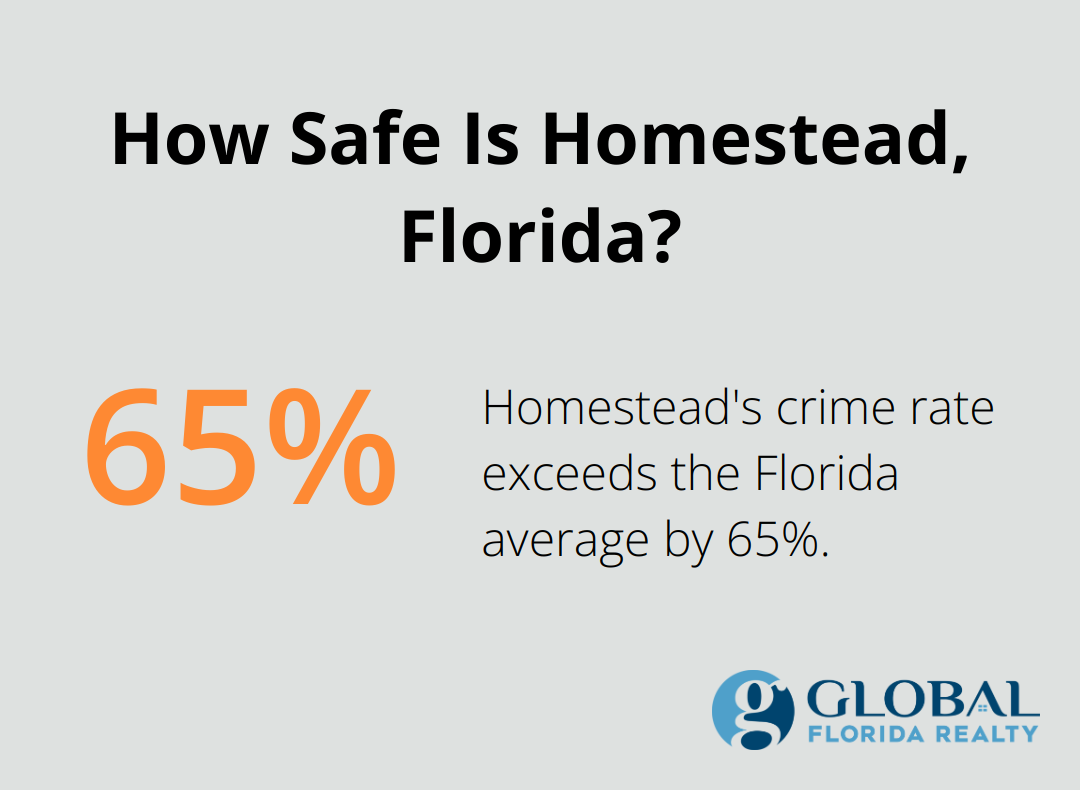
Homestead faces similar challenges with crime. The city’s crime rate exceeds the Florida average by 65%. This has resulted in a 2.3% decrease in median home values over the past year.
Investors should approach these areas with caution, as high crime rates not only affect property values but also make it difficult to attract quality tenants or resell properties in the future.
Some Florida cities experience an oversupply of rental properties, which leads to increased vacancy rates and downward pressure on rental income. Orlando, despite its popularity, has seen a surge in new apartment construction. Florida’s rental market has recorded a sharp decline in rent prices across its largest cities, diverging from the national trend of rising rents.
Tampa’s rental market shows similar signs of saturation. The city’s apartment occupancy rate dropped to 93.5% in Q4 2023, down from 96% the previous year. This oversupply can reduce rental income and potentially extend periods between tenants for property owners.
The quality of local schools significantly impacts real estate values. In Polk County, several schools received D or F grades from the Florida Department of Education in 2023. This corresponds with a slowdown in the local real estate market, with a 1.5% decrease in median listing prices year-over-year.
Investors should exercise caution in areas with struggling school districts, as they often lead to decreased demand from families and can negatively impact long-term property appreciation.
Some Florida cities face significant infrastructure issues, coupled with high property taxes, creating a challenging environment for real estate investors. Jacksonville grapples with aging infrastructure. The city’s 2023 budget allocated $500 million for infrastructure improvements, but progress remains slow. This, combined with a property tax rate of 11.4413 mills (higher than the state average), makes it a potentially risky investment area.
Pensacola faces similar infrastructure challenges, particularly with its stormwater system. The city has implemented a stormwater fee to address these issues, adding to the cost of property ownership. With property taxes at 11.2653 mills and additional fees, investors may find it difficult to achieve desirable returns in this market.
When considering real estate investments in Florida, it’s important to look beyond surface-level appeal and examine these underlying factors. While challenges exist in these markets, opportunities can still be found with proper due diligence and local market knowledge.
Florida’s real estate market requires careful consideration to avoid potential pitfalls. We explored the 5 worst cities to buy real estate in Florida, highlighting economic indicators, environmental risks, and local market conditions that impact investment viability. High unemployment, limited job diversity, declining populations, and stagnant home values serve as red flags for investors in cities like Sebring, Orlando, and Panama City.

Specific cities with challenging real estate markets include Daytona Beach and Homestead, where high crime rates correlate with decreased property values. Oversaturated rental markets in Orlando and Tampa, declining school districts in Polk County, and infrastructure challenges in Jacksonville and Pensacola further complicate the investment landscape. Thorough research and due diligence prove paramount when considering real estate investments in Florida.
We at Global Florida Realty can help navigate Florida’s complex real estate landscape. Our team assists with locating personal homes and investment properties, including vacation rentals near popular attractions. We offer home marketing, property valuations, and management services for both short-term and long-term leasing (in desirable areas like Orlando).