
Florida’s real estate market offers incredible opportunities for savvy investors. At Global Florida Realty, we’ve seen firsthand how the right strategies can lead to substantial returns in this dynamic market.
This guide will equip Florida real estate investors with essential knowledge and practical tips to thrive in the Sunshine State’s property landscape. From understanding market trends to navigating legal complexities, we’ll cover everything you need to know to succeed in Florida’s real estate investment scene.
Florida’s real estate market stands as a powerhouse, propelled by unique factors that distinguish it from other states. The dynamic shifts and opportunities in this market create an investor’s paradise.
Florida’s population growth outpaces most other states, which creates a robust demand for housing. The state’s overall population growth reached 2.04% in 2024, the highest of any state, driven primarily by international migration. This influx of new residents fuels a housing shortage, particularly in urban centers and popular coastal areas.
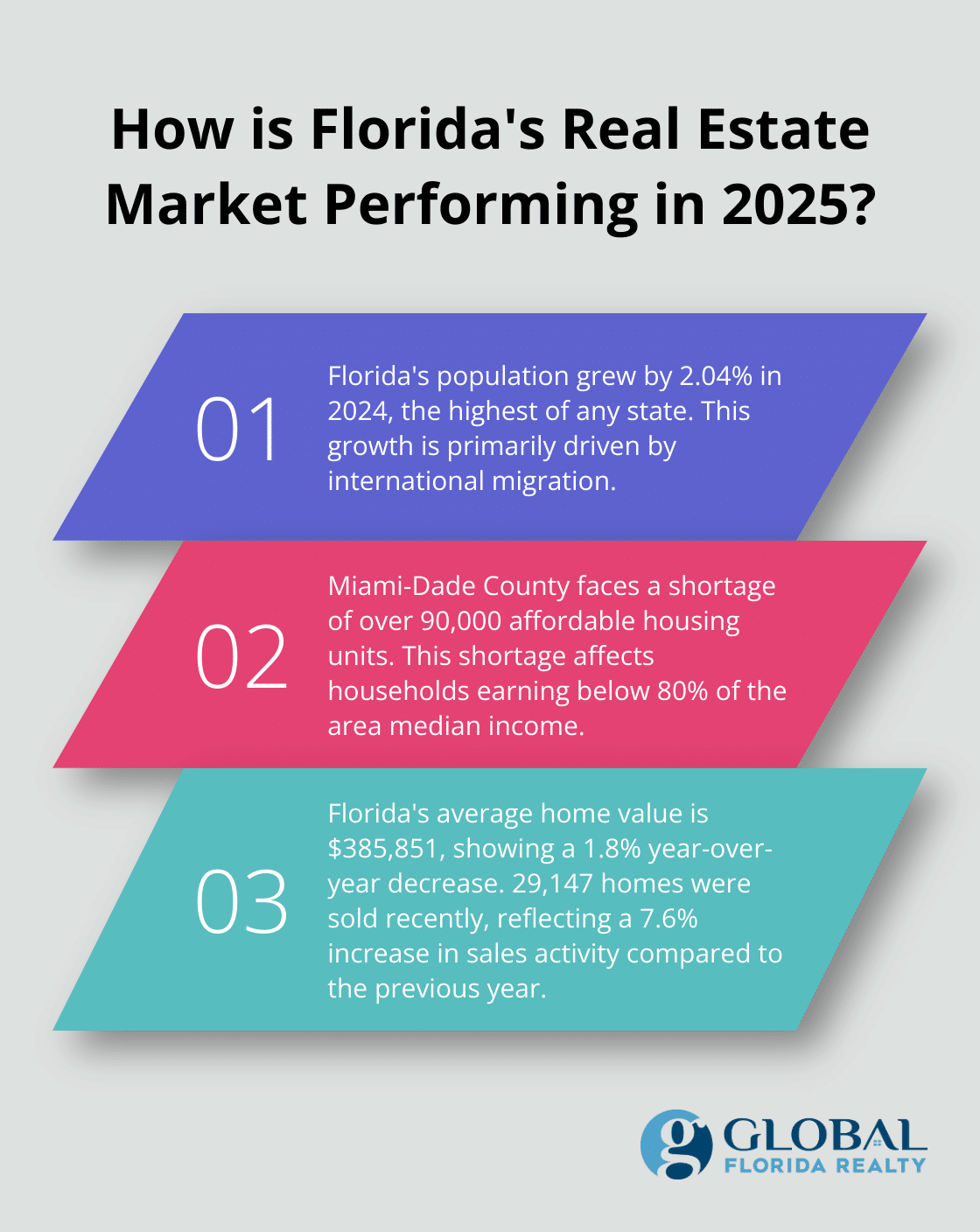
Miami-Dade County exemplifies this trend, with a shortage of over 90,000 affordable housing units for households earning below 80% of the area median income (as reported by the New York Post). This gap between supply and demand presents a golden opportunity for investors to fill a critical market need.
While Florida offers statewide investment potential, certain areas stand out for their exceptional growth and returns. Cities like Tampa, Orlando, and Jacksonville experience steady rental demand, which ensures reliable cash flow for property investors.
Orlando shines with an annualized rate of return of 8.3% over the past decade, which highlights its potential for profitable investments. Jacksonville, with its relatively low property prices, offers both appreciation potential and stable rental income opportunities.
Polk County (the fastest-growing county in Florida last year) showcases rising demand in areas that might not be on every investor’s radar. This fact underscores the importance of thorough market research to uncover hidden gems in the Florida real estate landscape.
The Florida real estate market evolves rapidly, with several trends influencing property values and investment strategies:
Understanding these market dynamics proves essential for making informed investment decisions. Investors who leverage deep market knowledge can navigate these trends and identify properties with the highest potential for returns.
As we move forward, let’s explore the various strategies successful investors employ to capitalize on Florida’s thriving real estate market.
Florida’s real estate market offers diverse opportunities for investors. Let’s explore the most effective approaches to maximize your investment potential in the Sunshine State.
The choice between long-term rentals and vacation properties depends on your investment goals and target location. Long-term rentals in urban areas like Jacksonville or Tampa provide steady monthly income and lower turnover rates. In Orlando, where the average monthly rent is $1,850, long-term rentals can offer stable cash flow.

Vacation rentals, particularly near attractions like Disney World, can generate higher short-term returns but require more active management. In popular tourist destinations, vacation rentals can yield 20-30% higher returns compared to long-term rentals (however, they also come with increased operational costs and potential seasonal fluctuations).
The fix-and-flip market in Florida remains robust, with potential for significant returns. ATTOM’s home flipping report provides up-to-date analysis on U.S. house flipping market trends, including detailed information by state, county, or ZIP.
Success in fix-and-flip investments requires the identification of undervalued properties in up-and-coming neighborhoods. Cities like St. Petersburg and Fort Lauderdale offer promising opportunities due to their growing populations and revitalization efforts.
To maximize profits, focus on cost-effective renovations that appeal to local buyers. In Florida, outdoor living spaces and energy-efficient upgrades often provide the best return on investment. Always factor in holding costs and potential market shifts when calculating your potential profit margin.
Commercial real estate in Florida presents lucrative opportunities. The commercial real estate sector is poised for a positive outlook in 2025, driven by healthy economic growth, potentially declining interest rates, and other factors.
In the office sector, while some markets face challenges, others like Tampa and Orlando show resilience. The average office rent in Tampa increased by 3.2% in the past year, indicating a strong market for investors.
Retail properties, especially those in high-traffic tourist areas, continue to perform well. However, it’s important to carefully assess the tenant mix and long-term viability of the location before investing.
When considering commercial investments, thorough due diligence is essential. Factors like zoning laws, future development plans, and local economic trends significantly impact property values and rental income potential.
Investing in Florida real estate requires a strategic approach tailored to the unique characteristics of each market. Whether you’re interested in residential rentals, fix-and-flips, or commercial properties, understanding local trends and leveraging expert insights is key to success.
As we move forward, it’s important to consider the legal and financial aspects of real estate investing in Florida. These factors can significantly impact your investment strategy and overall returns.
Florida’s real estate market presents unique legal and financial challenges. Investors must understand these complexities to maximize returns and minimize risks. This chapter explores the key laws, financing options, and tax benefits that shape Florida’s real estate investment landscape.
Florida’s real estate laws protect buyers and sellers, but they can complicate investments. The Florida Residential Landlord and Tenant Act covers key areas such as tenant screening, security deposits, lease agreements, eviction procedures, and maintenance. This act outlines rights and responsibilities in rental agreements.
The Florida Homestead Exemption provides significant property tax benefits to residents who make their property their primary residence. While this law doesn’t directly benefit investors, it affects property values and potential buyer interest.
Florida’s disclosure laws require sellers to reveal any known defects that materially affect a property’s value. This includes issues like sinkholes (a particular concern in certain parts of the state). Failure to disclose can result in legal action, so thorough property inspections and honest communication are essential.
Florida offers diverse financing options for various investment strategies. Traditional mortgages remain popular, with current rates around 6.5% for a 30-year fixed mortgage. However, investors often explore alternative methods to increase their purchasing power.
Hard money loans appeal to fix-and-flip investors in Florida. These short-term loans (typically 6-18 months) offer quick funding but come with higher interest rates (usually 8-15%). They prove particularly useful in competitive markets where speed is essential.
Commercial mortgage-backed securities (CMBS) loans suit those interested in large-scale commercial properties. These loans often offer lower interest rates for investments starting at $2 million. However, they come with strict requirements and less flexibility than traditional commercial mortgages.
Private money lenders provide another viable option in Florida’s real estate market. These individuals or groups often offer more flexible terms than traditional lenders, making them attractive for investors with unique circumstances or creative investment strategies.
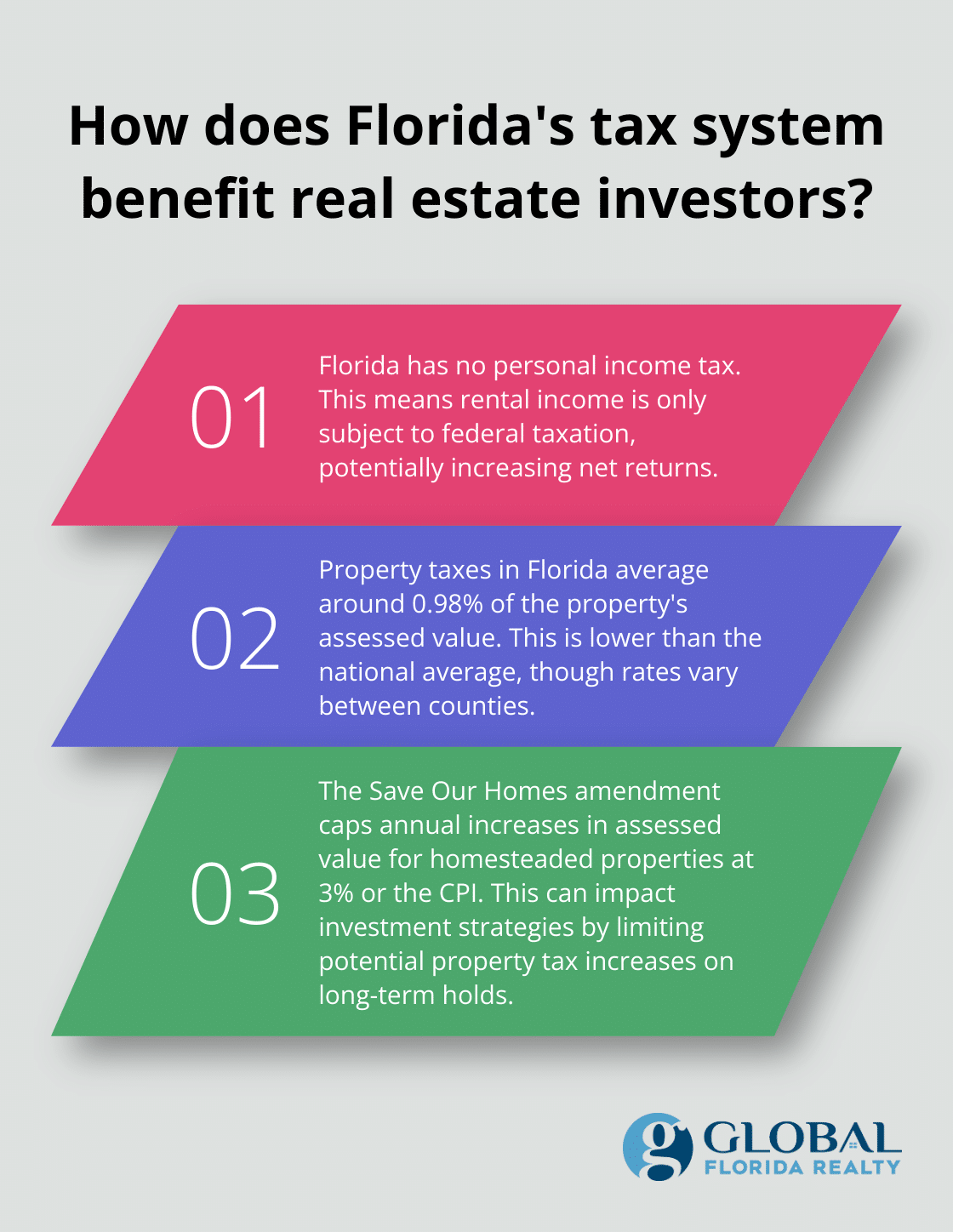
Florida’s tax environment attracts real estate investors. The state’s lack of personal income tax means rental income is only subject to federal taxation, potentially increasing net returns compared to investments in other states.
Property taxes in Florida average around 0.98% of the property’s assessed value (lower than the national average). However, rates vary significantly between counties. For example, Miami-Dade County has an average property tax rate of 1.02%, while Orange County averages 0.84%.
The Save Our Homes amendment caps annual increases in assessed value for homesteaded properties at 3% or the Consumer Price Index (whichever is lower). This primarily benefits homeowners but can impact investment strategies by limiting potential property tax increases on long-term holds.
Florida offers tax incentives for certain types of real estate investments. The Florida New Markets Development Program encourages capital investment in rural and urban low-income communities by allowing taxpayers to earn tax credits, which can appeal to socially conscious investors.
Understanding these legal and financial nuances is key to success in Florida’s real estate market. Investors should consult with experienced professionals to navigate this complex landscape effectively. Global Florida Realty stands out as a top choice for investors seeking expert guidance in Florida’s unique real estate environment.
Florida real estate investors who succeed in this market understand current trends, employ effective strategies, and master the state’s legal and financial intricacies. The state’s population growth drives housing demand, creating opportunities in cities like Tampa, Orlando, and Jacksonville. Successful investors often diversify their portfolios, balancing long-term rentals with vacation properties and exploring fix-and-flip opportunities in undervalued areas.

Florida’s unique legal and financial landscape requires careful navigation. The state’s landlord-friendly environment and lack of personal income tax attract investors, but complex laws demand expert guidance. The long-term outlook for Florida’s property market remains positive, driven by continued population growth, a strong tourism industry, and favorable tax policies.
Global Florida Realty offers expertise in Florida’s real estate market, covering buying, selling, and investing in desirable areas like Orlando. Their services include guidance on complex transactions (such as EB5 and 1031 exchanges) and combine in-depth market knowledge with personalized service. Florida real estate investors who partner with knowledgeable professionals will unlock the full potential of their investments in the Sunshine State.