
At Global Florida Realty, we often get asked about how to start an LLC for rental properties. It’s a smart move for real estate investors looking to protect their assets and streamline their operations.
Creating an LLC for your rental properties offers numerous benefits, from liability protection to tax advantages. In this guide, we’ll walk you through the process step-by-step, ensuring you’re well-equipped to establish and manage your rental property LLC effectively.
LLCs transform the way investors manage their properties and protect their assets. This powerful business structure offers numerous advantages for real estate investors looking to optimize their rental property strategies.
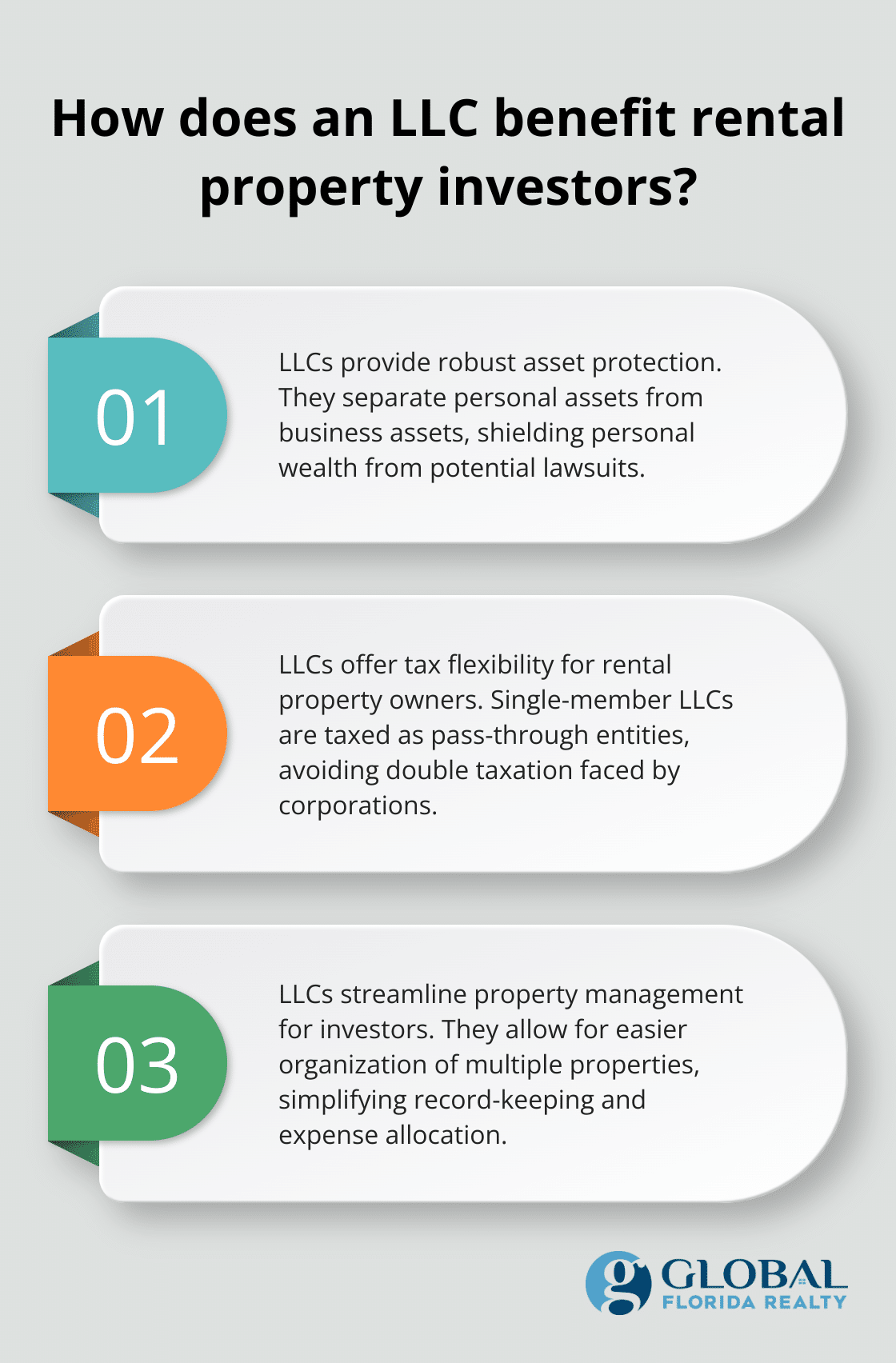
The robust asset protection an LLC provides stands out as one of its most compelling features. Creating an LLC for your rental property reduces your liability risk and separates your assets. If a tenant or visitor sustains an injury on your property and decides to sue, your personal assets (such as your home or savings) typically remain protected from legal action. Only the assets within the LLC face potential risk. This clear separation between personal and business assets proves essential for real estate investors who want to build wealth without exposing themselves to unnecessary risk.
LLCs offer remarkable flexibility in taxation. Single-member LLCs are generally taxed as pass-through entities by default, which means all profits and losses pass through to your personal tax return. This structure avoids the double taxation that corporations face. Multi-member LLCs can choose taxation as a partnership or elect S-corporation status, potentially reducing self-employment taxes on rental income.
An LLC structure simplifies the management of multiple properties. You can create a single LLC to hold all your properties or separate LLCs for different properties or locations. This organization helps you maintain clear records, allocate expenses accurately, and manage cash flow more effectively. Many property investors find that this structure simplifies their annual tax preparation and makes it easier to track the performance of individual properties.
An LLC lends credibility to your rental business. Tenants, vendors, and partners often view LLCs more favorably than individual landlords. This professional image can lead to better tenant relationships, more favorable terms with suppliers, and increased opportunities for partnerships or financing. In competitive real estate markets (like Florida), this edge can make a significant difference in your success as a property investor.
The specific advantages of an LLC can vary based on individual circumstances and local laws. Consulting with legal and financial professionals ensures you make the most of this powerful business structure for your rental property investments. As we move forward, let’s explore the step-by-step process of forming an LLC for your rental properties.
The first step in forming your LLC involves choosing a unique and compliant name. Each state has specific rules about what you must include in an LLC name. For example, in Florida, your name must contain “Limited Liability Company,” “LLC,” or “L.L.C.” You need to check your state’s database to ensure your chosen name isn’t already taken. Many states offer online search tools for this purpose. It’s smart to have several name options ready in case your first choice is unavailable.
After you’ve decided on a name, you must file your Articles of Organization with your state’s Secretary of State office. This document typically includes basic information about your LLC, such as its name, address, and the names of its members or managers. In Florida, the filing fee is $125. Processing times vary by state, but many offer expedited services for an additional fee if you need to form your LLC quickly.
An Operating Agreement outlines how you will run your LLC, including management structure, profit distribution, and procedures for adding or removing members. For rental property LLCs, it’s particularly important to detail how you will make property-related decisions and how you will distribute profits from rentals among members. We strongly recommend that you have an attorney review your Operating Agreement to ensure it covers all necessary aspects and protects your interests.
Depending on your location and the nature of your rental business, you may need specific licenses or permits. For example, many cities require landlords to obtain a business license or a rental property permit. In some areas, you might need to pass property inspections before you can legally rent out your property. Research your local requirements thoroughly to avoid potential fines or legal issues down the line.
An Employer Identification Number (EIN) is essentially a social security number for your business. You’ll need this for tax purposes and to open a business bank account for your LLC. You can obtain an EIN for free (usually through the IRS website in a matter of minutes). Have all your LLC information ready when applying, as you must complete the process in one session.

The formation of your LLC sets the foundation for your rental property business. While this process isn’t overly complex, it’s always wise to consult with legal and tax professionals to ensure you make the best decisions for your specific situation. Now that you’ve established your LLC, let’s explore how to effectively manage your new business entity to maximize its benefits and ensure compliance with all relevant regulations.
After forming your LLC for rental properties, proper management will maintain its benefits and legal status. Here’s how to effectively manage your rental property LLC:
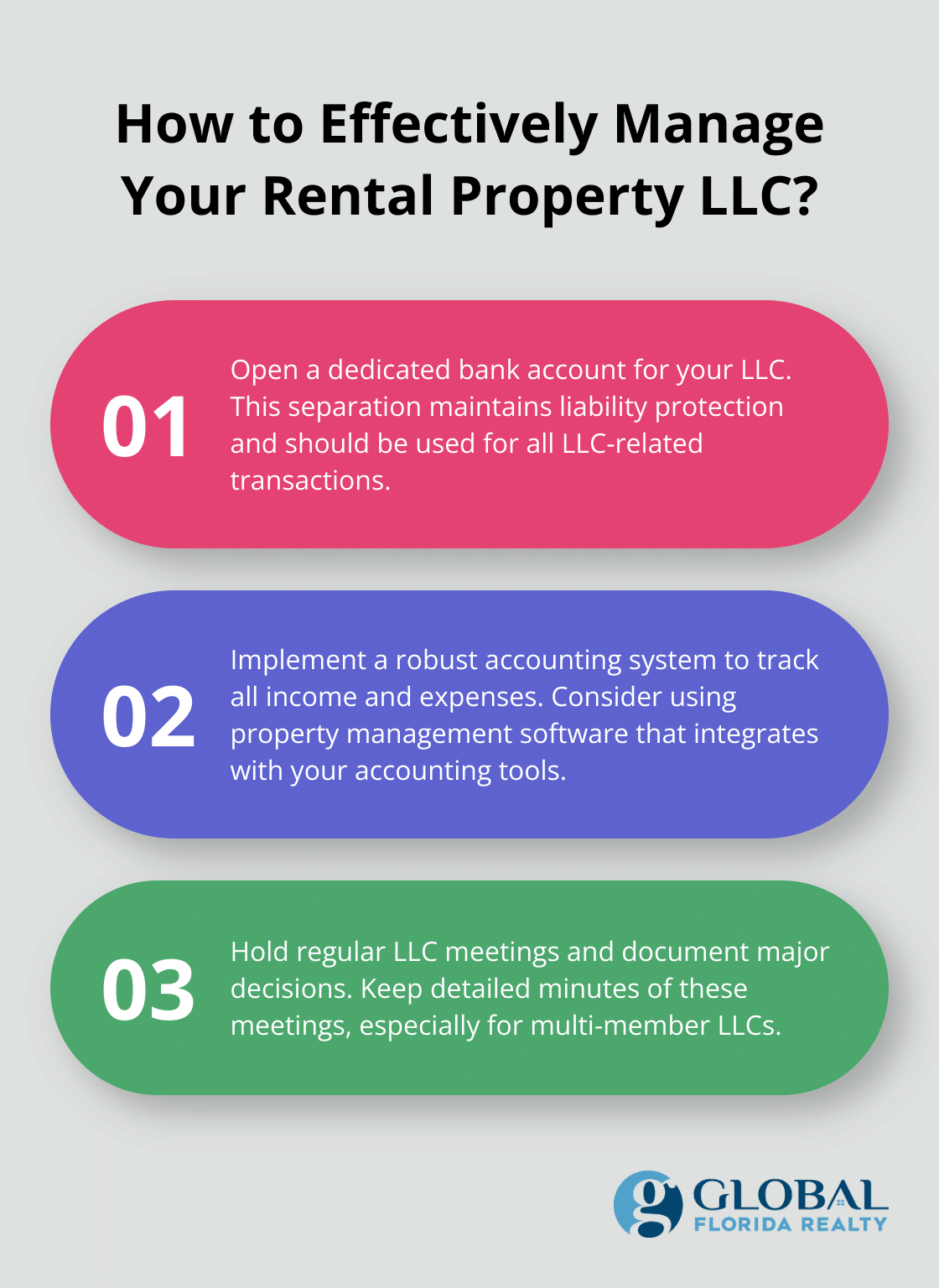
Separate your finances by opening a dedicated bank account for your LLC. This separation will maintain the liability protection your LLC provides. Use this account exclusively for all LLC-related transactions, including rent collection, bill payments, and property maintenance expenses. Consider LLC fees and annual registration fees when setting up multiple LLCs for optimal asset protection.
Accurate and detailed record-keeping forms the backbone of successful LLC management. Implement a robust accounting system to track all income and expenses. Consider using property management software that integrates with your accounting tools. These systems can automate rent collection, generate financial reports, and simplify tax preparation.
Even if you’re the sole member of your LLC, hold regular meetings and document major decisions. For multi-member LLCs, these meetings are essential for discussing property management strategies, financial performance, and future investments. Keep detailed minutes of these meetings, recording all significant decisions and discussions. While not legally required, LLC minutes provide valuable records, especially for multi-member LLCs.
Most states require LLCs to file annual reports and pay associated fees. Mark these deadlines on your calendar and set reminders to ensure timely filing. Failure to comply can result in penalties or even the dissolution of your LLC. Additionally, stay informed about any changes in local landlord-tenant laws or property management regulations that may affect your LLC’s operations.
Effective management of your rental property LLC extends beyond administrative tasks. It involves staying proactive in property maintenance, fostering positive tenant relationships, and continuously educating yourself on real estate market trends. Regular property inspections will help you identify and address issues before they become major problems. Develop a network of reliable contractors for prompt repairs and maintenance. Implement a tenant screening process to select responsible renters, which can reduce turnover and potential legal issues.
Starting an LLC for rental properties offers significant benefits for real estate investors. Asset protection, tax flexibility, and simplified management make this business structure attractive. The steps outlined in this guide provide a solid foundation for establishing a successful rental property LLC.

Local laws, market conditions, and individual financial circumstances impact the best approach for your specific needs. We at Global Florida Realty recommend consulting with legal and financial professionals before making significant decisions about your real estate investments. Our team offers invaluable insights and services for those looking to invest in rental properties, backed by nearly 30 years of expertise in Florida real estate.
Global Florida Realty can guide you through the process of finding, acquiring, and managing your real estate investments. We provide property valuations, effective marketing strategies, and support to make your journey into rental property ownership smooth and profitable. Our goal is to help you build a thriving rental property portfolio while minimizing personal risk and maximizing potential returns.