
Navigating the world of Florida real estate taxes can be complex, but it’s a crucial aspect of property ownership in the Sunshine State. At Global Florida Realty, we understand the importance of staying informed about how these taxes are calculated and paid.
This guide will walk you through the process of paying Florida real estate taxes, providing valuable insights on payment options, deadlines, and potential ways to reduce your tax burden. Whether you’re a new homeowner or a seasoned investor, understanding how Florida real estate taxes are paid is essential for effective property management.
Florida real estate taxes (also known as property taxes) fund local services such as schools, emergency services, and infrastructure maintenance. These taxes primarily consist of ad valorem taxes, which are based on the assessed value of your property. This includes taxes on land, buildings, and certain types of personal property used in businesses. Your tax bill may also include non-ad valorem assessments for specific services like solid waste collection or street lighting.
Florida property taxes use a straightforward formula: taxable value multiplied by the millage rate. The county property appraiser determines the taxable value by assessing your property’s market value annually and adjusting for any applicable exemptions. Various taxing authorities, including counties, cities, and school districts, set the millage rate. One mill equals $1 for every $1,000 of taxable value. For example, if your property’s taxable value is $200,000 and the total millage rate is 20 mills, your annual property tax would be $4,000.
The homestead exemption offers significant benefits for Florida residents. Property owners in Florida may be eligible for exemptions and additional benefits that can reduce their property tax liability. If you own and occupy your home as your primary residence, you can reduce your property’s taxable value by up to $50,000. The first $25,000 applies to all property taxes (including school district taxes), while the additional $25,000 applies to non-school taxes only.
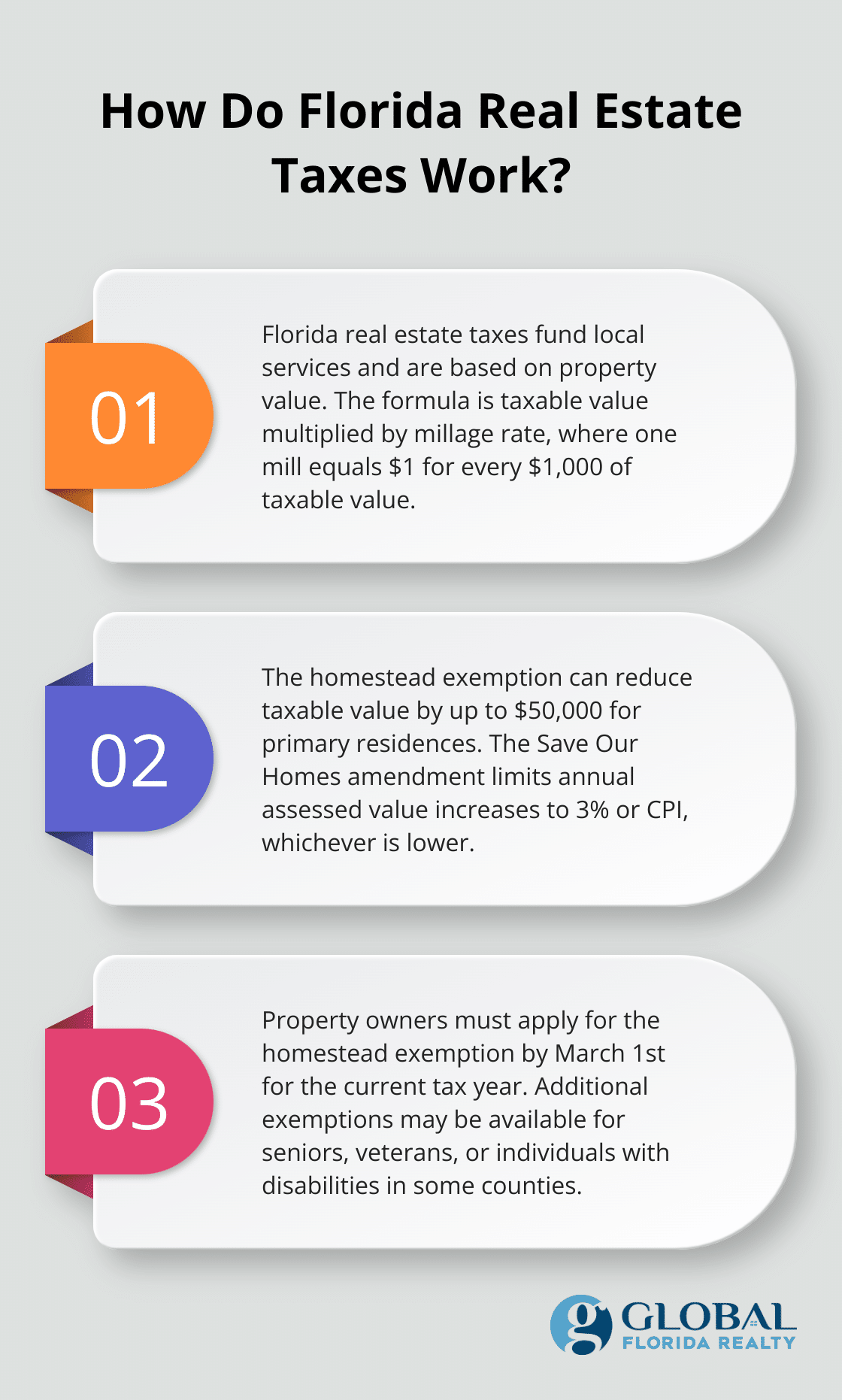
Additionally, the Save Our Homes amendment limits the annual increase in the assessed value of homesteaded property to 3% or the Consumer Price Index (CPI), whichever is lower. This can result in substantial tax savings over time, especially in areas with rapidly appreciating property values.
While these tax rules apply statewide, individual counties may offer additional exemptions or special assessments. For example, some counties provide extra exemptions for seniors, veterans, or individuals with disabilities. It’s essential to check with your local property appraiser’s office for the most up-to-date and location-specific information.
To benefit from the homestead exemption, new homeowners must apply as soon as possible after purchasing their primary residence. The deadline to file is March 1st for the current tax year. Missing this deadline could result in higher property taxes for that year.
As we move forward to discuss when and how to pay Florida real estate taxes, it’s important to note that understanding these tax nuances can significantly impact your financial planning and property management strategies.
Property taxes become delinquent April 1 or up to 60 days after the tax collector mailed the tax notice. Tax collectors mail out bills in November, and property owners must pay between November 1st and March 31st. This schedule allows ample time for financial planning and budgeting.
Property owners can choose from several payment options:

The official payment deadline is March 31st. Procrastination can lead to penalties, so prompt payment is advisable.
Florida offers attractive discounts for early tax payments:
These discounts can result in substantial savings. For a $5,000 tax bill, paying in November saves $200 (which could cover home maintenance costs or other expenses).
Failure to pay property taxes on time carries serious repercussions:
Some homeowners have faced foreclosure due to unpaid property taxes (a situation we at Global Florida Realty strive to help our clients avoid).
For those who find lump sum payments challenging, Florida offers an installment plan:
This option forfeits early payment discounts but can ease budgeting concerns for many homeowners.
Recent property purchasers should prepare for potentially higher initial tax bills. The previous owner’s homestead exemption doesn’t automatically transfer. New owners must apply for their own exemption by March 1st to benefit in the following tax year.
Understanding these payment options and deadlines is essential for effective property management. In the next section, we’ll explore strategies to manage and potentially reduce your Florida real estate tax burden.
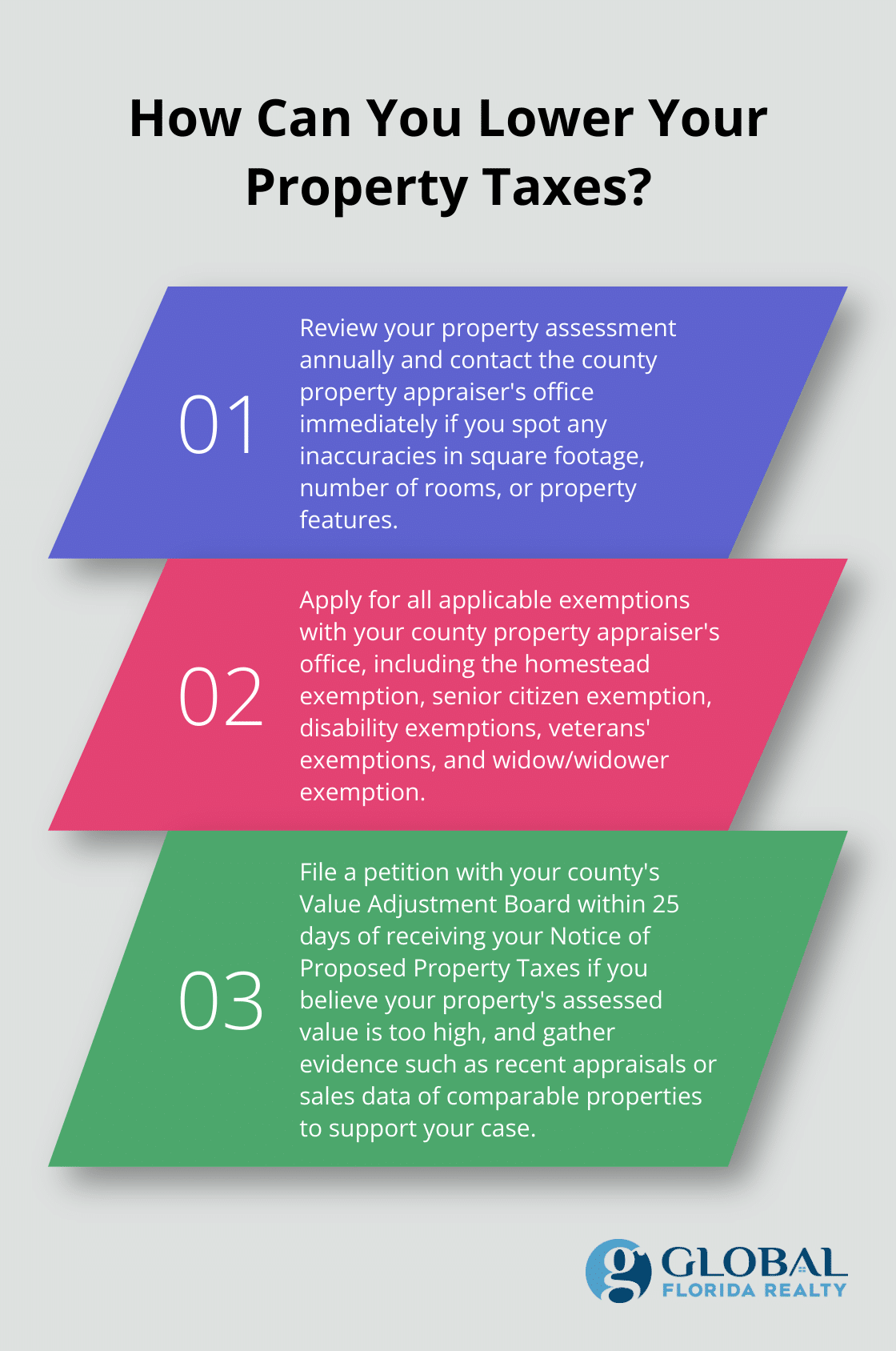
Take a close look at your property’s assessed value every year. This figure, determined by your county’s property appraiser, forms the basis of your tax bill. Errors in this assessment can lead to unnecessarily high taxes. Check for discrepancies in square footage, number of rooms, or property features. If you spot any inaccuracies, contact your county property appraiser’s office immediately to request a correction.

The Florida Department of Revenue provides information about the “Assessment Roll,” which is a systematic listing of information for the orderly levying or imposition of a tax on property. This document can help you understand how your property is assessed.
Florida offers numerous exemptions that can significantly reduce your property taxes. While the homestead exemption is the most well-known, there are others you might qualify for:
To take advantage of these exemptions, you must apply with your county property appraiser’s office. Don’t assume you’re automatically enrolled – being proactive can lead to significant savings.
If you believe your property’s assessed value is too high, even after reviewing for errors, you have the right to appeal. The appeal process typically involves these steps:
The Florida Department of Revenue produces statewide summary data on the number of appeals and the success rate of appeals. While the process requires effort, a successful appeal can lead to substantial tax savings.
Local tax laws can change, affecting your property tax obligations. Try to keep up with these changes by:
Global Florida Realty, with nearly 30 years of expertise in Florida real estate, can provide valuable insights into local tax laws and their potential impact on your property.
Florida real estate taxes require diligence and proactive management. Property owners must understand how taxes are calculated, when they’re due, and the payment options available to make informed decisions. Early payment discounts and exemptions like the homestead exemption offer significant savings opportunities, while timely payment of Florida real estate taxes prevents costly penalties and legal complications.
Regular review of property assessments and staying informed about tax law changes help manage tax burdens effectively. The appeal process can lead to substantial savings for those who believe their property has been overvalued. These strategies, combined with a thorough understanding of available exemptions, can help property owners minimize their tax obligations within legal bounds.
Global Florida Realty understands the complexities of Florida’s real estate tax landscape. Our team offers comprehensive services that extend beyond traditional real estate transactions, including assistance with understanding tax implications and navigating the local property tax system. We provide personalized service to make your real estate transactions both seamless and tax-efficient.