
At Global Florida Realty, we understand the importance of professional growth in the real estate industry. Florida Bar Real Estate Certification is a prestigious credential that can elevate your career to new heights.
This comprehensive guide will walk you through the steps to earn this valuable certification, from understanding the requirements to preparing for the exam. Whether you’re a seasoned real estate attorney or just starting your journey, this post will provide you with the knowledge you need to succeed.
Florida Bar Real Estate Certification stands as a prestigious credential in the field of real estate law. The Florida Bar awards this certification to attorneys who demonstrate exceptional knowledge, skills, and experience in real estate law. This recognition sets certified lawyers apart in a competitive legal landscape.
The path to certification demands dedication and extensive experience. Attorneys must meet several key requirements:
Obtaining Florida Bar Real Estate Certification offers numerous advantages:
Attorneys with Florida Bar Real Estate Certification often gain a competitive edge in the market. Their specialized knowledge allows them to provide more comprehensive and nuanced advice to clients, particularly in complex real estate transactions. This enhanced expertise translates into better service for clients and can lead to increased referrals and professional opportunities.

The certification’s impact extends beyond individual attorneys. It raises the bar for the entire real estate legal community, encouraging continuous learning and professional development. As we move forward, let’s explore the specific eligibility requirements for this prestigious certification.
The Florida Bar Real Estate Certification recognizes attorneys’ special knowledge, skills and proficiency in various areas of law and professionalism and ethics in practice. Attorneys must practice law for a minimum of five years to qualify. However, time alone doesn’t suffice-focus matters. In the three years leading up to the application, at least 40% of an attorney’s practice must concentrate on real estate law. This substantial involvement requirement ensures certified attorneys possess deep, practical experience in the field.

Attorneys should diversify their practice to include various aspects of real estate law (e.g., residential closings, commercial leases, zoning issues, title disputes). Keeping detailed records of cases and billable hours will help demonstrate this specialization effectively.
The Florida Bar sets a high standard for ongoing education. Applicants must complete 45 hours of approved continuing legal education (CLE) in real estate law within the three years preceding their application. This requirement keeps attorneys at the forefront of legal developments and best practices.
Attorneys should seek CLE courses that cover a range of topics, from advanced title insurance issues to the latest environmental regulations affecting real estate. The Florida Bar often provides a list of approved courses, but attorneys can also petition for approval of relevant courses not pre-approved.
An attorney’s reputation among colleagues and judges plays a crucial role in the certification process. The Florida Bar conducts a thorough peer review, seeking input on the applicant’s competence and ethics in real estate law practice. This step underscores the importance of maintaining high professional standards throughout one’s career.
Attorneys should cultivate strong relationships within the legal community and always prioritize ethical conduct. Participation in local bar association events, contributions to legal publications, or mentoring younger attorneys can help build a positive professional reputation.
The certification process evaluates both character and knowledge. Any ethical violations or disciplinary actions can derail certification efforts, so attorneys must maintain impeccable professional conduct at all times.
Meeting these eligibility requirements demands consistent effort and strategic career planning. Attorneys should focus on these areas throughout their practice to position themselves for certification and enhance their overall expertise in real estate law.
As attorneys prepare to meet these rigorous standards, they must also ready themselves for the challenging certification exam. The next section will explore effective strategies for exam preparation and success.
The Florida Bar Real Estate Certification exam tests an attorney’s knowledge and practical skills in real estate law. This exam covers a wide range of topics, including property rights, title insurance, contracts, financing, environmental issues, and land use regulations. The Florida Bar updates the exam content regularly to reflect current laws and practices.
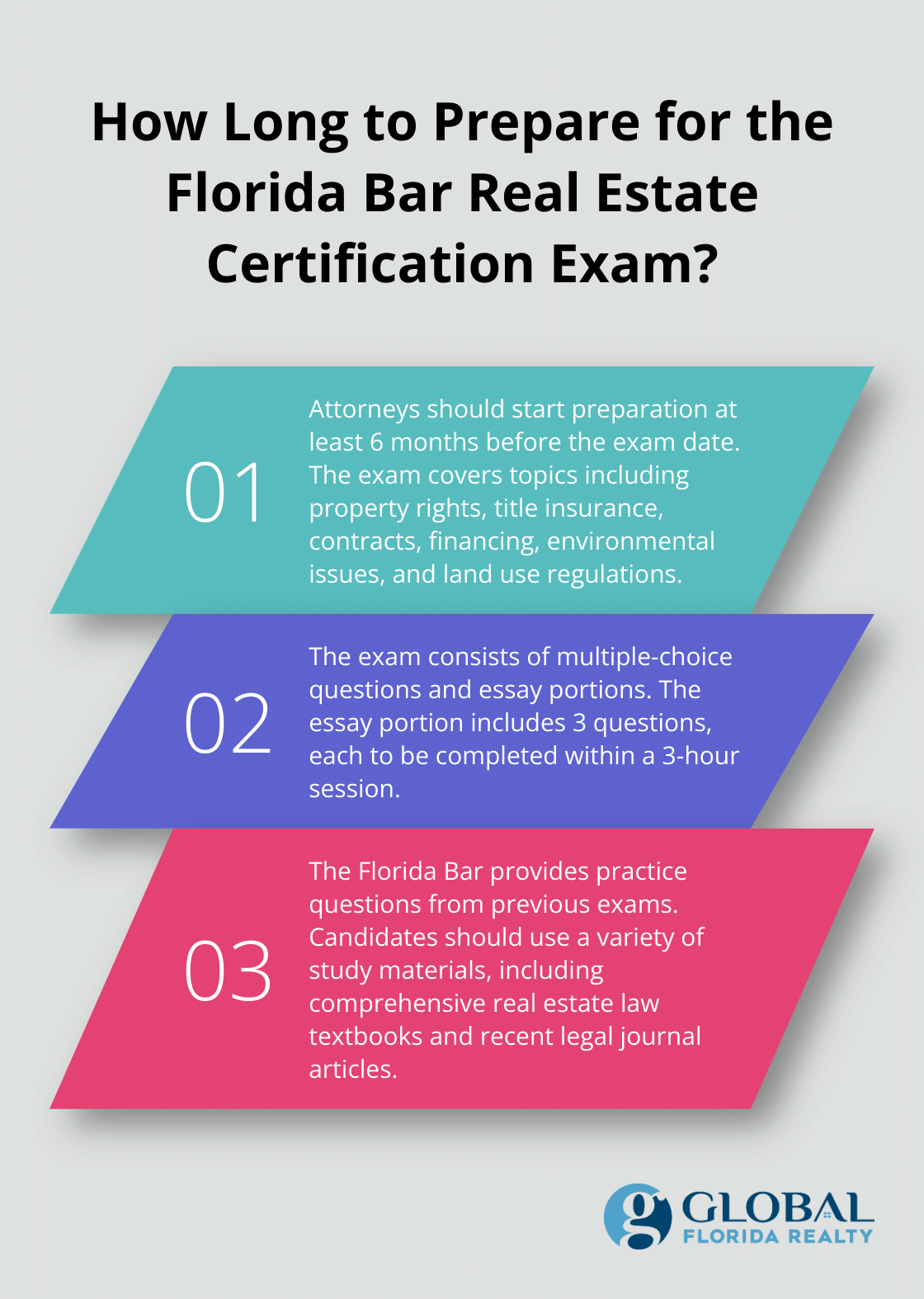
The exam consists of multiple-choice questions and essay portions. Multiple-choice sections test broad knowledge, while essays assess the ability to apply legal principles to complex scenarios. Many test-takers find the essay portion particularly challenging, as it requires clear, concise legal writing under time pressure.
Attorneys should start preparation at least six months before the exam date. Create a study schedule that covers all major topics, allocating more time to areas of less confidence. The Florida Bar provides a detailed outline of exam topics, which should form the backbone of your study plan.
Use a variety of study materials. The Florida Bar offers practice questions from previous exams (invaluable for understanding the exam’s style and difficulty). Supplement these with comprehensive real estate law textbooks and recent legal journal articles to deepen understanding of complex topics.
Form a study group with other attorneys preparing for the exam. This can help maintain motivation and provide opportunities to discuss complex issues and share insights. However, ensure that group study doesn’t replace individual, focused preparation time.
Time management during the exam often presents a struggle. Candidates are typically given three essay questions, and each must be completed within a three-hour session. Practice timed mock exams to improve pacing. For the essay portion, outline answers before writing to ensure a clear, organized response.
Many attorneys find it challenging to balance exam preparation with regular work responsibilities. Try to reduce your workload in the months leading up to the exam. Some firms offer study leave for certification exams – discuss this possibility with your employer.
Anxiety can significantly impact exam performance. Incorporate stress-reduction techniques into your preparation routine (e.g., regular exercise or meditation). On exam day, arrive early to familiarize yourself with the testing environment and reduce last-minute stress.
The day before the exam, avoid cramming. Instead, review key concepts briefly and get a good night’s sleep. During the exam, read each question carefully, paying attention to qualifiers and exceptions. For essays, clearly state the legal issue, applicable law, and your reasoning.
The exam tests not just knowledge, but the ability to apply it in real-world scenarios. Draw on practical experience in real estate law when answering questions, particularly in the essay portion.
It’s important to note that Florida attorneys who want a Florida real estate license do not need to take the prelicensing class, but they do need to pass the state exam.
Florida Bar Real Estate Certification represents a significant achievement for attorneys specializing in real estate law. This prestigious credential demonstrates exceptional knowledge and expertise in the field, potentially leading to increased client trust and more complex cases. The certification process requires extensive experience, ongoing education, and a commitment to high ethical standards.

The certification exam tests both knowledge and practical application of real estate law principles. Thorough preparation, including focused study and practice with sample questions, will improve your chances of success. Time management and the ability to apply legal concepts to real-world scenarios are key skills to develop for the exam.
We at Global Florida Realty value the expertise certified real estate attorneys bring to complex transactions. For attorneys considering this path, we encourage you to pursue Florida Bar Real Estate Certification. The professional growth and opportunities it provides can significantly enhance your career in real estate law.