
At Global Florida Realty, we often hear the question: “How many rental properties do you own?” It’s a common inquiry among investors looking to build wealth through real estate.
The answer isn’t one-size-fits-all. It depends on various factors, including your financial goals, available resources, and risk tolerance.
In this post, we’ll explore the pros and cons of different portfolio sizes to help you determine the right number of rental properties for your investment strategy.
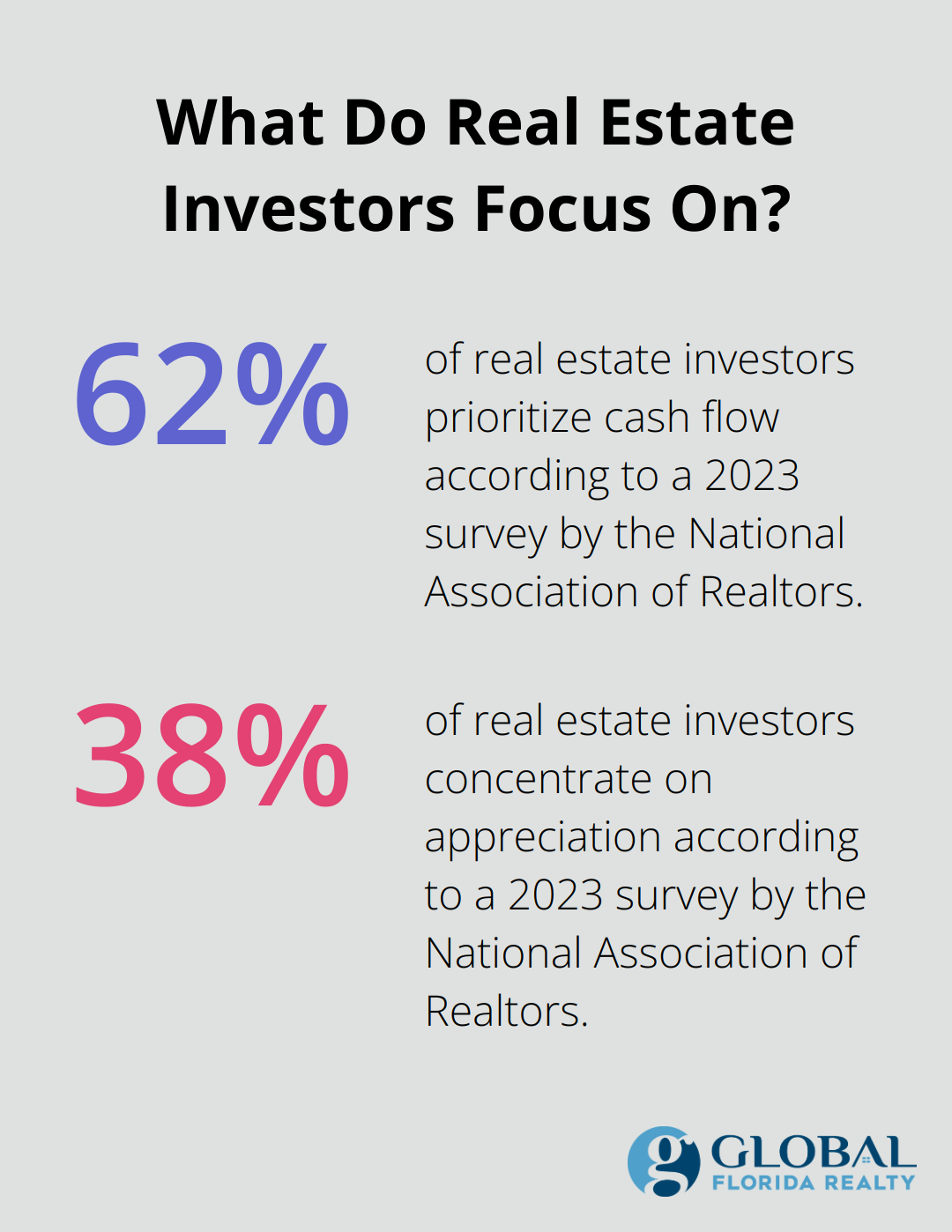
Your financial objectives form the foundation of your rental property portfolio. Are you targeting a specific monthly income? Or do you focus on long-term appreciation? A 2023 survey by the National Association of Realtors reveals that 62% of real estate investors prioritize cash flow, while 38% concentrate on appreciation. Your strategy might incorporate both, influencing the number and types of properties you acquire.
Available capital and financing options significantly impact your portfolio size. Evaluate your liquid assets and financing options. Some investors use home equity lines of credit (HELOCs) or partner with other investors to increase their purchasing power.
Property management requires time and effort. The Institute of Real Estate Management found that landlords spend an average of 3.5 hours per week managing each rental unit. This time commitment multiplies quickly with multiple properties. Assess your availability and willingness to handle tenant issues, maintenance, and financial management. If time is limited, factor in the cost of a property management company (typically 8-12% of monthly rent).
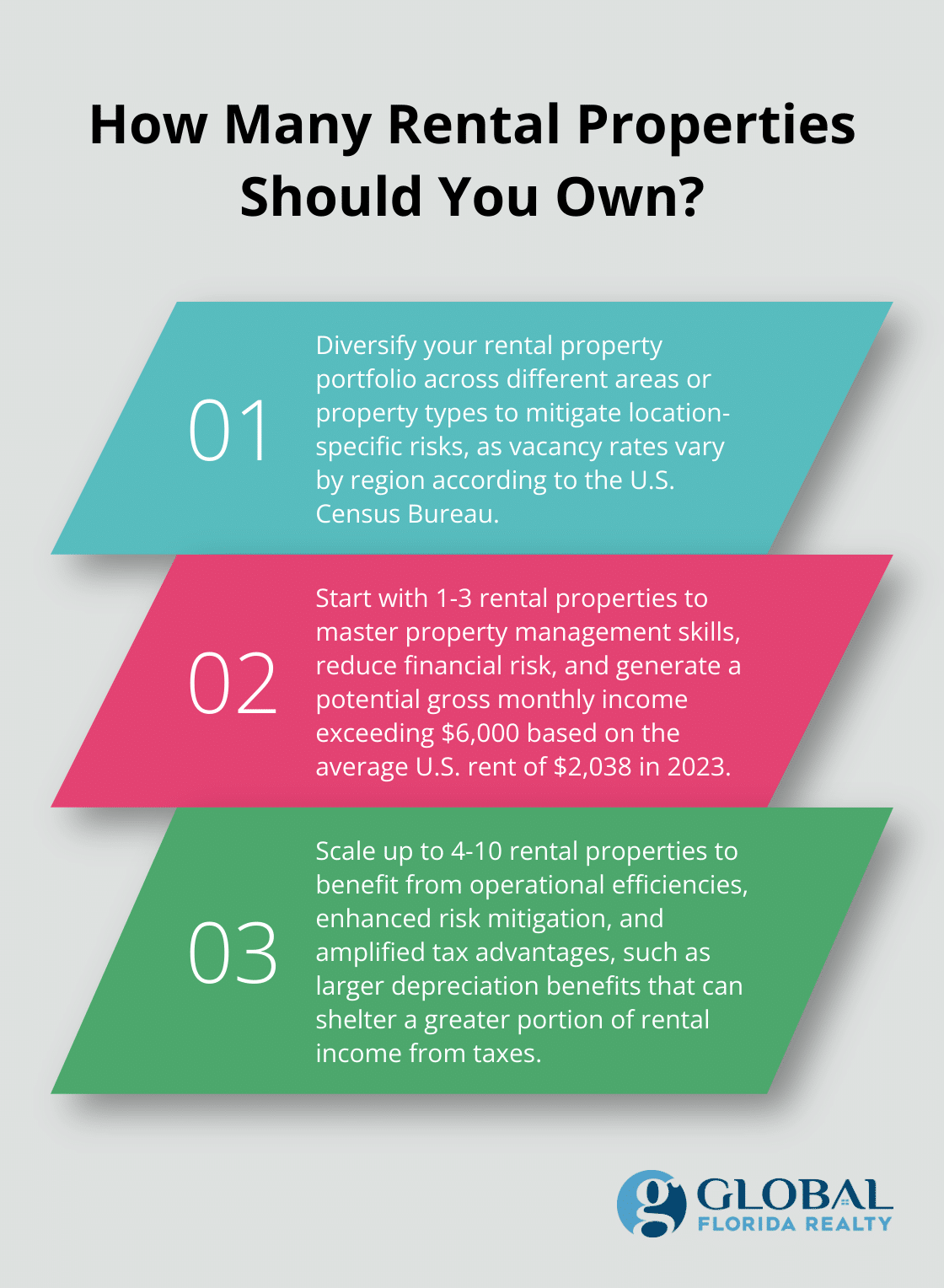
Your comfort with risk plays a crucial role in portfolio size. Multiple properties can spread risk, but also increase exposure to market fluctuations. The U.S. Census Bureau reports that compared to the fourth quarter 2023, the homeowner vacancy rates were higher in the South and West and not statistically different in the Northeast and Midwest. Diversifying across different areas or property types can help mitigate location-specific risks.
Successful investors often start with one or two properties and expand gradually as they gain experience and capital. They carefully balance these factors to build a portfolio that aligns with their goals and lifestyle. The right portfolio size is unique to each investor’s situation.
As we move forward, let’s explore the benefits of starting small with just a few rental properties and how this approach can set a solid foundation for your real estate investment journey. For those looking to expand their portfolio, it’s important to stay informed about current 1031 exchanges regulations, which can significantly impact your investment strategy.
Owning just a few properties allows you to master the ins and outs of property management without feeling overwhelmed. You’ll acquire hands-on experience in tenant screening, lease agreements, and property maintenance. Starting small helps you avoid common mistakes made by first-time rental property owners, saving you time and reducing stress while maximizing your investment.
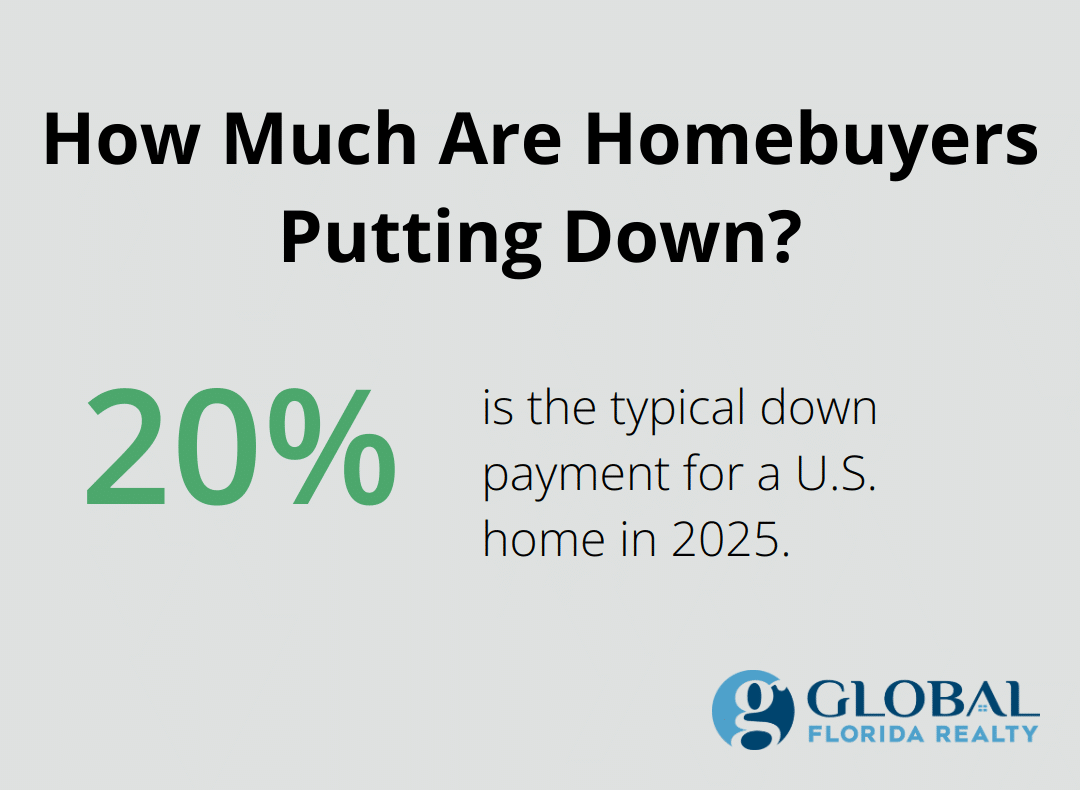
A small portfolio means less capital at stake. The National Association of Realtors projects the median U.S. home price to reach $394,200 in 2025. With a typical 20% down payment, your initial investment per property amounts to around $78,840. This reduced financial commitment enables you to test your investment strategy without risking a large portion of your savings.
Even a few properties can generate meaningful passive income. CoreLogic reported that the average monthly rent for a single-family home in the U.S. stood at $2,038 in 2023. Three properties could potentially yield a gross monthly income exceeding $6,000 (before accounting for expenses).
Managing 1-3 properties proves more straightforward than overseeing a large portfolio. You can personally handle tenant relations, maintenance issues, and financial aspects without the need for extensive outsourcing. This hands-on approach helps you understand the nuances of property management and make informed decisions as you expand your portfolio.
Starting small establishes a solid foundation for future expansion. As you gain experience and build equity in your initial properties, you’ll develop the skills and resources necessary to scale your portfolio effectively. This gradual approach allows you to refine your investment strategy and adapt to market changes before committing to a larger number of properties.
As you consider expanding beyond your initial 1-3 properties, it’s important to understand the advantages and challenges of a larger portfolio. Let’s explore the benefits of scaling up to 4-10 rental properties and how this growth can amplify your real estate investment success.
Owning 4-10 rental properties can substantially increase your monthly cash flow. The real median gross cost of renting grew faster annually (3.8%) than real median household income as of September 2024. A portfolio of 10 properties could potentially generate significant monthly gross rental income. This amplified income stream provides financial stability and accelerates wealth-building goals.
As your portfolio grows, you’ll likely find economies of scale in property management. You may negotiate better rates with contractors for maintenance across multiple properties. A recent study by the National Association of Residential Property Managers highlights that the cost of emergency repairs can quickly erode your rental income.
A larger portfolio allows for greater diversification, which spreads risk across multiple properties and potentially different markets. This strategy helps buffer against localized economic downturns or property-specific issues. If one property experiences extended vacancy, the income from other properties can help offset the loss.
Scaling up your portfolio can amplify tax advantages. The IRS allows rental property owners to deduct expenses such as mortgage interest, property taxes, and depreciation. With 4-10 properties, these deductions can significantly reduce your taxable income. You may also qualify for more substantial depreciation benefits (potentially sheltering a larger portion of your rental income from taxes).
Expanding your rental property holdings requires a strategic approach. You must consider market conditions, financing options, and your personal capacity for management. Careful planning and expert guidance can make a significant difference in your investment success. Global Florida Realty offers comprehensive services for investors looking to scale their portfolios, including guidance on property selection and management strategies.

The number of rental properties you own depends on your financial goals, available capital, management time, and risk tolerance. You can start small with 1-3 properties to gain experience and minimize risk. As you expand to 4-10 properties, you’ll benefit from increased passive income and operational efficiencies. Market conditions, financing options, and property management strategies change over time, so continuous education is essential for long-term success in real estate investing.
Successful real estate investing requires careful planning and adaptability. Your property ownership should align with your personal goals and management capacity. The rental property market offers unique benefits and challenges at different portfolio sizes, from lower financial risk with fewer properties to enhanced diversification with a larger portfolio.
For personalized advice on how many rental properties you should own, consult with real estate professionals. At Global Florida Realty, we offer expertise in Florida real estate to help you build a successful rental property portfolio. Our team provides insights on property selection, market trends, and effective management strategies to guide you through your real estate investment journey.