
Florida’s real estate market offers incredible opportunities for investors seeking rental properties for sale. From bustling tourist hotspots to serene coastal retreats, the Sunshine State has something for every type of landlord.
At Global Florida Realty, we’ve seen firsthand how the right rental property can generate substantial returns and build long-term wealth. This guide will help you navigate the Florida rental market and find the perfect investment property to meet your goals.
Florida’s rental market thrives, with several standout locations offering excellent investment opportunities. Let’s explore the most promising areas for rental properties in the Sunshine State.
Orlando stands at the top for rental property investments. Walt Disney World, Universal Studios, and SeaWorld attract millions of visitors annually, creating a high demand for short-term rentals. Visit Orlando reports that the city welcomed 74 million annual visitors in 2022, which establishes a lucrative market for vacation rentals.

The median property sale price in Orlando is $367,833, with a 5.3% increase in home values over the past year. This growth, combined with strong rental demand, makes Orlando a prime location for investors. Areas like Kissimmee and Davenport (close to theme parks) are particularly attractive for short-term rentals.
Miami’s vibrant culture and beautiful beaches attract both tourists and long-term renters. The city’s rent prices increase faster than home prices, which offers attractive returns for investors in both short- and long-term rentals.
South Beach, with its iconic Art Deco architecture and bustling nightlife, remains especially popular among tourists. However, areas like Brickell and Wynwood gain traction for long-term rentals, appealing to young professionals and families.
Tampa Bay’s rental market thrives, driven by a strong economy and growing population. The average home value in Tampa is $371,271, with a population growth rate of 1.27% annually. This steady growth makes Tampa an excellent choice for long-term rental investments.
St. Petersburg and Clearwater (part of the Tampa Bay area) offer unique opportunities. Clearwater Beach’s median property list price is $899,920, with rent prices 125% higher than average, which indicates a high-end rental market perfect for luxury short-term rentals.
Jacksonville, Florida’s largest city by area, emerges as a market for rental properties. The city appeals to young professionals and families, with a median sale price of $267,567, which makes it more affordable than other major Florida cities.
Jacksonville’s strong job market, beautiful beaches, and lower cost of living (compared to Miami or Orlando) make it an attractive option for long-term renters. The city’s 8.6% increase in home values indicates potential for property appreciation, which benefits investors in the long run.
These top locations in Florida offer diverse opportunities for rental property investments. However, success in real estate investment requires more than just choosing the right location. The next section will discuss key factors to consider when buying rental properties in Florida, ensuring you make informed decisions that align with your investment goals.
The potential rental income and return on investment (ROI) stand as critical factors when selecting a property. Florida’s diverse market presents varying figures across regions. West Palm Beach, for example, boasts a median property price of $947,714 with a monthly rental income of $3,386 (according to recent Mashvisor data). This combination translates to an attractive ROI for long-term rentals.
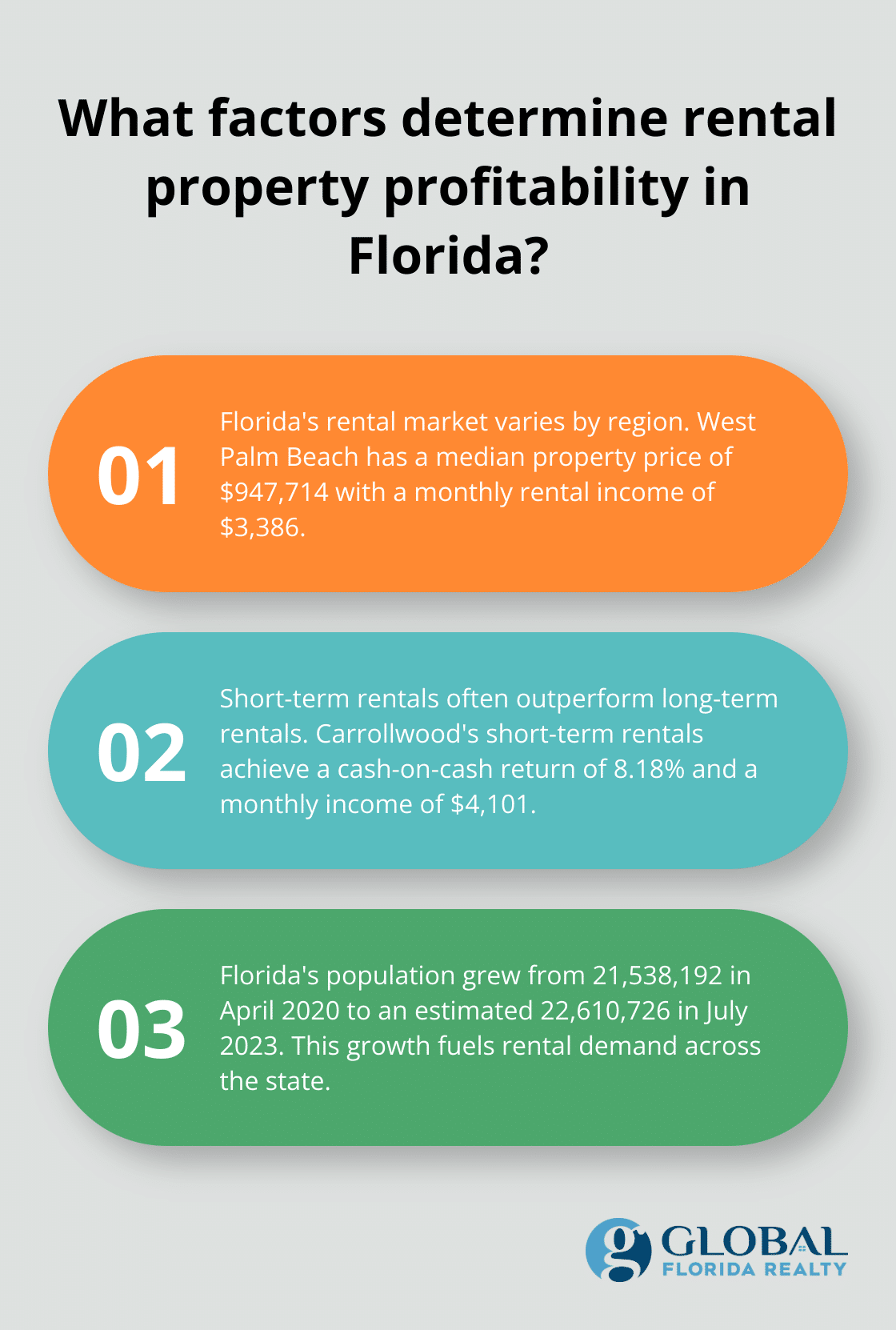
Short-term rentals often outperform in terms of returns, particularly in tourist-heavy areas. Carrollwood exemplifies this trend with short-term rentals achieving a cash-on-cash return of 8.18% and a monthly income of $4,101. These statistics underscore the necessity of thorough income analysis against initial investment.
A property’s condition directly impacts profitability. Florida’s humid climate and hurricane risk often necessitate increased upkeep for older properties. New regulations (which require condo buildings over 30 years old to undergo inspections and maintain dedicated maintenance funds) can add substantial costs for investors in older properties.
Florida’s climate vulnerabilities have also driven up insurance premiums. Some coastal areas have seen insurance costs double or triple in recent years. Investors must factor these ongoing expenses into their calculations to avoid financial surprises.
Local real estate market trends play a pivotal role in long-term success. Florida’s population grew from 21,538,192 in April 2020 to an estimated 22,610,726 in July 2023, according to the U.S. Census Bureau. This growth fuels rental demand, but it varies across the state.
Miami’s median home price reached $646,000 in Q2 2024, according to the National Association of Realtors. In contrast, Gainesville’s median home price of $360,700 experienced a slight depreciation of -1.4% during the same period (as reported by the National Association of Realtors). These contrasting trends highlight the importance of location-specific market research.
In Florida’s rental market, a property’s proximity to attractions and amenities can significantly boost its appeal. Properties near Orlando’s theme parks or Miami’s beaches often command premium rents. Vacation rentals near Disney World, for instance, can charge rates up to 50% higher than similar properties further away.
Emerging areas also merit consideration. Cities like Tampa and Jacksonville have seen increased demand due to growing job markets and lower living costs compared to traditional hotspots. Tampa’s robust economy provides consistent rental opportunities, especially near military bases and colleges.
As we move forward, understanding Florida’s unique landlord-tenant laws becomes essential for successful property management and investment. These regulations shape the rental landscape and influence investment strategies across the state.
Florida’s landlord-tenant laws shape rental property operations. The Florida Residential Landlord Tenant Act outlines rights and responsibilities for both parties. It includes provisions for causes of tenant removal and the tenant’s right to withhold rent under certain conditions. Landlords must provide at least 12 hours’ notice before entering a property (except in emergencies). Security deposits must be returned within 15 to 60 days after lease termination, depending on whether the landlord claims damages.

Recent legislation (HB-133 passed in 2023) allows landlords to offer tenants the choice to pay a fee instead of a traditional security deposit. This change can affect cash flow for landlords, requiring adjusted financial planning. Staying informed about these laws helps avoid legal issues and maintain profitable operations.
The choice between short-term and long-term rental strategies depends on investment goals and property location. Short-term rentals in tourist hotspots like Orlando can yield higher returns. Properties near Disney World can charge up to 50% more than similar properties further away. However, they also require more active management and may face stricter local regulations.
Long-term rentals offer more stable income and lower turnover costs. Cities like Jacksonville, with its growing job market, are ideal for this strategy. The median sale price of $267,567 in Jacksonville makes it an affordable entry point for investors seeking steady, long-term returns.
A local real estate agent or property manager can provide valuable insights into market trends and neighborhood dynamics. They can help identify up-and-coming areas before they become widely known, potentially leading to higher returns.
An experienced local agent might point out that while Miami’s median home price reached $646,000 in Q2 2024, emerging neighborhoods like Wynwood offer better value for investors targeting young professionals. This local knowledge can make the difference between an average and an exceptional investment.
Financing a rental property in Florida offers several options. Traditional mortgages are common, but investors should also consider FHA loans for properties with up to four units if they plan to live in one unit. For those with multiple properties, portfolio loans can efficiently finance several investments at once.
Florida’s property market also attracts international investors. Some lenders specialize in foreign national mortgages, offering competitive rates for non-U.S. citizens looking to invest in Florida real estate. These specialized financing options can make entering the market more accessible for a wider range of investors.
Florida’s rental property market offers numerous opportunities for investors. From Orlando’s theme parks to Miami’s beaches, each region presents unique advantages for rental properties. Investors must consider factors such as potential income, property condition, and local market trends when selecting rental properties for sale in Florida.

Understanding landlord-tenant laws and choosing between short-term and long-term rental strategies are essential for success. Financing options, from traditional mortgages to specialized loans, can significantly impact investment profitability. Local expertise often proves invaluable in navigating the complexities of Florida’s diverse real estate landscape.
Global Florida Realty provides comprehensive services for investors in Florida’s rental market. With extensive experience in Florida real estate, they offer assistance in identifying prime investment properties and managing both short-term and long-term rentals. Their personalized approach helps investors maximize their chances of finding the ideal rental property to meet their investment goals.