
Florida’s real estate market has been a hot topic lately, with many wondering if prices are finally cooling off. At Global Florida Realty, we’ve been closely monitoring market trends and gathering insights from industry experts.
This blog post will explore the current state of Florida’s real estate prices, analyze key factors influencing the market, and provide expert predictions for the future. Whether you’re a buyer, seller, or investor, understanding these trends is essential for making informed decisions in today’s dynamic real estate landscape.
Florida’s real estate market is experiencing a significant transformation. The National Association of REALTORS® provides the latest real estate research and statistics that affect the industry. This shift marks a stark contrast to the market’s performance in recent years.
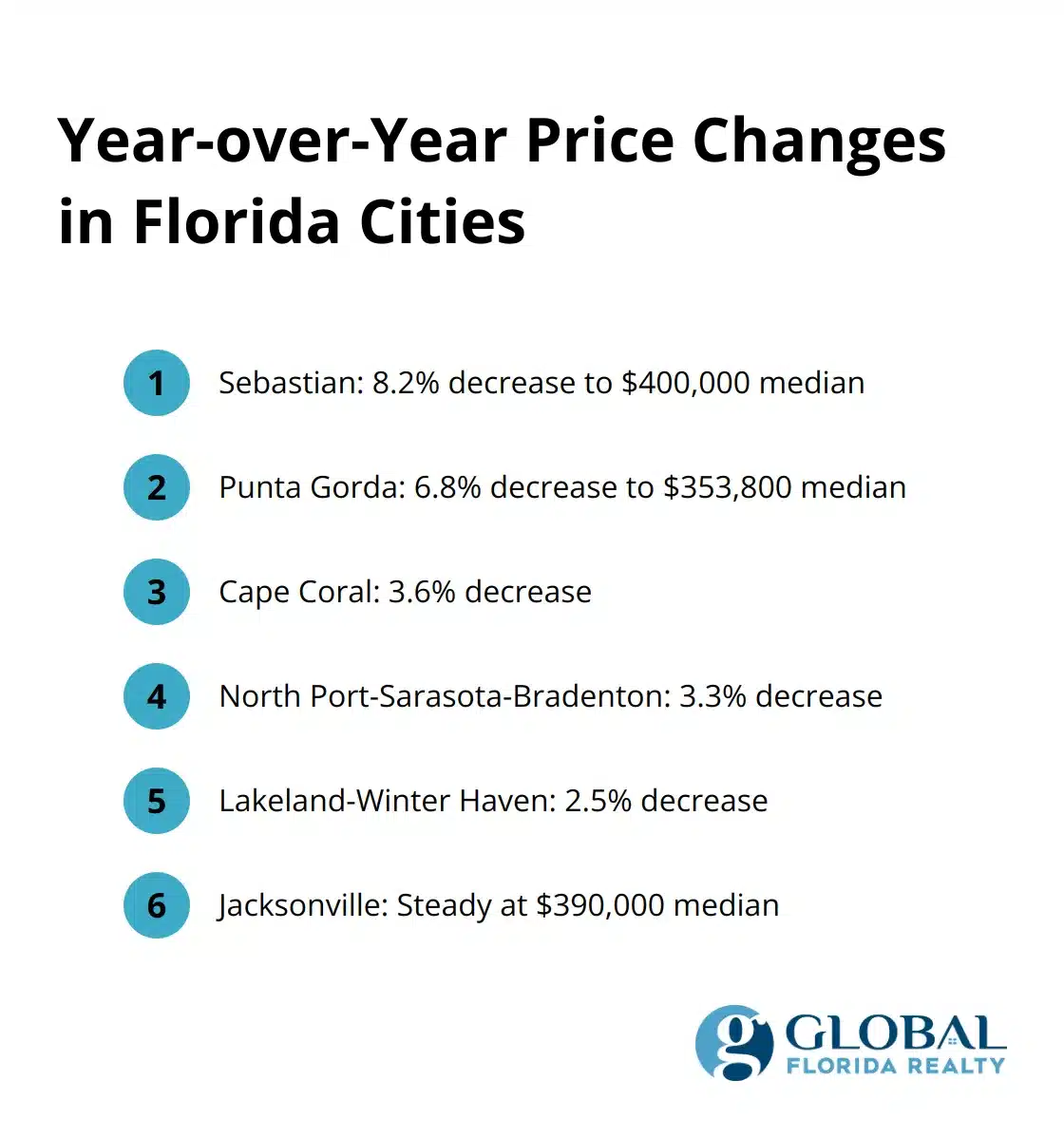
Sebastian has reported the most substantial year-over-year price drop in Florida, with a decrease of 8.2 percent to a median of $400,000. Punta Gorda follows closely behind with a 6.8 percent decline, bringing its median home price to $353,800. Other notable decreases include Cape Coral (3.6 percent), North Port-Sarasota-Bradenton (3.3 percent), and Lakeland-Winter Haven (2.5 percent).
While some areas experience significant price drops, others show more stability. Jacksonville’s home prices, for instance, have remained steady with a median of $390,000. This variability underscores the importance of understanding local market conditions when making real estate decisions in Florida.
Several factors contribute to this market shift:
These factors combine to create a complex and evolving real estate landscape in Florida. As we move forward, it’s essential to consider how these trends might impact different segments of the market, from first-time homebuyers to seasoned investors. The next section will explore expert predictions for Florida’s real estate market, providing valuable insights for navigating these changing conditions.
Interest rates significantly influence Florida’s real estate market. As of June 2025, mortgage rates stand at approximately 7%, a substantial increase from recent historic lows. This rise directly affects affordability and deters many potential buyers.
A $300,000 home with a 30-year fixed mortgage illustrates this impact. At a 3% interest rate, the monthly payment would be about $1,265. The same payment jumps to $1,995 at 7% (a $730 monthly increase). This stark difference explains why many buyers hesitate to enter the market.
Florida’s population growth, once a major real estate demand driver, shows signs of slowing. The latest Census Bureau data reveals a 50% decline in net domestic migration to Florida from 2022 to 2023. Major metropolitan areas like Tampa and Miami experienced some of the highest drops in new residents.
Rising living costs in Florida, including skyrocketing insurance premiums, contribute to this slowdown. The Florida Policy Project reports a 45% increase in property insurance costs from 2017 to 2022, outpacing wage growth and straining affordability further.
The job market plays a vital role in real estate demand. Florida’s unemployment rate remains low at 4.2% (as of April 2025). However, potential economic challenges loom. Despite predictions of economic challenges, the most likely outlook suggests that the economy will avoid a downturn, according to Moody’s Analytics.
Despite these challenges, certain sectors show robust growth. The technology and healthcare industries, in particular, continue to expand. Orlando’s Lake Nona area, for example, has seen a surge in high-paying jobs due to the expansion of its medical city. This growth could potentially offset some broader economic concerns.
Insurance costs and Homeowners Association (HOA) fees significantly impact Florida’s real estate market. Florida currently has the highest property insurance premiums in the nation, with costs continuing to climb. This increase adds to the overall affordability crisis in the housing market.
HOA fees, especially for condo owners in South Florida, have also seen substantial increases. These rising costs further complicate the housing affordability issue and influence buyers’ decisions.

As we examine these factors driving Florida’s real estate prices, it becomes clear that the market faces complex challenges. The next section will explore expert predictions for Florida’s real estate market, offering valuable insights for navigating this dynamic landscape.
Florida’s real estate market faces a period of adjustment. Lawrence Yun, chief economist at the National Association of Realtors, predicts home prices in Florida will decrease by an additional 3-5% over the next 6-12 months. This trend appears most prominent in areas like Miami and Tampa, where prices previously soared.
However, price drops vary across the state. Some areas, particularly those with robust job markets (such as Orlando’s Lake Nona), may experience more stability or slight increases.
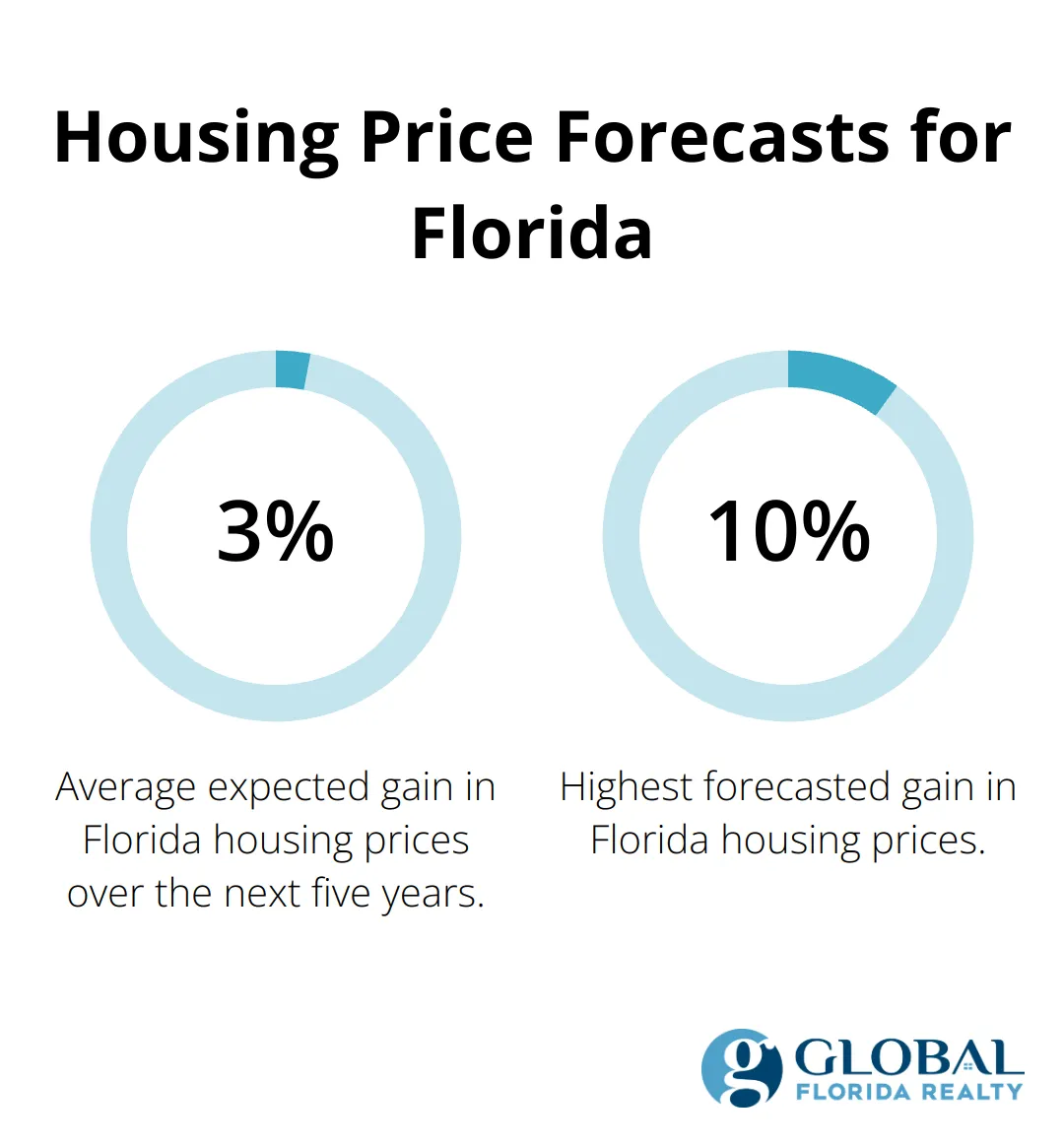
The long-term outlook appears more optimistic. Florida’s real estate market is predicted to experience steady growth in the next five years, driven by strong job markets and population increases in key areas. The state’s favorable tax environment and warm climate continue to attract both domestic and international buyers.
The outlook from housing analysts is positive, with expected gains ranging from -0.4% to 10.8%, and an average of about 3%.
Several factors could impact Florida’s real estate market:
This period of price correction presents opportunities for buyers, especially those who can navigate the current high-interest rate environment. Investors should focus on areas with strong economic fundamentals and consider properties’ long-term potential. Current market conditions may offer chances to acquire properties at more favorable prices, with an eye on future appreciation.
Sellers may need to adjust their expectations and prepare for longer listing times. Pricing strategies may require more flexibility in this changing market. Sellers should work closely with experienced real estate professionals to navigate these challenges effectively.
Florida real estate prices continue to drop, presenting challenges and opportunities for market participants. Buyers can now enter the market at more favorable prices, but must consider long-term potential and high interest rates. Sellers should adjust expectations, prepare for longer listing times, and work with experienced professionals to navigate these challenges effectively.
The long-term outlook for Florida’s real estate market remains positive due to the state’s favorable tax environment and warm climate. Navigating this dynamic market requires expert guidance and local knowledge. At Global Florida Realty, we offer extensive experience in Florida real estate, covering buying, selling, and investing in desirable areas like Orlando.
Our team provides home marketing, valuations, and property management services for both short-term and long-term leasing. We assist with locating personal homes and investment properties, including vacation rentals near popular attractions. Contact us today to make informed decisions in Florida’s evolving real estate landscape.